
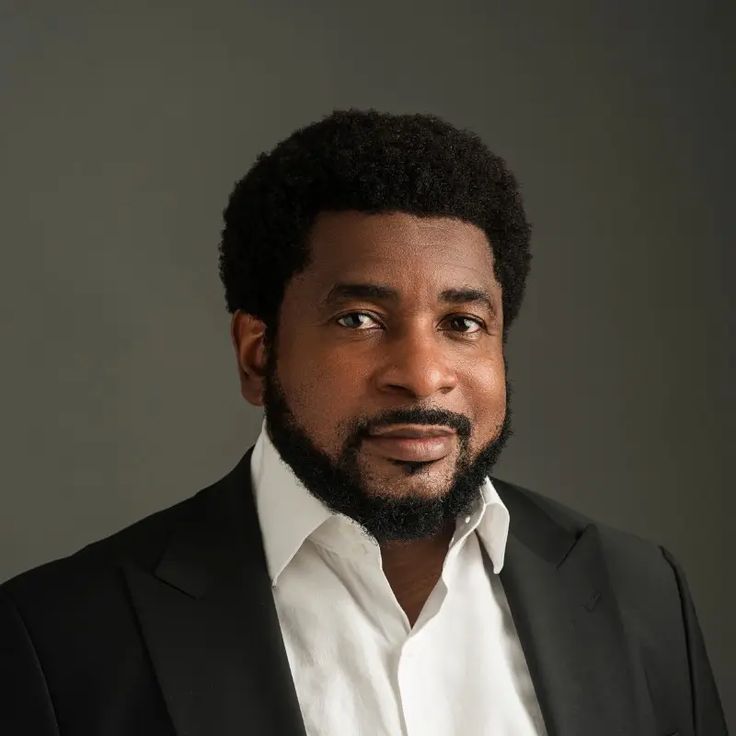


The Church And State Part 1(impact Beyond The Church Walls) by Apostle Joshua Selman: MP3 Download & Sermon Notes
Doctrine
Notes/Excerpt
These notes were taken while listening and may contain some errors. Please tap any sentence twice to suggest corrections.
By holding or selecting a paragraph, you can easily share snippets to friends or on your whatsapp status directly
Building a Thoroughly Furnished Apostolic Community
To build a people who are matured, enlightened, and empowered, a teaching ministry must cover at least four areas. The teaching ministry in Africa is powerful in terms of zeal, but has not always done justice in capturing all the dimensions needed to produce wholesome, balanced believers.
- Doctrine — The fundamental, non-negotiable beliefs of the Christian faith. Every believer must eventually be grounded in the knowledge of God, of Christ, of sin, of redemption, of salvation, of the church, and of the coming judgment. These are what constitute doctrine.
- The Principles of the Kingdom — These are not the same as doctrine. Jesus emphasized what we call the mysteries of the kingdom — contrasting the way the world approached life versus how the kingdom expects believers to function. Principles like prayer, giving, agreement, and spiritual warfare are the modus operandi of the kingdom: how to function effectively to secure God's favor and excel in it.
- Wisdom for Living — The wisdom needed to operate within the cosmos. The cosmos goes beyond the church. There are people who are doctrinally sound and understand the mysteries of the kingdom, but lack the wisdom for living. When placed in positions of leadership or management, they underperform — not because they are not in Christ, but because something about navigating the nuances of governance, leadership, and human nature is absent. This is where believers learn things like the law of honor, the reward systems of the natural world, and how to navigate life as a sheep among wolves.
- A Word-Compliant Worldview — A worldview is the lens, the vista through which you interpret life — matters of justice, equity, leadership, and responsibility. Believers must be discipled to have a worldview that is shaped by Scripture. When you say "prosperity" or "justice" and believers within the same congregation have wildly divergent interpretations, it is a signal that their worldview has not been uniformly trained from the pulpit.
Any man who submits himself methodically to be mentored along these four areas — you show a champion whose relevance cannot fade.
When these four pillars are neglected, the danger is a generation of believers who are both knowledgeable and ignorant simultaneously. A person can be doctrinally sound and yet bring a company down with prayer in tongues because the mysteries of the kingdom were never given to them. Another can build an excellent business using kingdom principles but prove to be utterly without consecration when tested in character. These imbalances produce lopsided believers who are not relevant to their world.
The goal is not to raise religious fanatics. It is to produce spiritual, vibrant, responsible, thoroughly furnished believers whose relevance goes beyond the church walls.
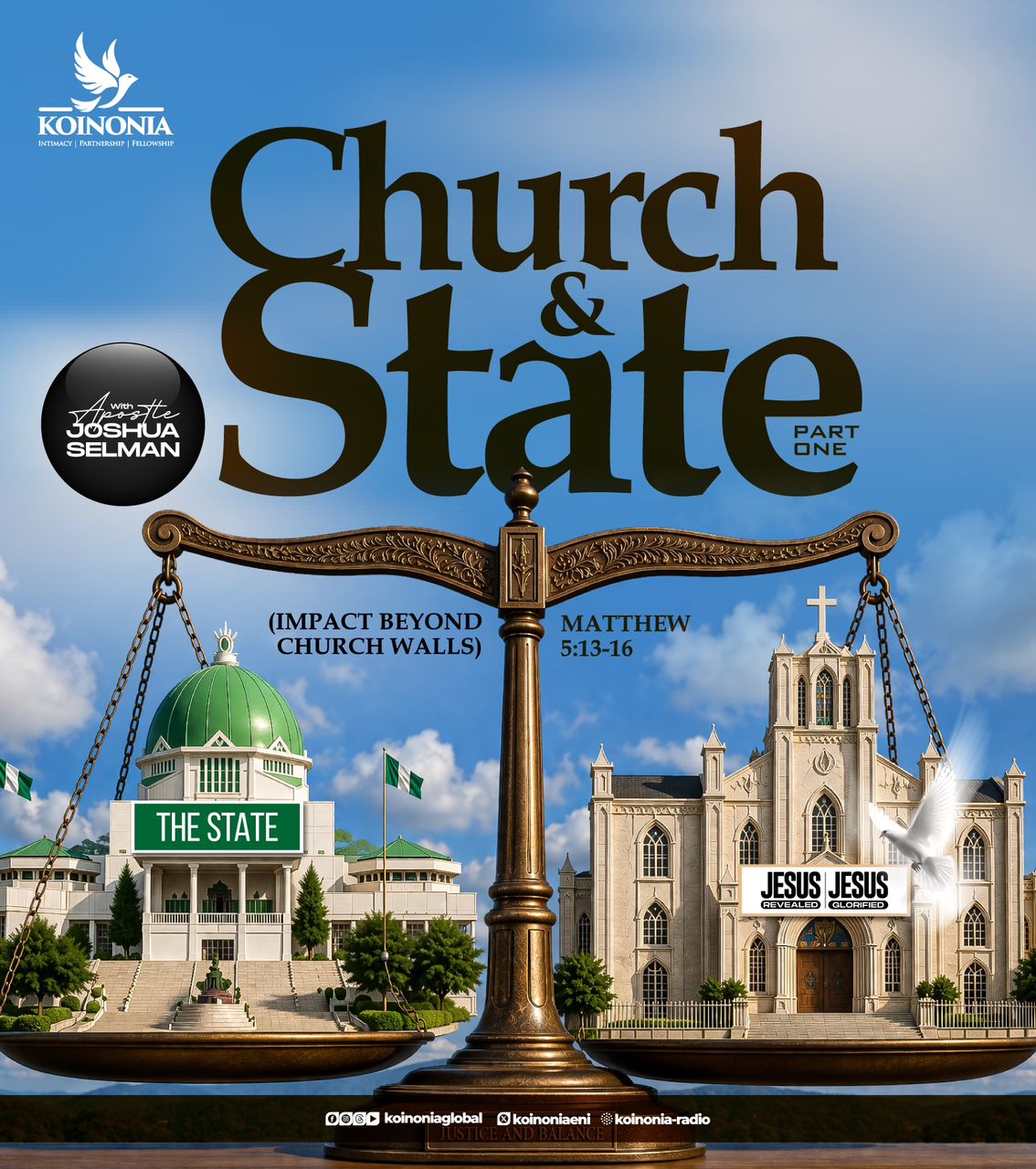
Church and State — Part One: Impact Beyond Church Walls
Matthew 5:13–16
In the Beatitudes, Jesus was introducing the culture and system of kingdom living — contrasting how the world operated versus how God expected believers to function. By the time he reaches verse 13, he makes a statement the church has not fully exhausted.
He says, "Ye are the salt of the earth." Not like salt — but you are the salt of the earth. Four things about salt are relevant here:
- Salt can lose its savor — It is possible to be original salt and yet, for whatever reason, lose the capacity to influence. The Bible identifies this as a real possibility.
- It is never too late to add salt — Unlike certain ingredients that ruin a meal if added at the wrong time, salt can be added even at the table and the meal remains intact.
- Salt adds taste — There is a level of relevance the church should have that should never deplete and never decline. The church Jesus built is not a declining church.
- Salt preserves — In ancient practice, salt was rubbed into beef to preserve it. Worms and maggots cannot prey on salt. Whatever touches salt is itself affected. The church carries this preserving, purifying power.
In verse 14 he shifts metaphors: "You are the light of the world." Not a light — the light. He says you are a city set on a hill that cannot be hidden. That is influence. That is relevance. Light does not need to be everywhere for everywhere to feel its impact. You can be in Nigeria and Ghana feels you, and the UK feels you, and America feels you. You are light.
He adds in verse 15 that "neither do men light a candle and put it under a bushel." Anything that fights your kingdom influence and relevance is demonic. The candlestick gives light to all — crossing cultures, borders, religions, and races.
Verse 16 closes the passage with an instruction: "Let your light so shine before men that they may see your good works and glorify your Father which is in heaven." The word let means permit — do not restrict, do not restrain. Allow it unhindered.
Theologically, believers are classified in two ways: by identification — your oneness with Christ (joint-heirs, raised with Christ, seated with Christ) — and by function. When the Bible calls believers salt, light, ambassadors, kings, priests, and witnesses, those are functional classifications. They are not just expressions of connectedness. They are a call to duty.
What Is the Church? Three Definitions
notifications_active Stay Updated
Join the Readsermons communities for daily nuggets and new sermon alerts.
Language and definition matter. Before engaging the subject of church and state, the term "church" must be grounded clearly.
-
The church is a spiritual strategy.
Jeremiah 51:20–23 — "Thou art my battle axe and weapons of war. For with thee will I break in pieces the nations, and with thee will I destroy kingdoms." God did not say I will give you an axe — He said you are my battle axe. The church is God's own invention, not a product of human science or technology. It is a brainchild of divine wisdom, part of His predetermined counsel. When anything goes wrong in a nation, God does not go to government first — He goes to the church. 2 Chronicles 7:14 — "If my people who are called by my name shall humble themselves and pray and seek my face and turn from their wicked ways, then will I hear from heaven and will forgive their sins and heal their land." The sickness in the land is traceable to the condition of the church.
The church is God's strategy for revival, restoration, redemption, nation-building, healing, hope, reconciliation, and deliverance.
-
The church refers to believers in Christ.
The church is the generic name not just for a gathering, but for believers in Christ — the born again, those who have received salvation through faith in Jesus. Whether they are gathered outside, in a building, or in parliament, a congregation of believers with a kingdom mentality is called the church. 1 Peter 2:5 — "Ye also as lively stones are built up into a spiritual house." Romans 12:4–5 — "So we being many are one body in Christ" — the body of Christ. Not an aggregate of denominations primarily, but believers built together in Christ.
-
The church is an institution.
1 Timothy 3:15 describes the church of the living God as "the pillar and the ground of truth." The church as an institution has a mandate to preserve and communicate the greatest expression of truth in society. No matter where truth is absent, the final bus stop for truth is the church. If governments want truth, if businesses want truth — they should be able to come to the church. The church is the institution mandated with the responsibility of preserving truth transgenerationally.
Hebrews 10:24–25 adds that the assembling of believers is essential — provoking one another to love and good works. Acts 2:42–47 describes the early church: continuing steadfastly in doctrine, fellowship, breaking of bread, and prayer. They were together, had all things in common, continued daily in one accord, and the Lord added to the church daily those who were being saved.
The Declining Relevance of the Church in Society
It is a paradox that we have statistically more churches being registered every year, more programs on the increase — and yet the impact of the church beyond its walls appears to be on a gradual decline. There is a generation settling into the realization that the church is becoming what the typewriter is to the modern world: once relevant, now obsolete.
At least 40% of Americans report still believing in God — but not in church. Among their reasons, aside from the character inconsistencies of shepherds, most say the teachings from the pulpit failed to empower them to be relevant in the world. After years of loyalty, sitting under teaching, those teachings did not produce results when tested by real life. Many started as children and found themselves as adults unable to live a meaningful, victorious life.
There are a number of reasons for this seeming decline.
Three Reasons for the Church's Declining Relevance
-
The Declining Moral Disposition of Ministers
The first reason is the character disposition — the declining level of morality among preachers and ministers of the gospel. This has affected the church's relevance because one of the sixteen laws that govern influence is trust. People will not lend attention until they trust the authenticity, integrity, and relevance of the one seeking to influence them.
Three people can say the exact same thing. A generation will take one person serious and ignore another. It is not merely the will or grace of God — it is the perception of trust. The loyalty of a generation is a report card of a leader's character.
Consider that Jesus could gather 5,000 men — minus women and children — without prior notification, and they remained for three days, hungry but unwilling to leave until He fed them. That level of loyalty is a description of trust and the perception of it. The declining moral standard among those who shepherd is the first wound the church must address.
personlibrary_books More SermonsApostle Joshua Selman
Enjoying this sermon? Browse more messages by Apostle Joshua Selman on Impact at ReadSermons.
For further study on this:
The Purified Church — which describes the six major sins of the modern-day church that God would have us address. -
The Poor Quality of Sermons and Teachings
The second reason is the low quality — in content, value, relevance, and applicability — of the sermons and teachings that come from the pulpit. When a product or service can no longer serve a people, they leave.
The power of transformation is in the quality of the teachings. Quality, balanced, life-applicable, Scripture-based teachings that cut across all four pillars — doctrine, the mysteries of the kingdom, wisdom for living, and a word-compliant worldview — will produce a powerful, refined, responsible body of believers. Failure to achieve that produces the opposite.
The battle among ministers of God has often been a battle of supremacy in one area rather than completion. Those who are masters in doctrine dismiss the mysteries of the kingdom. Those with a great worldview dismiss consecration. Instead of completing one another, they compete. The result is that different camps produce different hybrids of lopsided believers.
It is dangerous to only teach doctrine. It looks spiritual, but it will raise consecrated people who are a nuisance to society. The call is for all four areas — doctrine, the mysteries of the kingdom, wisdom for living, and a word-compliant worldview — each in its rightful place.
Many poor sermons do not come from wicked men. They come from ministers who are limited by the structure of their own mentorship. You cannot raise a people greater than your own level of transformation or enlightenment. And the goal of enlightenment is not to be more Western — it is to be more word-compliant.
-
The Inefficiency of the Witnesses Produced
The third reason is the poor quality of the products — the believers, the witnesses — that emerge from faulty and incomplete teachings. After years of conventions, seminars, prophetic programs, and services, the byproducts reflect fanaticism instead of passion, imbalance, inaccurate understanding, a poor worldview, and often, defeat.
There are broken homes today that are homes of Christians. There are lawless children from Christian families. There are corrupt politicians who are registered church members. Most of the destructive belief systems circulating — materialism, selfishness — did not originate in a club. They came from pulpits.
There are three institutions whose failure produces social decay:
- The family institution — the first visible expression of God's love was meant to come from the relationship between father and mother.
- The school — the educational institution. Every time the home fails, God looks to school to correct it. And when schools fail, there is only one institution left.
- The church — which covers both family and school, because it touches everyone, long after childhood, long after formal education. A summation of many people's understanding of life is 70–80% a product of the pulpit that served them across their lifetime. This is why men of God must be prayed for — not just honored with gifts. Pray that God will help their understanding so that destinies are not destroyed using the Bible.
The Bible is a prophetic book. It can be made to speak the language of love or the language of lust. It can be used to raise a responsible citizen or to produce a destructive one. The word of God must be rightly divided. It takes more than sincerity — it takes knowledge and skill. Psalm 78:72 — "He shepherded them according to the integrity of his heart, and guided them by the skillfulness of his hands." Integrity without skill is not enough. Love without capacity can also destroy.
If the sermons were corrected, upgraded, and balanced, they would produce such a rich, global apostolic community of refined, vibrant, enlightened, and empowered believers that transforming society would become achievable.
A Road Map to Restore the Church's Relevance
It does not do justice to only diagnose what is wrong. Scripture must provide the restorative pathway.
One of the greatest miracles needed today is not a rising from a wheelchair, not the multiplication of bread, not stadiums filled with crowds. One of the greatest most-needed miracles in the church today is the humility of pastors.
If pastors can humble themselves, it would account for over 70% of a sudden transformation in their congregants. The pride of pastors has stood like a wall, punishing the church transgenerationally. There are those who would rather die than say, "Let me listen." Africa's traditional culture measured masculinity by invincibility, and that mentality has been transferred to ministry — where being seen as wrong is treated as an insult on leadership. As a result, rather than admit incompleteness, many construct new roads of deception.
You may also like
Tuesday Bible Study || 19.05.2026 || The Doctrine Of The Church
by Apostle Michael Orokpo
Authenticity and sincerity attract loyalty; they do not take it away. A humble submission — "I didn't see this clearly yesterday, but by the grace of God, I'm on a journey of transformation" — makes leaders authentic and people love them sincerely for it. If a pastor does not know finances, he should stay away and respect those who do. If he does not know about prayer, stay away and learn. Do not destroy members because of ego. Five minutes of humility can teach a pastor a dimension that produces a miracle in his members.
-
A Threefold Restoration Within the Priesthood
The first key is a restoration among ministers — three-fold:
- Restoration of character and moral excellence — Without trust, influence cannot be sustained. Ministers must be willing to face the gap between what they claim and what they demonstrate.
- Broadness of knowledge — No more limitation in scope. Prayer, fasting, deliverance, the confession of the word, the place of grace, the place of secular knowledge, the place of leadership, the place of excellence and productivity — all must find their rightful place. Not overemphasized. Not underemphasized. In balance.
- Restoration of supernatural power — It is still dangerous to raise people who are only intellectuals. Demons are real. Challenges are real. Satan has an agenda. It takes power to keep him at bay.
Philippians 2:14–16 — "Do all things without murmuring or disputing, that ye may be blameless and harmless, the sons of God, without rebuke in the midst of a crooked and perverse generation, among whom you should shine as light in the world, holding forth the word of life."
-
An Upgrade in the Quality of Teachings
There must be an upgrade in the quality and method of the teachings from the pulpit — to capture doctrine, the principles of the kingdom, wisdom for living, and a word-compliant worldview.
For some churches, this requires balance. For others, it requires addition or subtraction. For others, it requires a total change of approach. There is a theology to communicating truth, but there is also a science — a psychology to how knowledge is transferred and retained. Studies suggest people assimilate no more than 10–15% of thoughts communicated in a single session. This means the communicator must be intentional about strategy, method, and craft.
The real proof of wisdom is not in its storage in the mind — it is in its ability to influence decisions and produce victorious consequences. If truth fails to influence you toward making superior decisions and taking wise actions, it has not yet done its work.
There must also be a correction of the template that defines a serious believer. Not every zeal must end in the pulpit. A person can be prayerful and be a prayerful businessman. She can be prophetically gifted and be a prophetic mother. The moment this is taught, the saturation at the pulpit reduces, the competition among pastors reduces, and believers find their actual lane of calling.
Preaching is not the only way to serve God:
- The person who serves God as a kingdom financier
- The judge in the law court administering justice
- The responsible father or mother raising children with character
- The politician serving with integrity
- The career person excelling in their field
All are doing the exact same thing the evangelist does. Until respect is restored to other areas of service, believers will keep gravitating toward the pulpit, causing saturation and jealousy among ministers who were never assigned there.
There are people who should be inventors, policy makers, entrepreneurs, scientists. When we fail to give them room, we rob nations of valuable hands and turn them into frustrated voices without the right platform.
The concept of the seven mountains of influence — church, family, education, government, arts and entertainment, business, media — requires that the body of Christ be well-represented across all of them, not concentrated in one.
-
Believers Must Actively Engage — Not Just Comment and Pray
The third key is that believers must be trained to not only comment and pray about matters of state and society, but to actively engage them.
Prayer is always the starting point — but it is irresponsible for prayer to be the ending point. It is not wrong to pray. But it is irresponsible to only pray about matters of nation-building and society. Daniel prayed — but he did not pray alone. He rose and used an excellent spirit to do something that exalted him to serve among kings. Prayer warriors must also be solution providers. Fasting giants must also be policy formulators.
- See prostitution on the streets — start an NGO. Gather those women. Show them the path of dignity.
- See malpractice in a sector — start a sensitization program. Offer free services while building credibility.
- See a housing deficit — come up with low-cost estate solutions through the illumination of the Spirit. That translated spirituality will matter to government far more than a sermon about it.
- See food scarcity — buy the farms. Set up the farms. Solve food security. Don't insult government. Start while you pray.
If a son is involved in crime, don't only pray — ask where the parenting failed. Fix yourself so that when he returns, he finds a transformed home. Where the rubber meets the road is where the work is. Many commentators are unwilling to put their money and energy where their words are.
The next generation descending into moral bankruptcy — do something. Challenge your church not just to preach, but to set up programs. Trainings that build professionals. Trainings for every area of life.
Policies are simply belief systems and convictions translated into law and modus operandi. Justice is a belief system. Corruption is a belief system. Fairness is a belief system. Selfishness is a belief system. You can write policies on paper, but they will not work until they are bound in the hearts of men. The greatest platform capable of reforming nation-builders is the church.
You do not change the big by attacking the big. You change the big by changing your environment. Every man of God should fix his pulpit. Every parent should fix their home. Every citizen should take responsibility for their small square of influence. Every national problem was once a community problem. Every community problem was once a family problem. Change the family, change the community, change the state, change the region, change the nation.
National transformation is everybody's business. There is no messiah who independently has the power to change a nation. Rolling up sleeves — from the pulpit to schools to policy — is where transformation begins.
A Campaign of Balance, Love, and Unity
The final call to the church — particularly in Africa — is a campaign of three things:
- Balance — A restoration of completion in the content of teachings. All four pillars in their rightful place. No exaggerations. No underemphases. Prayer, the word, fasting, deliverance, leadership, excellence, wisdom for living, the supernatural — each with its rightful place.
- Love — Not tribal, not denominational, not sectarian. A love that does not ask whether someone is from this church or that movement before extending honor. If the fathers made the mistake of drawing walls, the next generation must correct it while honoring them.
- Unity — Not uniformity. Unity in diversity. A Yoruba hand can hold an Igbo hand. Not every northerner is a threat. Not every southerner is corrupt. Not every prophet is false. Not every wealthy young man achieved it through fraud. Not every beautiful woman is immodest. Let experience not become the lens through which all people are judged. Let the rich respect the poor. Let the enlightened respect those who are starting. Let fathers respect sons and sons respect fathers. Let nations respect one another. We are better together.
The advancement of the kingdom, the advancement of Nigeria, the advancement of Africa, the advancement of the church global — depends on you. And I declare that you receive the grace to play your role.
Father, build character in them. Broaden their knowledge — not just spiritual understanding. Let them understand doctrine. Let them understand the ways of the kingdom. Let them understand the wisdom that makes for excellence in the cosmos. Let them have a healthy, pro-kingdom worldview. And supply upon them the spirit power that they become custodians of the anointing of the Holy Spirit — relevant not only in spiritual things, but transcending the church walls.
All that it takes for the church to be salt indeed, to be light indeed — I decree and declare by the power of the Holy Spirit that it is marvelously supplied to every altar, every church, every denomination. That love and respect are restored. That balance is restored. That the whole counsel of God empowers the believer holistically. That men and women of character, knowledge, and genuine apostolic power arise in our generation.
In the name of Jesus Christ — be a nation builder. Be a responsible individual. Be a good person. If it will not edify, don't post it. If it will build, you are invited. Be guided by conscience. Empathy, respect, responsibility, justice, equity, diligence — these are the pillars that build nations. And you are one of those pillars. Go and succeed.Apostle Joshua Selman
Enjoyed this sermon? Browse more messages by Apostle Joshua Selman on ReadSermons.
Comments
0 comments
No comments yet. Be the first to share.
Stay updated with Readsermons
To be notified on every sermon release, join the group that suits you best:
For nuggets & Sharable snippets follow us.
headphones Media & Resources
Listen to Sermon
Download initiated! Follow us to be the first to get new sermons by Apostle Joshua Selman.
The Church And State Part 1(impact Beyond The Church Walls)
Apostle Joshua Selman • 69MB
Download initiated! Follow us to be the first to get new sermons by Apostle Joshua Selman.
Your download
is starting! 🎉
Connect with us directly for more powerful teachings.
The Church And State Part 1(impact Beyond The Church Walls)
00:00:00 / 00:00:00