



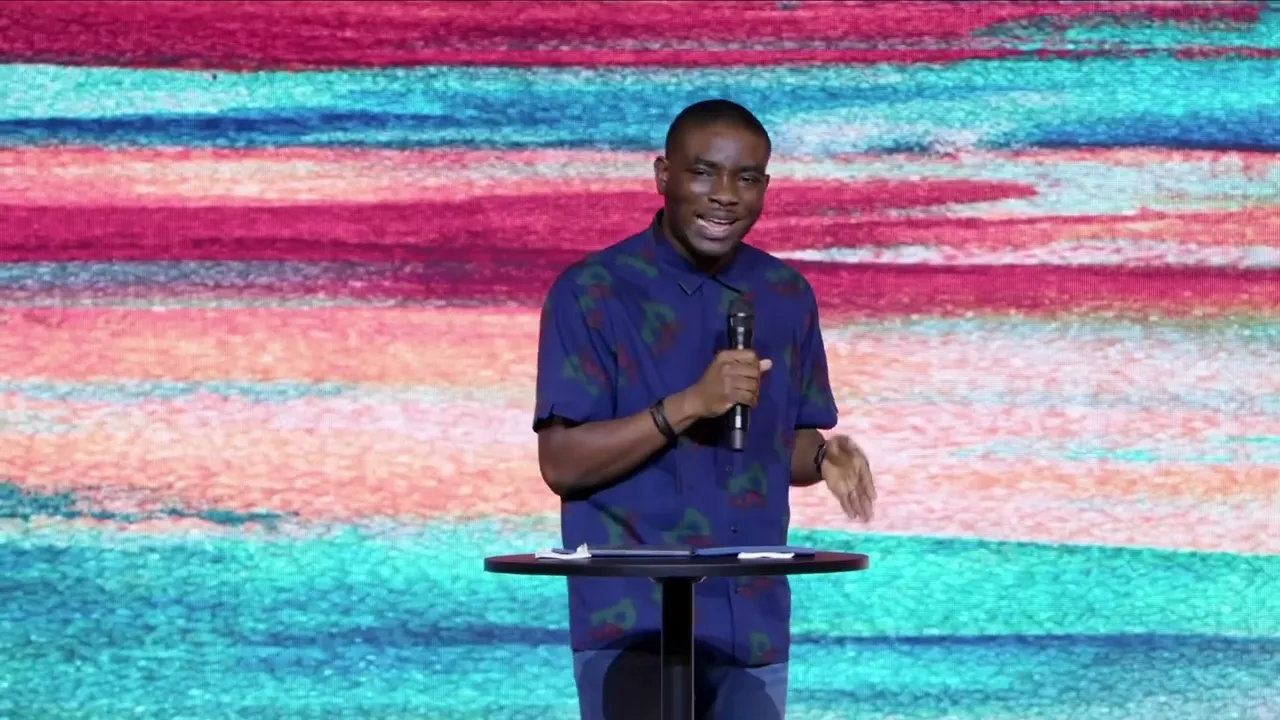
The Gospel And Its Functionalities by Pastor Dolapo Lawal: MP3 Download & Sermon Notes
What Is The Gospel?
Notes/Excerpt
These notes were taken while listening and may contain some errors. Please tap any sentence twice to suggest corrections.
By holding or selecting a paragraph, you can easily share snippets to friends or on your whatsapp status directly
1 Corinthians 15:1–4
The gospel is the death, the burial, and the resurrection of Jesus:
- The death of Jesus — for the forgiveness of sins
- The burial of Jesus — for the forgetting of sins
- The resurrection of Jesus — for newness of life
The first thing to understand about the gospel is that it is according to the scriptures. When the New Testament writers refer to "the scriptures," they mean Genesis to Malachi. That body of Scripture contains the promise of the Messiah who would save people from their sins.
Matthew 1:21
The structure of Scripture moves in three movements:
- Genesis to Malachi — God promises: I am going to send the Messiah.
- The Gospels — The Messiah arrives: Here I am.
- The Epistles — The apostles unpack what the Messiah accomplished — chiefly his death, burial, and resurrection, and the possibilities those events brought.
What makes the death of Christ different from any other death is that his death was prophesied. It is according to scripture.
The gospel is therefore primarily the promise of salvation from sin. That is the rationale behind justification — the subject the book of Romans is majorly concerned with: if by one man's sin all became sinners, also by one man's righteousness all can be made righteous.
The Death of Jesus: Forgiveness of Sins
The Passover in Egypt is the prototype — the type — of what Christ accomplished on the cross.
When God told the children of Israel to apply the blood of the lamb to their doorposts, the angel of death was coming as an angel of judgment. The wages of sin is death, so that angel would not strike where there was no sin. But God's instruction to apply the blood was itself a declaration: God concluded that the Israelites were in sin. The difference between the Israelites and the Egyptians was not that one group was sinless — it was the blood.
notifications_active Stay Updated
Join the Readsermons communities for daily nuggets and new sermon alerts.
It was not enough that the lamb was killed. The blood of the lamb had to be applied.
This transfers directly to Christ. In Isaiah 53, God crossed — crushed — Jesus: the Lamb of God slain for the sins of the whole world. On that cross, the sins of the whole world were paid for. But just as killing the Passover lamb was not enough without applying the blood, God's act of sending Jesus is not enough without personally applying his blood. The blood must be placed on the door of the heart.
John 3:14–16
The word so in "God so loved the world" is not an adjective of intensity — it is a simile. John 3:14 makes this clear: as Moses lifted up the brazen serpent in the wilderness, so must the Son of Man be lifted up. In like manner — in that same way — God loved the world by lifting his Son on a cross, so that whosoever believes should not perish but have everlasting life.
God's love is agape — unconditional and decision-based. It is not a feeling; it is a choice. That distinction matters because love as a feeling can fluctuate. Agape does not.
The Burial of Jesus: Forgetting of Sins
The burial of Jesus accomplishes the forgetting of sins — as far as the east is from the west, he has removed our transgressions.
A dead man cannot be judged. The burial meant that believers died with Christ — and the you that could be accused, the you that could be condemned, was put in the ground.
When the accuser comes to list the past — the lying, the stealing, the failures — the answer is: that person died. This newness of life that now stands before God has not existed before. The case is discharged because the defendant no longer exists.
That is justification.
God prepared a sacrifice. God became that sacrifice. God judged that sacrifice. Then God gave the receipt to the sinner. That is what grace is — not free, but unmerited. Unearned.
Correct prophecy reflects this pattern: it speaks to what God is doing in a person or will do through them. It does not rehearse past sin, because God is not trying to bring up the past — he is trying to get everyone to forget it.
The Wrath of God and the Cup Jesus Drank
John 3:36, Ephesians 2:3, Romans 1:18, 1 Thessalonians 5:9, 1 Thessalonians 1:10
The gospel reveals the reality that without Christ, humanity stood condemned — not merely under the disapproval of God, but under his wrath. God has not destined believers for wrath, but to obtain salvation through Jesus Christ. Jesus delivers from the wrath to come.
Matthew 26:38–44
Pastor Dolapo Lawal
Enjoying this sermon? Browse more messages by Pastor Dolapo Lawal on Gospel at ReadSermons.
In the garden of Gethsemane, Jesus prayed that the cup might pass from him. That cup was the cup of God's judgment.
Jeremiah 25:15–16, 28
The cup in Jeremiah is the wine cup of God's fury — nations would drink it, stagger, and go mad because of the sword. And God's word was: You must drink it. Jesus was not permitted to let it pass. He had to drink it — the full weight of the sins of the whole world, the complete fury of God's judgment against every human transgression.
Psalm 75:8
"Surely all the wickedness of the earth must drain and drink down to the dregs."
2 Corinthians 5:21
He who knew no sin was made sin, so that believers might become the righteousness of God in him. Christ, sinless, replaced sinners full of sin. On that cross he was made sin — that is why he had to die.
John 19:30
When Jesus said "It is finished," he meant: I have finished drinking the cup of God's wrath. The wrath was so consuming that God did not even look upon his Son as he crushed him.
Isaiah 53:4–5
Justification does not merely mean go free. It means the wrath of God has been fully satisfied. To punish a person for a sin that was already punished in Christ would be injustice — like flogging a child for the same offense twice. In Christ, the wrath of God is satisfied.
If there had been another way for humanity to be saved, Jesus would not have died. Without Jesus, humanity was condemned for hell. The best a person can produce — the most moral, most devout life — is a filthy rag before God. This is why the gospel is not moralism. It is not behavior modification. A person can be good and still end up in hell. The gospel is not for the moral — it is for the sinner.
Christianity claims exclusivism: there is no other name under heaven given among men by which we must be saved. Acts 4:12. If the God of the universe came himself to show humanity the way back to him, no human effort could have discovered it independently.
C.S. Lewis said: "There are only two kinds of people in the end. Those who say to God, 'Thy will be done.' And those to whom God says in the end, 'Thy will be done.'"
What takes people to hell is not only what they did — it is also what they refused. The sin that drives people to hell is pride and self-righteousness: the belief that they can make it on their own. Salvation cannot be entered by works. Ephesians 2:8. If it were by works, a person could eventually say they had done enough — and heaven would owe them. But heaven must be a gift, or it cannot be received with perpetual thanksgiving.
Jonathan Edwards wrote that the torment of hell is not merely fire — it is the conscience. An awakened conscience that finally sees sin as God sees it, with no blood to cover it and no Savior to bleed. The pain of hell is regret: I had a choice, and I missed it.
You may also like

Why Will A Loving God Bring Us Into A World Of Suffering? - 100 Dod - Day 96
by Apostle Emmanuel Iren
How this changes how a person sees others: every human being becomes a matter of life and death — not rich or poor, not impressive or ordinary. A person without the gospel is broke. What shall it profit a man to gain the whole world and lose his soul?
The Functionalities of the Gospel
James 2:17–19
Faith without works is dead. If the gospel is truly believed, there are functionalities — visible works of faith — that must follow. Below are three.
-
We Learn How God Loves — and How to Love
God's love is agape: unconditional and decision-based. It pursues the highest good of the other person — not the most comfortable outcome.
God loved Jesus enough to say no to Jesus in Gethsemane. God is willing to allow inconvenience, the loss of a relationship, or the loss of a job if it drives a person toward their purpose.
This kind of love operates through what can be called mercy. Mercy is mysterious. If someone is stealing at work and asks God for mercy, that very prayer may trigger the audit that exposes them. If someone is in an ungodly relationship and introduces God into it, that person may be removed — not because they are necessarily terrible, but because God is taking out impurities.
Exposing sin is the work of God, not the devil. The devil keeps sin hidden and destroys people with it. Light exposes — and it is only light that exposes. When a weakness is uncovered, the response should be to embrace it, open up, and thank God for his mercy.
Ephesians 5:13, Proverbs 28:13, John 3:20–21
The purpose of exposure is not shame — it is restoration and purging. Whom God loves, he chastises.
-
We Give Grace to Others
Understanding how God has loved and forgiven produces a person who extends grace rather than judgment.
A person cannot condemn in others the same class of sin they practice. To judge someone for sexual sin while committing a different sexual sin is inconsistency. The church has sometimes made the mistake of treating people more harshly than the world does — and then wondered why those people do not return.
The difference between punishment and restoration must be understood: God does not primarily want to punish — he wants to restore. Rules built out of fear, rather than the power of the gospel, produce external compliance without transformation. The gospel is powerful enough to change people. A community that believes that will look and act differently from one that does not.
-
We Embrace Selflessness
God was selfless enough to die. The response is to be selfless enough to live for others — for God and for the people around us.
The man who died on that cross was not dying for himself. The glory is in living and dying for others. When a person can chase something larger than themselves, that is when life begins to have meaning.
A minister shared a story: he was traveling to Nigeria and, to please his wife, took a different route through Dubai on an Emirates flight. His seat was damaged, he was moved from business class to economy, then moved again to the very back of the plane — seat 44C. There, beside him, was a father whose son was on an oxygen mask following surgery. The father fell asleep. The mask slipped from the boy's nose. The boy stopped responding. There was no medical personnel on the flight. The Holy Spirit said: stretch your hand and touch the boy. As the hand was laid on him, the boy coughed and came back to life.
God had orchestrated every inconvenience — the damaged seat, the moves — to position a person at the exact seat where a dying boy needed them. The word that came afterward: If you can understand that you live for more than yourself, that is when your life will start having meaning.
Similarly, a very wealthy man said the day he finally understood why he needed his wealth was the day his friend refused his check and said instead: Come and see where your money is going. When he saw the children in wheelchairs: Until you are now rich, you are not rich.
There is nothing personal about salvation. The righteousness claimed was not personally earned — it was credited from another. A person is standing on someone else's righteousness. The appropriate response to that gift is to carry it outward.
Sharing the gospel can be as simple as listening well. In a conversation, once depth is reached, a question like: What is that one thing that means so much to you that you cannot do without it? — creates room. After they share, the response is: I have one too. It's Jesus. He has changed my life.
God provided the sacrifice. Jesus did it so we can tell it. If we don't tell it, it is as though he didn't do it.
God has chosen to partner with believers in his work — that is why Scripture calls them collaborators with God. He did it. We tell it.
A person who has been in Christ for five years and has not shared the gospel with anyone who came to faith knows they are not bearing fruit. Jesus was not vague about what happens to trees that do not bear fruit.
The best way to honor the death, burial, and resurrection of Jesus is to share it.
Father, thank you for the gospel — the death, the burial, and the resurrection of your Son. Thank you that the wrath was satisfied. Thank you that the cup was drunk. Thank you that the record against us was buried. Give us a genuine burden for souls. Let us not hold this to ourselves. Make us collaborators in your work — not just hearers of the gospel but tellers of it. In Jesus' name.
Pastor Dolapo Lawal
Enjoyed this sermon? Browse more messages by Pastor Dolapo Lawal on ReadSermons.
Comments
0 comments
No comments yet. Be the first to share.
Stay updated with Readsermons
To be notified on every sermon release, join the group that suits you best:
For nuggets & Sharable snippets follow us.
headphones Media & Resources
Listen to Sermon
Download initiated! Follow us to be the first to get new sermons by Pastor Dolapo Lawal.
The Gospel And Its Functionalities
Pastor Dolapo Lawal • 24MB
Download initiated! Follow us to be the first to get new sermons by Pastor Dolapo Lawal.
Your download
is starting! 🎉
Connect with us directly for more powerful teachings.
The Gospel And Its Functionalities
00:00:00 / 00:00:00