


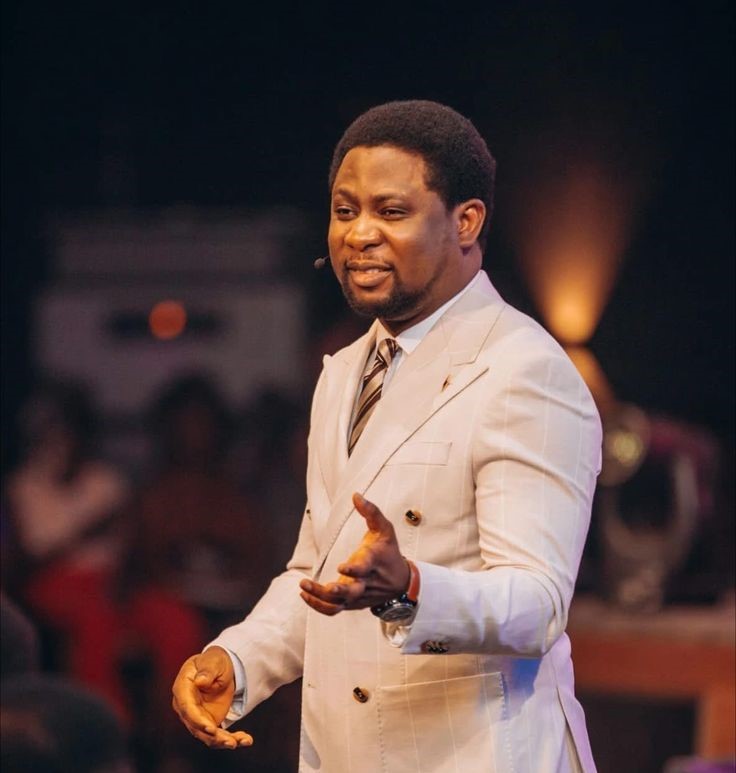
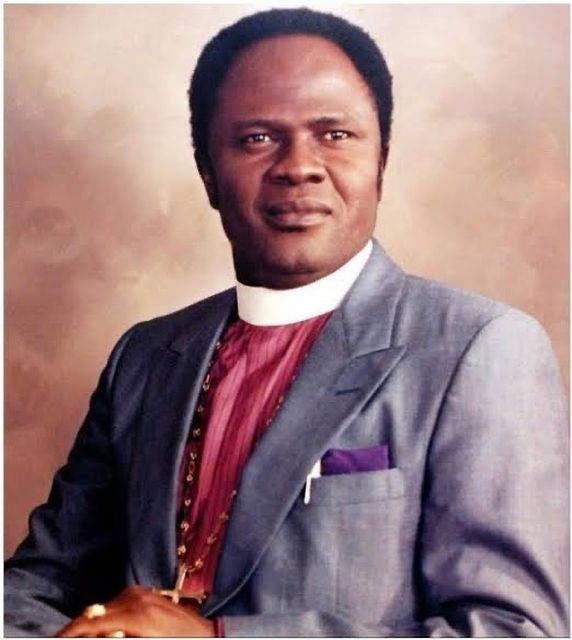
Is Speaking In Tongues Speaking Human Languages ? - 100 Dod - Day 78 by Apostle Emmanuel Iren: MP3 Download & Sermon Notes
Why The Gift Of Tongues Surpasses Human Language And How To Receive And Grow In It By Faith.

Notes/Excerpt
These notes were taken while listening and may contain some errors. Please tap any sentence twice to suggest corrections.
By holding or selecting a paragraph, you can easily share snippets to friends or on your whatsapp status directly
The Misconception That Tongues Must Be Human Languages
Some say the tongues practiced in charismatic or Pentecostal churches are gibberish — that what the Bible actually teaches is tongues done in human languages. But God's word settles this definitively.
1 Corinthians 14:2
Paul, an apostle of Jesus Christ, is stating plainly: when you speak in tongues, no man understands you. No man.
When clear scriptures like this appear, the only right response is to submit to the final authority of scripture rather than allow preconceived notions or human logic to override it. The notion that tongues is God giving someone supernatural ability to speak a language they never learned — for evangelism — is directly contradicted here. Speaking in tongues is done to God, not to men. And because it is to God, no one understands it.
As the verse continues: How be it in the spirit he speaks mysteries. In the natural, it sounds like gibberish. In the spirit, he is speaking mysteries.
Addressing the "Two Types of Tongues" Argument
Some attempt to find middle ground by distinguishing between xenolalia — speaking in tongues in known human languages — and glossolalia — speaking in unknown languages. Even granting that distinction, what Paul describes throughout 1 Corinthians is clearly the latter. And even if Acts 2 was a different kind of manifestation, there is sufficient proof that it was not the norm.
notifications_active Stay Updated
Join the Readsermons communities for daily nuggets and new sermon alerts.
Paul makes no differentiation between types of tongues in this passage. He speaks authoritatively and conclusively: he that speaks in an unknown tongue does not speak unto men but unto God. No man understands him.
The Evangelism Argument Collapses
For those who insist tongues is for evangelical purposes — that a preacher going to China without knowing Mandarin will be supernaturally enabled to speak it — a simple challenge stands: give one example of that happening in the Bible.
Consider what happened in Acts chapter 10 at Cornelius's house. Peter and Cornelius were already communicating. If tongues existed only to aid communication across language barriers, why did the Holy Spirit give Cornelius the gift of tongues when Peter could already speak with him? That question alone dismantles the evangelical-tongues argument.
The Necessity of Interpretation Exposes the Error Further
The Bible emphasizes the interpretation of tongues. And here the contradiction in the evangelical-tongues position becomes glaring. If tongues is God helping someone speak a known human language to a waiting audience, what is the purpose of interpretation?
1 Corinthians 14:13
Apostle Emmanuel Iren
Enjoying this sermon? Browse more messages by Apostle Emmanuel Iren on Praying In Tongues at ReadSermons.
1 Corinthians 12:10
Interpretation is not a supplemental gift — it is an essential one, because tongues in its proper biblical nature is not understood by anyone present.
1 Corinthians 14:23
If tongues were done in a known human language, nobody would call the speaker mad. If someone who never learned Yoruba were supernaturally praising God in Yoruba, no one would call them drunk. The text is clear: spoken in its real, doctrinal, biblical nature, tongues will sound like foolishness to those who don't know any better.
1 Corinthians 14:11
Without interpretation, tongues will not benefit anyone. This means when tongues are spoken, there is no language on earth being spoken that the human mind can recognize.
What About Testimonies of People Recognizing Their Language?
There are testimonies where someone praying passionately in tongues was recognized as speaking a particular person's native language. The most likely explanation is that the supernatural operation in those moments was in the interpretation — in the hearer's perception — not in the speech itself. God is capable of that. Even if briefly someone truly spoke Spanish or French they had never learned, that is a miracle. But it is the exception, not the definition.
You may also like
Empty And Void 3
by Apostle Femi Lazarus
On 1 Corinthians 13:1 — "Tongues of Men and Angels"
Some cite 1 Corinthians 13:1 — "Though I speak with the tongues of men and of angels" — as evidence that tongues can be human languages. This is a figure of speech. Hyperbole. Paul was not teaching that there are two categories of tongues, one human and one angelic. He was making a rhetorical point about love. Reading it literally would be like misunderstanding a mother who tells her crying child, "You can cry from now till tomorrow," as a literal time prediction.
What Speaking in Tongues Actually Is
Speaking in tongues is a unique personal spiritual language by which the Holy Spirit helps the believer communicate to God in a way no man will understand.
It sounds like gibberish to the natural man.
1 Corinthians 14:15
I will pray with the spirit and I will pray with my understanding also.
When praying in the spirit, a believer is not praying in any language they or anyone else understands. Paul says plainly: your understanding is unfruitful. This means even the one speaking in tongues does not understand what they are saying.
This is one of the ways God uses the foolish things to confound the wise. If what comes out of the mouth makes sense to the mind, that is not tongues. If it sounds like gibberish, that is the very sign that it is working correctly.
A Note on Acts Chapter 2
Consider this: get 120 people in a room and have them all pray aloud simultaneously at the top of their voices. Then move some distance away. It is impossible to pick out what any individual person is saying.
What happened in Acts 2 was a miracle — not a template that defines the ongoing nature of tongues. Additionally, the allegation that the disciples were drunk is significant. Drunkenness is identified by two things: staggering, and incoherent speech. That means incoherent speech was present at Pentecost — which is exactly what tongues sound like. The correlation in Ephesians 5:18 — be not drunk with wine, but filled with the Spirit — is not accidental.
The most coherent interpretation of Acts 2 is that the disciples were speaking in their natural prayer language, and the Holy Spirit performed a supernatural operation in the ears of the hearers — enabling each person to hear in their own language. This also serves as a prophetic symbol: the reversal of what happened at the Tower of Babel.
Acts 2 was a one-off supernatural operation. First Corinthians 14 is the literal, systematic apostolic teaching on what tongues are.
If someone comes speaking in tongues, they will not be understood unless they interpret. That is the established teaching. That is what tongues are.
Apostle Emmanuel Iren
Enjoyed this sermon? Browse more messages by Apostle Emmanuel Iren on ReadSermons.
Comments
0 comments
No comments yet. Be the first to share.
Stay updated with Readsermons
To be notified on every sermon release, join the group that suits you best:
For nuggets & Sharable snippets follow us.
headphones Media & Resources
Listen to Sermon
Download initiated! Follow us to be the first to get new sermons by Apostle Emmanuel Iren.
Is Speaking In Tongues Speaking Human Languages ? - 100 Dod - Day 78
Apostle Emmanuel Iren • 6MB
Download initiated! Follow us to be the first to get new sermons by Apostle Emmanuel Iren.
Your download
is starting! 🎉
Connect with us directly for more powerful teachings.
Is Speaking In Tongues Speaking Human Languages ? - 100 Dod - Day 78
00:00:00 / 00:00:00