



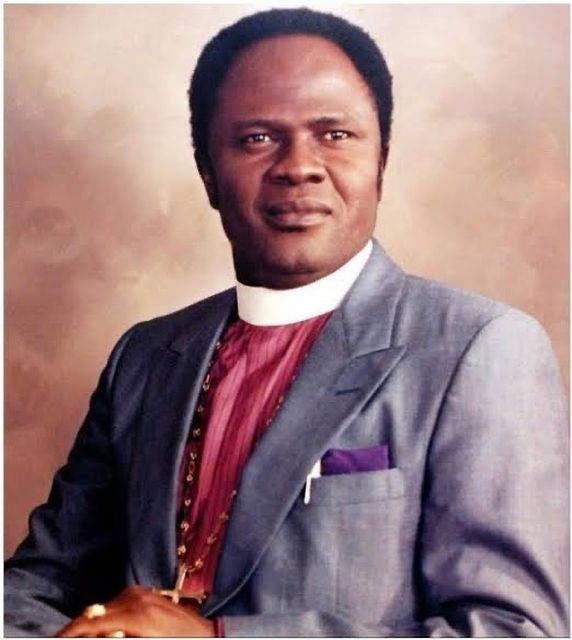
How To Heal From A Break Up by Pastor Dolapo Lawal: MP3 Download & Sermon Notes
A Biblical Framework For Understanding Breakups

lightbulb Message Summary - Key Nuggets
- Breakups can leave deep emotional wounds, but God’s healing is real and available. In this message, Pst. Dolapo Lawal shares practical, scriptural wisdom on how to process pain, renew your mind, and rebuild your heart with God at the center. Learn how to release the past, receive God’s comfort, and step into a stronger, healthier future.
Notes/Excerpt
These notes were taken while listening and may contain some errors. Please tap any sentence twice to suggest corrections.
By holding or selecting a paragraph, you can easily share snippets to friends or on your whatsapp status directly
There is a biblical account that provides an unexpected but accurate framework for understanding relationship breakups — the separation of Paul and Barnabas.
Acts 13:1–3
God expressly said, through confirmed prophetic utterance, that Barnabas and Saul were to be separated for the work of the ministry. The Antioch church — the only megachurch in the New Testament, numbering around 10,000 at its peak — fasted, prayed, laid hands on them, and sent them out. The hand of God was evident in their missionary work together.
Acts 15:36–41
After some days, Paul and Barnabas prepared to revisit the churches they had planted. Barnabas wanted to bring John Mark — whose house had been the church gathering point in Acts 1, 2, and 12, and whom Peter himself called "my son." There was both a ministry connection and a family-like bond. Paul refused. Mark had abandoned them mid-journey when things got difficult, and Paul was not willing to overlook that. The contention became so sharp that the two men separated entirely — Barnabas taking Mark to Cyprus, Paul taking Silas into Macedonia. The same brethren who had heard God say "separate unto me Barnabas and Saul" could not resolve this conflict and commended each party to the grace of God.
That is a breakup — a God-ordained partnership that still ended in painful separation.
Five Foundational Truths from This Account
-
God's Will Is a Choice, Not a Guarantee
God can designate two people to work together and they can still fail to make it work. Predestination is not determinism. Predestination is an appointment that can become a disappointment.
God knows what will happen, but does not make what happens happen. Consider a football match: God, being eternal, knows the final score before the match is played. But he did not make the players play that way — the players are agents of free will. If God scripted every outcome, judgment would be unjust. No one could be held accountable for a script they did not write.
1 Timothy 2:4
The will of God is that all men be saved — yet all men are not saved. The will of God is that in all things, give thanks — yet many do not. These are choices, not compulsions. God can designate a partnership, a relationship, a marriage — and two people can still refuse to make it work.
God's will is only a wise choice. Someone can hear correctly from God about a person and still wreck it through disobedience, pride, or neglect.
Also: God did not tell Abraham to marry Sarah. Abraham saw someone in his family and wanted her. When God called Abraham, Sarah was already his wife — and God said, "I will walk with her." Once a person is married, that is God's will. The scope of divine appointment in relationships is more collaborative than many assume.
-
God's Will Was Not Without Trials and Contention
Joseph saw a star in a dream — and that dream took him to prison.
Genesis 15:13
God told Abraham in advance that his descendants would be afflicted in a foreign land for 400 years. When Joseph's brothers sold him, it was God's will. When Potiphar's wife lied, it was God's will — because there was no other path to the king's ear except through the chief butler, and the only place to meet the chief butler was in that prison. Joseph was in God's perfect will through a pit, a slave's house, and a cell — for seventeen years.
Stephen died by stoning while glorifying God. Jesus preached the gospel and was crucified for it. The fact that something is hard does not mean it is outside God's will. The fact that something ended painfully does not mean it was a mistake.
There is something called antichrist — it comes for anything that has Christ in it. If the thing is truly from God, expect contention. The mindset that says "if I just hear from God, I cannot have problems in my marriage" is already a setup for failure. The prosperity-gospel phrase — "where there is vision, there will be provision" — sounds poetic, but it is not always true.
-
After Their Separation, Both Still Fulfilled Their Ministries
Barnabas, according to church history, was martyred in 61 AD having done powerful gospel work. He insisted on John Mark — the same man Paul had rejected — and that insistence was evidence of apostolic foresight. Paul later wrote to Timothy: "Send Mark, for he is profitable to me for the ministry." Mark went on to write the Gospel of Mark. One early church father, Tertullian, attributed the book of Hebrews to Barnabas himself.
Paul sailed with Silas and planted the churches at Philippi, Ephesus, Corinth, and beyond.
Because they separated did not mean their lives ended. Two of them fulfilled their ministries — not together, even though God had said together. A breakup does not terminate destiny. Life has not finished.
-
Separation Did Not Make Them Bad People or Enemies
notifications_active Stay Updated
Join the
Readsermonscommunities for daily nuggets and new sermon alerts.1 Corinthians 9:6
The contention happened in 50 AD. First Corinthians was written in 60 AD — just one year before Barnabas died. Paul mentions Barnabas with warmth and familiarity, as someone the Corinthians clearly knew. They had reconciled. They were no longer working together, but they were not enemies.
Someone can be a good person and still not be the right person. The end of a relationship is not always a verdict on character. It is possible that two people are not bad in themselves, but they met too early — before either had the wisdom that would have made the relationship work.
-
Breakup Is Not Divorce
A breakup ends a relationship. Divorce ends a covenant of marriage.
Ecclesiastes 5:5
There is no scripture that forbids breaking up. Marriage, however, is a vow — and it is better not to vow than to vow and not pay. If there is second-guessing, examine carefully before crossing that threshold. Once the covenant is made, the posture changes entirely.
If someone has dated nine people in one year, the problem is not breakup — the problem is being broken. Breakup is a tool of discernment. It is not the same as covenant dissolution.
Additional Truths About Breakup
-
Breakup Is a Sign of a Successful Dating Process
Dating and courtship is a discernment season. It is the process of committing to fully test compatibility, alignment of faith, values, direction, and readiness for marriage — without the covenant obligation of marriage. In simple terms, dating is the process God uses to show whether a person should marry someone or not.
Amos 3:3
Proverbs 19:21
If a relationship ends during the dating process, it ended because marriage with that person would not have worked. Two people realized they are not agreed. That is not failure — that is the dating process doing exactly what it is supposed to do.
-
There Are Not Always Two Victims in a Breakup
Because someone ended a relationship does not automatically make the other person a victim. If there was cheating, dishonesty, manipulation, repeated disrespect, or broken trust — the actions ended things first. The other person only formalized what had already been done.
Proverbs 18:17
The first person to tell a story always sounds right — until the other side is heard. What a person sows, they will reap.
-
Breakup Is the Only Option with Certain Types of People
Nobody deserves to stay with a pessimistic, narcissistic, selfish, insecure, or abusive person. Staying with them is not faithfulness — it is empowering their behavior. It also signals low self-esteem: the belief that something better cannot be obtained.
A pessimistic person cannot agree with, celebrate, or believe in what is being built. A controlling person isolates — cutting off friends, family, anyone outside the relationship. Abuse is not limited to one gender. These are real situations, and staying in them is not spiritual.
James 1:17
God's gifts are perfect — the Greek word is teleios, meaning mature, complete. There is a way a person can be in a relationship and know inwardly: this is not from God. Staying is not an act of faith. It is a refusal to believe God can do better.
Pastor Dolapo Lawal
Enjoying this sermon? Browse more messages by Pastor Dolapo Lawal on Relationship at ReadSermons.
Three Ways a Breakup Can End
-
Breakup with Friendship in View — After Healing
This applies where the separation happened due to genotype incompatibility, religious differences, relocation, family or cultural constraints, or timing misalignment — for example, one person wants to marry within the year while the other says they need six years. That is not bad character; it is misalignment.
After a genuine season of emotional healing and clarity, both parties can relate with maturity and peace. This is only possible where there is real forgiveness, maintained emotional boundaries, and no hidden romantic expectations lingering on either side.
Hebrews 12:14
Romans 12:18
As important as holiness is to God, so is peace with all people. A troublemaker cannot see God. Jesus said: if a gift is being brought to the altar and there is a grievance against a brother, leave the gift, go and reconcile first, then come back. Anything done without that peace is not fully accepted.
-
Breakup with Distance — Separation and Limited Access
Distance here is not punishment. It is protection — to avoid reopening wounds, creating confusion, or feeding temptation.
Proverbs 26:20
Where there is no wood, the fire goes out. If there is still emotional attachment to a former partner, God cannot pour new wine into that old wineskin. The person God wants to bring next is His child. Giving that person to someone still emotionally occupied elsewhere would be judgment against the new party — not a gift.
This is also why Leah's situation was so painful. Jacob had settled. It was really Rachel. When Rachel came, Leah knew it. The most miserable thing that can happen is to be someone's second choice. Let go fully, so the next person arrives into a genuinely available heart.
This kind of breakup requires deliberate separation: no unannounced visits, no social media surveillance through a second account, no reopening of channels. Peace — but from a distance.
-
Breakup with Full Separation and No Access
This happens when the relationship was unhealthy, abusive, manipulative, or spiritually damaging. Healing requires full separation, blocked access, and firm boundaries.
This is not unforgiveness. It is wisdom.
Ecclesiastes 3:5
Proverbs 22:24–25
There is a time to embrace and a time to refrain from embracing. Proximity to a destructive person is not loyalty — it is exposure. Some people will damage the soul if given continued access. The instruction is peace from afar — not hatred, but also not access.
How to Heal from a Breakup
-
Do Not Be in Denial
Denial language sounds like this:
- "I am fine. It did not hurt me at all."
- "I'm over it already. I do not even think about them."
- "God has taken the pain away. There is nothing to process."
- "I am just trusting God. I do not need to talk about it."
- "It was never that serious to begin with."
- "I do not miss them. I just miss the idea of being in a relationship."
- "I forgave them instantly. There is no emotional residue."
- "I am strong. I do not get affected by things like this."
Jeremiah 6:14
False peace is when the conscience is pacified about what happened instead of being made wiser by it. There is a difference between getting wiser and getting hardened. Hardness looks like wisdom — but it is devilish wisdom. Where there is bitterness, strife, and envy, that wisdom is earthly, sensual, demonic.
Hardness sounds like: "No matter how beautiful an idea is from a future spouse, I will never add my voice — they will use it and dump me." That is not discernment. That is a wound deciding all future outcomes.
The danger of suppressed pain: one of the symptoms of leprosy is numbness — the nerves no longer register pain. A doctor treating leprosy patients once helped a patient struggling to put on a sandal. The patient leaned his full weight on the doctor's hand. The doctor screamed. The patient was shocked — he had not known he was causing pain, because he himself could not feel it. Once a person numbs themselves to pain, they begin causing pain in others without realizing it.
Unhealed pain also produces what the Bible calls mara — bitter water. A person reaches out in genuine care and the other person receives it as suspicion. "How are you?" sounds like "Where have you been?" The water flowing out is love, but the person drinking it tastes bitterness.
Another sign pain is unprocessed: when multiple people across different relationships raise the same complaint, and the response is to defend rather than examine. If two previous people said the same thing and a current person is saying it again — that is a pattern, not an attack. The honest response is: it is me. Growth requires sitting with that without using past trauma to excuse present behavior rather than explain it.
They have moved on. They are not coming back. That is the truth to start from.
When someone breaks up with another person, they had already emotionally disconnected — sometimes months before. They are not feeling the same pain because they already felt it during the relationship. Look back at the last two months: the involvement reduced, the interest dropped, the reply times stretched. That was the real breakup, happening in slow motion.
-
Grieve — Because It Is a Loss
Matthew 5:4
Blessed are those who mourn, for they shall be comforted — not pitied. Pity says, "I'm sorry." Comfort says, "I'm sorry, and there is hope." When someone dies in Christ, they are comforted — not pitied — because the separation is not final. That is the posture to take here. Cry until the tears are done. Get to the point of: all done.
Psalm 56:8
God keeps the tears in a bottle. They are in His book. That book is what releases angels and moves the right people toward the one who has been treated unjustly. Tears in a season of loss are not wasted — they are recorded.
Psalm 30:5
Weeping may endure for a night, but joy comes in the morning. The connection between night and morning is rest. In that night season, the instruction is not silence — it is declaration alongside the tears:
- This affliction will not arise a second time.
- The path of the just shines brighter and brighter.
- The glory of the latter is better than the glory of the former.
- My best is not behind me.
These are not denials of pain. They are declarations spoken in the middle of pain — spoken until everything inside aligns with what is being said. The healing comes faster that way.
Also: do not abandon a church community because of a breakup that happened within it. If God confirmed that a particular church is home, do not yield that position to an ex. That breakup already took a relationship. Do not let it take the community, the friendships, and the spiritual home built over years.
Be careful about who is close in that season. There are friends who will counsel toward retaliation, recklessness, or bad decisions — and in a vulnerable state, that advice feels reasonable. Watch who is speaking into the grief. Declarations also belong in the private space — a room, a conversation with God — not performed publicly. Posting pain on social media is not confession. It is a stage.
-
Do Not Slander or Assassinate Their Character
Slander and gossip, even in pain, are sin. The pain does not justify it.
What happened between two people in a relationship was agreed upon by both parties at the time. Once pain enters the lens, shared history gets distorted. Things that were mutual become one-sided accusations. Things shared in private confidence become public ammunition. That is not honesty — it is the wound speaking, and it reflects poorly on the one doing the talking.
For men specifically: a woman who decides to dismantle a man's reputation has the capacity to do it in under two weeks. Proceed with sobriety in how former relationships are handled. Do not play with people's hearts.
Proverbs 18:17
The first person to tell a story always sounds right — until the other side is heard. Restraint in how an ex is discussed is not weakness. A person who speaks with grace about a former partner — starting with what was good before naming what could be worked on — signals safety to anyone listening. The way someone speaks about a former relationship is the template a future partner applies to themselves.
-
Give Yourself Grace and Time
Moving on is a process, not an event. Attachment is not only to a person's presence — it is to memories, places, songs, mannerisms, types of cars, shared habits, and associations. Triggers are everywhere and they are normal. They are not signs of failure to heal. They are signs of having genuinely loved someone.
The emotional cycle after a breakup typically moves through:
- Shock — the first response. "From where to where?" The mind tries to make sense of it, reaching for rationale.
- Sadness and depression — mourning the exit of the person, once reality settles.
- Anger — first directed at the other person, but often the deeper anger is at oneself. Anger at what was done in the desperate season of trying to hold things together, of begging, of compromising dignity. That self-directed anger gets transferred outward.
- Bitterness — what anger becomes if it is not managed. Bitterness does not punish the person who left. It puts wounds on the one who stayed, and puts triggers around them so that normal love cannot be received without pain.
The wound illustration makes this plain: two people can be held in exactly the same way. One responds normally. The other flinches — not because anything wrong was done, but because there is a wound exactly where the touch landed. Bitterness does that. Normal love cannot land, and the person offering it cannot understand why.
Do not carry a scarcity mindset — the fear that if this one is missed, that is it. The path of the just shines brighter and brighter. The latter glory exceeds the former. God's plan is not behind.
Do not build a playlist for heartbreak and sit in it. Suffering is not the same as healing.
-
Learn — and Be a Blessing
Even if nothing was done wrong in the relationship, there is still something to learn. Red flags were missed. Patterns went unexamined. Wisdom not yet in place.
Sit with honest questions: How was communication handled? What was contributed to the tension? What warning signs were visible but dismissed? What behaviors showed up across more than one relationship and were never addressed? Introspection is not self-punishment — it is what prevents the same pattern from repeating.
One practical insight: introducing physical intimacy prematurely shuts down conversation. From that point, time together stops being used for genuine discernment. Questions go unasked. Behaviors go unobserved. What should have been a season of clarity becomes a season of appetite — and when it ends, the person walks away without the wisdom they were supposed to gain.
On prayer and discernment: if the question before God is whether a particular person is right, the answer will often come through continued conversation — not through distance. Prayer sensitizes a person to pick up what would otherwise be missed. As the prayer goes up, God moves the other person to say what needs to be heard. Distance from a person being discerned about is not necessarily spiritual — it may simply delay the answer.
Also worth facing: the weight of what was invested affects how hard it is to heal. Someone who gave deeply — emotionally, physically, in ways that went beyond their character trying to hold something together — will feel the aftermath of "after everything, I was still not enough." That pain is real. God sees it, and He compensates.

The Healer of Broken Hearts
Luke 4:18
Jesus read from Isaiah and announced that he had been anointed to heal the brokenhearted. This was not a footnote — it was named as one of the core reasons for his coming. Heartbreak is internal. Someone can hear the whole story and say "is that it?" — not because they are cold, but because they cannot access what is happening on the inside. That is why nothing external resolves it. Not alcohol, not distraction, not another relationship entered before the healing is complete.
The broken heart must be brought into the presence of God. He may not change the situation. But he will change the perspective. And when perspective shifts — when what felt like loss is seen clearly as redirection — mourning turns to thanksgiving. That is the healing.
Pastor Dolapo Lawal
Enjoyed this sermon? Browse more messages by Pastor Dolapo Lawal on ReadSermons.
Comments
0 comments
No comments yet. Be the first to share.
Stay updated with Readsermons
To be notified on every sermon release, join the group that suits you best:
For nuggets & Sharable snippets follow us.
headphones Media & Resources
Listen to Sermon
Download initiated! Follow us to be the first to get new sermons by Pastor Dolapo Lawal.
How To Heal From A Break Up
Pastor Dolapo Lawal • 35MB
Download initiated! Follow us to be the first to get new sermons by Pastor Dolapo Lawal.
Your download
is starting! 🎉
Connect with us directly for more powerful teachings.
How To Heal From A Break Up
00:00:00 / 00:00:00