

The Unseen Trap Of Our Leadership Crisis by Apostle Femi Lazarus: MP3 Download & Sermon Notes
Poverty Weaponized Keeps A Nation Powerless
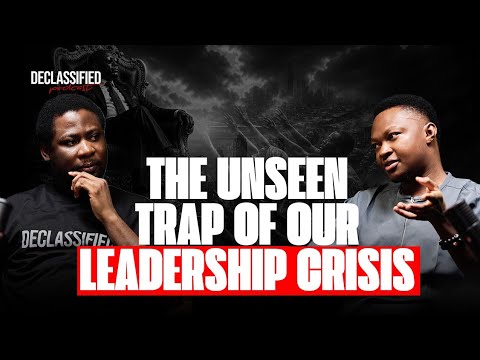
lightbulb Message Summary - Key Nuggets
- Nigerian politicians remain unaccountable because citizens have not made them genuinely afraid of consequences.
- Poverty is deliberately sustained as a tool of political control — creating cheap soldiers for any war.
- Insecurity in Nigeria is now more economic than ideological in its roots.
- National unity requires citizens to see themselves as Nigerians first, before tribe or religion.
Notes/Excerpt
These notes were taken while listening and may contain some errors. Please tap any sentence twice to suggest corrections.
By holding or selecting a paragraph, you can easily share snippets to friends or on your whatsapp status directly
Why Nigerian Politicians Are Not Afraid
The number one problem in Nigerian politics and governance is that politicians are not afraid of the people. If a president can remove fuel subsidy while people are crying from hunger, then travel to buy a yacht — that is a leader who has no fear of those he governs.
The renovation of the vice president's residence cost billions while citizens could not afford food. Not one state in Nigeria today can boast of four days of uninterrupted power supply. Yet the president's son rides in a long motorcade, funded by taxpayers, while holding no public office. This is the behavior of leaders who do not respect those they govern.
The Nigerian people have, over time, turned politicians into celebrities — and that shift gave them too much power. Politicians are employees of the state. Taxpayers are the ones paying their salaries. But many of them do not see it that way.
How Poverty Has Been Weaponized
Imagine a child born today into a family with no resources. By age two or three, the child is on a roadside begging for food. That is the life they know until age eighteen. Now someone approaches that young man — someone arriving in a car they have never seen, surrounded by armed escorts — and says: take this weapon. Stand on this road. Collect things from people and make money. Is that not enticing?
The Nigerian elites know they need to keep people poor to maintain their power. There is an industry, an economy of poverty. As long as poverty exists, there are cheap soldiers available for any kind of war — religious, social, economic.
Insecurity in Nigeria is now more economic than ideological. Armed groups do not only recruit in communities where there is desperation — they enter as providers. They teach, they offer stipends, they give community. Then they radicalize. The transition from ideology to criminal enterprise follows the resources in the ground — gold, minerals — which is why the geography of insecurity often maps onto areas of illegal mining activity.
The Propaganda Machine and Foreign Interference
Since World War II, the United States has been involved in over one hundred regime changes across the world. Every external power operates in its own interest. The question Nigerians must ask about any foreign engagement is: what is the American interest in Nigeria?
Patterns matter in predicting the future. Buhari was presented as the next best thing — branded powerfully, emotionally compelling — until the nation began spiraling. APC, the change movement. Then the next good thing brought the next worst thing. Nigerians are loving people, but they love without their eyes open. They do not check what is being smuggled in.
The label being prepared for Nigeria is religious persecution — the one trigger that can split a country that is nearly fifty-fifty in religious makeup and already fragmented along ethnic lines. Once people are grieving, no amount of facts will matter. The family whose members were killed while someone shouted religious slogans cannot be reasoned with in that moment of pain. And that is understood. Which is why the pattern of engineering such moments is deliberately calculated.
Tribal Politics and the Identity Crisis
Consider Benue State: four ethnic groups, each voting along tribal lines, meaning Zone C has never produced a governor and has never had a senator from the Etulo minority. Progress in that zone stalled — the same places that were more developed in 2004 are worse today.
Nigeria cannot break this cycle while citizens see their tribe as their primary nation. Lagos has an economy bigger than most African countries. But the question of who governs it has tribal dimensions that override merit. The same pattern plays out across the continent — Ghana, South Africa — wherever group identity is weaponized by those who benefit from division.
Removing "state of origin" from the Nigerian constitution would be a seismic but necessary step. It would force citizenship to mean something at the national level. The fear that follows such a suggestion — occupational agenda, ethnic domination — is itself evidence of how deep the distrust runs.
The Breakup Argument Is a Trap
The ideology that dividing Nigeria will bring prosperity is a lie. A landlocked Biafra would start at zero. Its neighbors would, by necessity, become adversaries. The initial years would be catastrophic regardless of the industry or ingenuity of its people. This is not an argument against self-determination in principle — it is a confrontation with the reality of how the business plan would work out. And who benefits from the breakup is a question worth asking before celebrating the idea.
Democracy as a Festival
Consider this: someone starts voting at twenty. Each president gets two terms. In forty years of voting, that person will have voted for approximately five presidents. Buhari, Jonathan, Tinubu — each of them consuming eight years. The cycle becomes a festival. People chant, defend democracy, line up, vote, wait four years, chant again.
The alternative models being held up — Singapore's Lee Kuan Yew, China's model — are not simple either. Lee Kuan Yew was not a good man by any conventional measure. His philosophy: if you do not want what we are building, you are an enemy of the state. The result was transformation — but at a cost of civil liberties that must be named honestly.
The deeper issue: accountability requires that citizens themselves carry the weight of holding power responsible. The politician is an employee of the state. Until Nigerians begin to enforce that relationship — with their voices, their votes, their refusal to accept impunity as the norm — the cycle continues.
The Nigerian Military Is Not Appreciated
The Nigerian military is fighting multiple wars simultaneously — in the northeast, northwest, southeast, with porous borders allowing fighters from Chad, Niger, and beyond. If the US were facing the same number of simultaneous internal conflicts, the nation would have already collapsed. These officers are stationed across the country, in some cases unable to return home for months, separated from families, fighting with inadequate ammunition.
There are soldiers who revolted over lack of equipment — and were court-martialed for it. A soldier cannot speak out; once you join, you become the system. Yet these are the men standing between Abuja and the insecurity that has already reached Kaduna. If the federal capital were ever breached by militants, what happens to the most populous nation in Africa?
These men are not appreciated enough. They deserve the nation's full backing — not contempt from politicians who are comfortable while others bear the weight of protecting them.
Apostle Femi Lazarus
Enjoyed this sermon? Browse more messages by Apostle Femi Lazarus on ReadSermons.
Comments
0 comments
No comments yet. Be the first to share.
Stay updated with Readsermons
To be notified on every sermon release, join the group that suits you best:
For nuggets & Sharable snippets follow us.
headphones Media & Resources
Listen to Sermon
Download initiated! Follow us to be the first to get new sermons by Apostle Femi Lazarus.
The Unseen Trap Of Our Leadership Crisis
Apostle Femi Lazarus • 27MB
Download initiated! Follow us to be the first to get new sermons by Apostle Femi Lazarus.
Your download
is starting! 🎉
Connect with us directly for more powerful teachings.
The Unseen Trap Of Our Leadership Crisis
00:00:00 / 00:00:00