


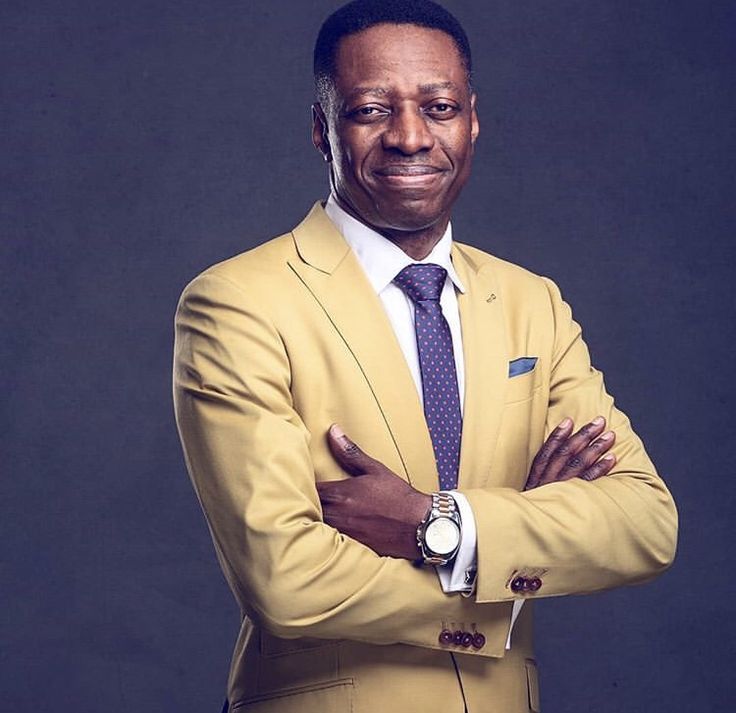

Tongues - Making The Case For Speaking In The Spirit by Pastor Dolapo Lawal: MP3 Download & Sermon Notes
Tongues Is Prophecy You Don't Yet Understand

lightbulb Message Summary - Key Nuggets
- Scripture commands believers not to forbid tongues, yet it remains for many a misunderstood gift.
- Tongues is unknown prophecy; prophecy is known tongues, linked by interpretation.
- Common arguments against tongues, that it ended with the apostles or requires a special feeling, do not hold up against scripture.
- Speaking in tongues opens the door to other spiritual gifts like vision and dream interpretation.
Notes/Excerpt
These notes were taken while listening and may contain some errors. Please tap any sentence twice to suggest corrections.
By holding or selecting a paragraph, you can easily share snippets to friends or on your whatsapp status directly
This teaching makes a defense for speaking in tongues ahead of an extended time of corporate prayer in the Spirit the following day, intended to help believers who already speak in tongues understand what they are doing, and to invite those who do not into the practice.
Key Things to Note About Tongues
There Is a Clear Warning Not to Forbid Tongues
1 Corinthians 14:39-40Scripture is direct: do not forbid speaking in tongues, but let all things be done decently and in order. Any teaching that excludes tongues from church life runs against this explicit instruction.
1 Thessalonians 5:19-20
Believers are told not to quench the Spirit and not to despise prophecy. Speaking in tongues is shown later in the message to be a form of prophecy; despising it is one way the Spirit is quenched, effectively placing limits on what God is permitted to do.
Speaking in Tongues Is an Aftermath of Salvation
A person must be saved to speak in tongues; tongues are not required to be saved. Every believer who receives the Holy Spirit receives two things: the fruit of the Spirit, which makes His presence conducive within a person, and the gifts of the Spirit, which make His presence beneficial through that person. Tongues function as a receipt, a sign that the Holy Spirit resides within someone, even though some believers, such as Billy Graham, never operated in this sign despite great spiritual impact. Not speaking in tongues does not call someone's salvation into question.Romans 1:11
Spiritual gifts establish and bring conviction to believers.
Mark 16:15-18
These signs were given to follow those who believe, including casting out devils and speaking with new tongues, language that is naturally unacquired and unknown to the speaker.
How the Disciples Understood What Was Happening at Pentecost
notifications_active Stay Updated
Join the Readsermons communities for daily nuggets and new sermon alerts.
Acts 2:1
When the day of Pentecost had fully come, those gathered began to speak in other tongues as the Spirit gave them utterance. Peter, having never witnessed this before, was nonetheless able to immediately explain it through the prophet Joel because Jesus had spent forty days after His resurrection teaching the disciples to interpret scripture through the lens of His finished work, a practice that can be called scripturization.
Luke 24:44-45
Jesus told the disciples that all things written about Him in the Law, the Prophets, and the Psalms must be fulfilled, teaching them to read every part of the Old Testament through the lens of Christ.
Acts 1:16
Following this pattern, the disciples found Judas's betrayal already foretold in scripture.
Psalm 22:1, 16, 18
This is read as Jesus's conversation on the cross, including the dividing of His garments.
Psalm 23
This is read as Jesus's conversation in the grave, with the rod and staff understood as a type of the Holy Spirit, the Comforter promised in Romans 8:11.
Psalm 24
This is read as Jesus's conversation at His resurrection and entry to sit at God's right hand.
Psalm 69:25 and Psalm 109:8, applied in Acts 1:20, were combined by the disciples to identify the prophetic word concerning Judas's replacement. Anyone facing a difficult situation can find their answer the same way scripture was searched and applied to Judas.
Acts 2:5-13
Those gathered from many nations heard the disciples declaring the wonderful works of God in their own languages, a working of miracle rather than an interpretation of tongues, since unbelievers cannot interpret tongues without the Holy Spirit. With many people praying simultaneously, no one could have naturally distinguished individual languages; it was the Spirit Himself giving understanding to the listeners. The speakers themselves were not speaking known human languages but the language of the Spirit, with their own understanding unfruitful, which is what qualifies it as tongues.
Acts 2:14-18
Pastor Dolapo Lawal
Enjoying this sermon? Browse more messages by Pastor Dolapo Lawal on Speaking In Tongues at ReadSermons.
Peter explained that this was not drunkenness, since it was only nine in the morning, but the fulfillment of Joel's prophecy that sons and daughters would prophesy. Tongues was therefore interpreted as prophecy.
There Are Different Kinds of Tongues
1 Corinthians 12:10
The different kinds of tongues mentioned in scripture are not different levels or qualities of tongues; there is no such thing as tongues being more or less powerful based on sound or rhythm. There is also no biblical basis for distinguishing tongues of angels from tongues of men as separate levels of spirituality; in scripture, whenever angels spoke and were recorded, it was in known human language. The reference in 1 Corinthians 13 to tongues of men and of angels is hyperbole, similar to other rhetorical exaggerations Paul uses in the same passage, not a literal hierarchy. Tongues can only be considered false when spoken by someone who is not a believer; a believer speaking what they do not understand under the Spirit's influence is, by definition, genuine tongues.
The context of 1 Corinthians 12 is the operation of spiritual gifts within a local church body, distributed across different members so that ministry functions as a team rather than resting on one individual, preventing both burnout and the elevation of a single person above the rest of the body.
Tongues for Personal Edification
1 Corinthians 14:4, 18-19This is a private prayer language that builds up the individual believer, strengthening the spirit even while the mind remains unfruitful.
Tongues That Require Interpretation
1 Corinthians 14:27-28When tongues are spoken publicly, they must be interpreted so the whole church can be edified; these are public messages from the Spirit, not private utterances, and the speaker should be silent if no interpreter is present.
Tongues as a Sign for Unbelievers
1 Corinthians 14:21-25, drawing on Isaiah 28:11 and Deuteronomy 28:49In the Old Testament, God speaking to Israel through a foreign tongue was a sign of judgment for covenant unfaithfulness, as fulfilled through the Assyrian invasion referenced in Jeremiah 5:15. At Pentecost, however, the multiplicity of tongues was paired immediately with interpretation, transforming what could have signified judgment into a sign of mercy and invitation rather than condemnation, since unbelievers present had not yet reached a state deserving severe judgment. What God gathered together through interpreted tongues at Pentecost reversed what He had scattered at Genesis 11, where humanity's language was divided because of prideful ambition to ascend without God. At Pentecost, God affirmed it was now time for ascension on His own terms, unifying language again through the Spirit even while many tongues were being spoken simultaneously.
You may also like

What Real Faith Is
by Pastor Mildred Kingsley-Okonkwo
Translation Versus Interpretation
Many confuse translation of tongues with interpretation of tongues. Translation converts words from one language to another; interpretation conveys the meaning or idea behind what is being communicated, which is why someone can speak in tongues for an extended period and receive a much shorter interpretation, without that being an inaccurate or incomplete rendering.
Daniel 5:25-26
The writing on the wall is offered as an illustration of interpretation rather than translation: the meaning conveyed was far more significant than the literal words written.
Tongues equals unknown prophecy; prophecy equals known tongues. The link between the two is interpretation, which is why Paul instructs that when someone speaks in tongues, another should interpret so the church can be edified. A speaker's spirit remains in their own control while speaking in tongues; nothing in scripture suggests a person loses control of their will under the Spirit's influence, since God leaves the will intact in order to justly judge it, unlike demonic possession which overrides a person's will entirely.
1 Corinthians 14 instructs that those prophesying or speaking in tongues should take turns, and that two or three should judge what is said by the standard of scripture, since inspiration must always be filtered through sound theology. There is a meaningful difference between a believer simply carrying wrong theology and a person operating under a demonic spirit; sincere believers under the influence of inspiration can still need correction without their character or salvation being questioned.
A personal account followed of organizing young believers into groups by perceived calling, teaching, prophecy, and so on, to pray separately on the same subject and reconvene, finding that the words and scriptures each group received independently aligned, an experience offered as evidence that genuine prophetic interpretation, rightly tested, is consistent with scripture and with what the Spirit is doing across the body.
Common Arguments Against Tongues, Answered
"How can we say what we don't understand?"
1 Corinthians 14:2, 13-14This is precisely the design: the spirit prays while the understanding remains unfruitful, which is resolved through interpretation, not by avoiding tongues altogether.
"It ended with the apostles."
James 2:10Scripture treats the gifts of the Spirit as a package; rejecting one effectively requires rejecting all of them, including discerning of spirits, casting out devils, healing, and prophecy itself. Rejecting prophecy ultimately undermines the basis for trusting the prophetic fulfillment that authenticates Jesus as the Messiah. Historically, tongues did not end with the apostles: the 120 in Acts 2 were not apostles; Cornelius's household spoke in tongues around 37 to 40 AD in Acts 10; the Ephesian believers spoke in tongues in Acts 19:6 around 53 to 55 AD; and Paul was still instructing the church in Corinth about tongues decades after Pentecost.
"Paul says we shouldn't speak in tongues."
1 Corinthians 14:15, 18, 27Paul himself describes praying and singing both with the spirit and with understanding, and states he spoke in tongues more than the entire Corinthian church.
"You only pray in tongues when the Spirit pricks you."
Believers are not waiting passively for a feeling before exercising other gifts, such as laying on of hands or casting out devils; tongues belongs to the same category of signs that follow those who believe, available to be exercised in faith rather than awaited. Believers are described as a faucet, with the Holy Spirit as the supply that is always present whether the faucet is open or closed.Jude 1:20
Believers are instructed to build themselves up by praying in the Holy Spirit, indicating personal initiative rather than passive waiting.
"Don't speak in tongues in church."
A close reading of Acts 2 and related passages argues that the disciples were not confined to the upper room at Pentecost but had moved into the temple itself, the same setting referenced through the Greek word for house used consistently elsewhere for the temple, as seen in Acts 5:12, John 2:16, Acts 7:47, and Luke 11:51. The timing, the third hour, aligns with the regular Jewish hour of morning prayer observed by the apostles, as shown in Acts 3:1. Acts 2:46 describes the early church continuing daily in the temple. This places the very first instance of speaking in tongues inside corporate worship, not hidden away from it.
The Authority Behind the Name of Jesus
A testimony was shared of a demon-possessed visitor who could not be delivered by others present, but was cast out within minutes through direct command in the name of Jesus. Demons recognize and respond to spiritual authority and identity, not merely to words spoken; engaging the name of Jesus carries the weight of His own integrity and reputation being defended, since believers act as representatives sent in His name, similar to a messenger sent to retrieve something on another's authority.
Luke 11:11-13
If earthly fathers know how to give good gifts to their children, how much more will the Father give the Holy Spirit to those who ask. The likelihood of sincerely asking for something within the Holy Spirit's gifting and being refused is effectively zero, since refusal would call God's own goodness into question.
A further testimony described witnessing a healing of a deaf and mute girl performed by someone with apparently little personal interest in or relationship with God, illustrating that miracles can occur through people without deep conviction, simply because God is protective of His own name and reputation, while still desiring that those who walk in His power also walk in genuine relationship and love for Him.
Stepping Into Practice
Those who had not yet experienced speaking in tongues were invited to stand and begin, without waiting for a particular feeling or prompting, simply opening their mouths in faith while others gathered around to encourage and pray with them. As individuals began to speak, the room was encouraged to grow louder and bolder in response, with testimony in real time of someone beginning to speak in tongues for the first time during the gathering. The session closed with the whole room turning to corporate prayer and praise in tongues together, in preparation for the extended time of prayer the following morning.
Pastor Dolapo Lawal
Enjoyed this sermon? Browse more messages by Pastor Dolapo Lawal on ReadSermons.
Comments
0 comments
No comments yet. Be the first to share.
Stay updated with Readsermons
To be notified on every sermon release, join the group that suits you best:
For nuggets & Sharable snippets follow us.
headphones Media & Resources
Listen to Sermon
Download initiated! Follow us to be the first to get new sermons by Pastor Dolapo Lawal.
Tongues - Making The Case For Speaking In The Spirit
Pastor Dolapo Lawal
Download initiated! Follow us to be the first to get new sermons by Pastor Dolapo Lawal.
Your download
is starting! 🎉
Connect with us directly for more powerful teachings.
Tongues - Making The Case For Speaking In The Spirit
00:00:00 / 00:00:00