
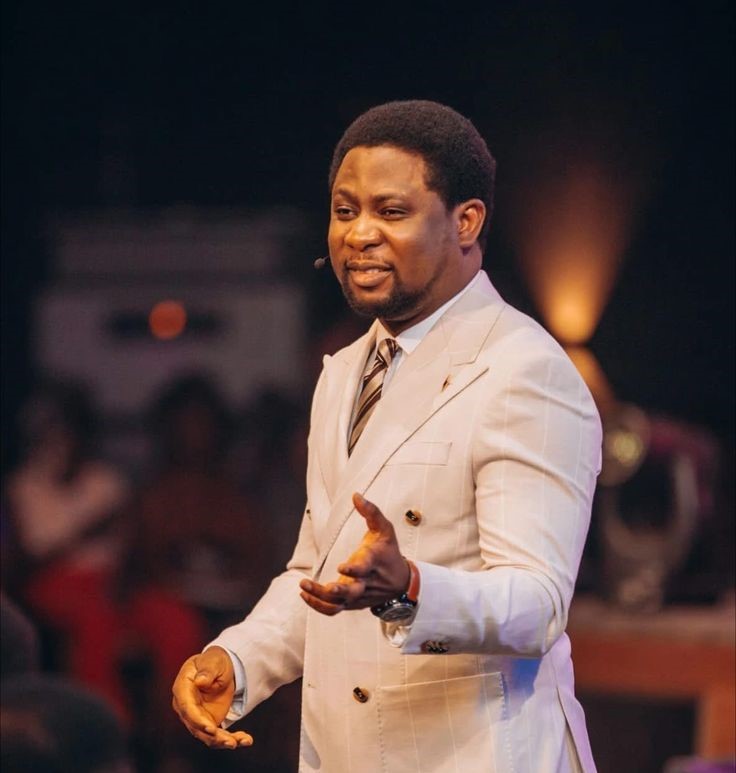
The Wealthy Place - 2 by Apostle Joshua Selman: MP3 Download & Sermon Notes
Foundation: The Wealth Is For All

Notes/Excerpt
These notes were taken while listening and may contain some errors. Please tap any sentence twice to suggest corrections.
By holding or selecting a paragraph, you can easily share snippets to friends or on your whatsapp status directly
Proverbs 22:2 — The rich and poor meet together; the Lord is the maker of them all. Scripture itself acknowledges that in the same earth there are two kinds of people — but God is not the one who separated them into rich and poor. He created them. They made themselves into those categories.
Ecclesiastes 5:9 — The profit of the earth is for all. God did not leave the profit of the earth for a particular tribe, race, or gender. He said whoever finds the key may take it. There is no tribalism, no racism, no gender inequality in the laws of prosperity. Even the king is served by the field.
Quick Recap: Why People Remain Poor
These are the core reasons established in the first part of this series:
- They have not decided to be wealthy
- They have not set it as a goal
- They lack understanding of the real formula for wealth and abundance
- They have not made the mental transition from poverty to wealth
The biggest difference between the rich and the poor is not the money in their pocket. Money is a receipt — a sign that something has already been purchased in the realm of mindset. Physical cash coming into one's hands is not the reason a person is rich; it is the proof that they already are. Until the mental adjustment happens, nothing done physically will substitute for a wrong mindset.
The Mindset of the Rich vs. the Poor
Since wealth flows from the quality of one's thinking, there is a distinct way the wealthy think that draws financial resources toward them, and a distinct way the poor think that repels those same resources.
-
The rich take responsibility; the poor believe in luck and chance
Every justly wealthy person — especially in the kingdom — believes they have a participation in the outcome of their financial life. They take full responsibility for their financial destiny.
The poor, by contrast, believe in luck, chance, and fate. They teach themselves that they are poor because God wills it, because of their background, because of government, because of the failure of relatives. They love passing responsibility. The flaw of government or circumstances reveals a flaw that was already in them — it did not create it.
In the name of Jesus, I take responsibility for the outcome of my finances. I stop blaming parents. I stop blaming friends. I stop blaming circumstances. I take full responsibility for the outcome of my financial destiny. -
The rich are disciplined and patient; the poor are indisciplined and impatient
Wealthy people understand the place of discipline and patience. A wealthy man worth ten million naira may still be staying in a small room because he is building his wealth. The poor man who receives a million will rent a house of six hundred thousand, buy a suit of a hundred thousand, and have nothing left.
There is enormous pressure — especially among young people — to prove that one is "making it." This pressure produces financial carelessness. People spend their entire savings to impress others who often cannot tell the difference between a cheap item and an expensive one. The effort to prove oneself poor.
The rich do not waste money. They do not live to impress. They live by plan and by discipline.
-
The rich believe in the law of process; the poor want results without process
notifications_active Stay Updated
Join the
Readsermonscommunities for daily nuggets and new sermon alerts.Wealthy people know that it takes time to build wealth. Prosperity is a function of time. The poor always want sharp, immediate results — and that impatience is what drives them into schemes, fraudulent promises, and get-rich-quick arrangements.
Breakthrough comes instantly, but the preparation for that breakthrough takes time. It is the manifestation that is instant, not the preparation.
- Joseph became Prime Minister in one day — but it took twelve years of preparation
- Moses led Israel out in one night — but it took forty years at the back side of the mountain
- Jesus fulfilled the plan of salvation in three days — but it took thirty years of preparation
Anything that does not subscribe to the law of process should be run from. The path to wealth can be accelerated, but not rushed. God is the God of speed, not rush.
I receive grace to follow the due process that brings lasting wealth. -
The rich plan and set goals; the poor are impulsive and reactive
Wealthy people always plan. Before they build, they count the cost. They work with budgets. They are not embarrassed to say "that is beyond my budget right now." There is nothing embarrassing about discipline.
The poor are erratic. They enter a boutique planning to buy one thing and leave having spent everything on an impulse. They collect a salary and it is gone by the weekend — not because the amount was small, but because there was no plan. This pattern repeats at every income level.
There is no reason to be under pressure to look rich. The goal is to pay the price and be rich. A wealthy man can wear his plain clothing and enter a simple car and go to the bank — while a poor man has taken a loan of millions to buy a car and rent an apartment, and will spend the rest of his life paying that debt.
Set goals. Work with budgets. Refuse to be impulsive. If you do not need something now, do not buy it.
-
The rich see challenges as opportunities; the poor see them as obstacles
Wealthy people never call difficulties "problems." They call them challenges. And they see challenges as opportunities to learn, to grow, to re-strategize.
The poor see challenges as stumbling blocks. One failed business attempt becomes the permanent evidence that a person is not meant to succeed. One job rejection becomes the reason to stop applying.
Two people can face the same difficulty. For one, it becomes a ladder. For the other, it becomes a load. The difference is entirely in their attitude toward the challenge.
In the name of Jesus, I change my attitude toward challenges. From today, I see challenges as an opportunity to learn, to improve, and to grow. -
The rich have courage and persistence; the poor give up easily
Wealthy people are courageous. When one door closes, they force another to open. When one strategy fails, they start another. They are persistent over their goals, even when no visible progress is showing.
A person who made a decision to break out of poverty five years ago and is still studying, still growing, still in the same house and same trouser — but still moving — is a rich man whose status will most certainly change.
personlibrary_books More SermonsApostle Joshua Selman
Enjoying this sermon? Browse more messages by Apostle Joshua Selman on Wealth at ReadSermons.
Failure is a prerequisite in the school of success. Rich people have failed more times than most people have tried. But persistence and courage keep them in motion when everyone else is criticizing or doubting.
Galatians 6:9 — Do not be weary in well doing, for in due season you shall reap if you faint not.
I refuse to faint. I refuse to give up. -
The rich are great risk-takers; the poor are afraid to take risks
Wealthy people step out of their comfort zone. They take risks — not foolishly, but deliberately. In the world of finance, the spelling of faith is R-I-S-K.
Life itself is a risk. Marrying is a risk. Starting a business is a risk. Getting a job is a risk. Not taking a risk is an even bigger risk.
The key distinction is between foolish risks and calculated risks. Wealthy people assess, then move. They do not move recklessly, but they do move. The easy-does-it mentality — the one that closes a shop the moment customers don't come — guarantees a lifetime of insufficiency. Growth is like a child being born: it requires pressure, pain, and persistence before the breakthrough comes.
-
The rich have a positive mental attitude; the poor are easily influenced by the opinions of others
Wealthy people have a strong sense of self and a healthy attitude toward criticism. They do not let the opinions of others kill their dreams. They know that whether they do well or poorly, people will talk — so they produce results and let the results answer their critics.
The poor have a poor esteem of themselves. They are easily moved away from their dreams by what people say. They abandon businesses, drop ideas, and shrink back from opportunities — all because of what someone might think or say.
Criticism is simply an opinion harshly expressed. It is not evidence. Whether a person does well or badly, they will be spoken about. Delivering oneself from the influence of the opinions of others is one of the most liberating decisions a person can make.
In the name of Jesus, I have a healthy mental attitude about myself. I refuse to let the opinions of others kill my dream.
The Grand Formula for Wealth and Abundance
This is the exact formula that every justly wealthy person — millionaire, billionaire, kingdom builder — operates by, whether they know it or not.
The amount of money received will always be in exact proportion to:
- The demand or need for what you do (the product or service offered)
- Your ability to do what you do (skill, expertise, proficiency)
- The difficulty in replacing you (uniqueness, competitive advantage)
This is a law. It is irrefutable. It works for anyone, any day, anywhere.
You may also like
How Not To Read The Bible: Doctrine Of Bible Interpretation 2
by Pastor Dolapo Lawal
Element One: The Demand for What You Do
Never try to provide a service where there is no notable demand for it. Many people start businesses without asking whether there is a sustainable need for what they are trying to offer. They are answering a question nobody is asking.
The first key to wealth is to recognise that you are only paid for something when there is a demand for it.
Preachers are not wealthy simply because they are preaching the gospel. They are wealthy because there is a demand for the grace they carry. For as long as that demand exists, they remain financially relevant.
There are two responses to the law of demand:
- Create a demand first — through exposure, orientation, and advertisement. Make people want what you offer.
- Satisfy an existing demand — identify what people already desperately need and supply it.
Always respond to demands and you will be rich.
Always be absolutely sure that there is sufficient and sustainable demand for the value or service before committing to provide it. Will the demand fade with time? Is it tied to a technology that is becoming obsolete? These are questions that must be answered before building a financial life around any service.
When a demand for a value or service becomes overwhelming or very high, the wealth index grows faster — and even in failure, the person can recover quickly, because the need is too great to ignore.
Examples of services with near-inextinguishable demand:
- Clean water — people will always need to drink
- Food — at minimum, people eat once a day
- Soap — bathing is a daily necessity
- Photography — birthdays, events, and milestones will never stop
- Spiritual solutions — for as long as there is sin, sickness, and oppression, there is demand
Element Two: Skill and Ability
There is a direct relationship between skill, expertise, proficiency, and financial abundance.
It is not enough to have something to offer. There must be skill in the offering. Those who are promoted in every organisation are those who are skilled. When a master does something, the proof of mastery is ease. Wealth gravitates toward people who are exceptionally good at what they do.
Many believers pray in tongues and fast but reject capacity building as carnal. The result is a person with anointing but without the skill to deliver what the anointing has equipped them to carry.
1 Samuel 16:18 — David was described as a mighty valiant man, a man of war, prudent in matters, and the Lord was with him. He was not just anointed — he was skilled. Psalm 78:72 — He led them with the integrity of his heart and the skillfulness of his hands.
Skill is an asset. A highly skilled person can enter a hotel in a strange city, begin to display their gift, and within moments attract opportunities that walk them out of any financial difficulty — because skill creates its own demand.
Study to show yourself approved — a workman that needs not to be ashamed. 2 Timothy 2:15
The wealthy are not lazy. They are some of the hardest-working people alive. They study. They consult mentors. They are willing to pay for knowledge. They practice. They refine. They do not produce mediocre work and hope anointing will cover for the absence of skill.
Element Three: The Difficulty in Replacing You
To be valued means to not be easily replaceable.
When your uniqueness, strategy, or competitive advantage stands you out such that it becomes very difficult to find a worthy alternative to you — you will be very wealthy.
Signs that you are not yet valued:
- Your absence is easily forgotten and ignored
- Others can immediately fill the gap you leave
- There is nothing in what you offer that cannot be found more conveniently elsewhere
When there is no easy alternative to you, people will pay whatever price you name. This is why professionals — doctors, engineers, architects, lawyers — command high incomes. Their licensing and training limit the number of people who can replicate what they do, making the demand consistently high and the supply carefully restricted.
Creativity is the key to becoming irreplaceable. Creativity is the ability to birth new or improved ideas. It is what makes the difference between a shop that looks like every other shop and one that people travel to specifically. It is what turns a gift into a business, a passion into a platform, and a service into a legacy.
The first revelation of God in Scripture was not as a Saviour but as a Creator. He created humanity in that image. To be creative is to walk in the original design.
You lose in the world of prosperity by becoming like every other person. Your uniqueness is what stands you out.
Personal Evaluation
These are five questions to answer honestly and work through deliberately:
- What are the major solutions, values, or services I provide? Be specific. Knowing exactly what you offer is the first step toward improving it.
- Is there a demand for the solutions I am providing — and if yes, how great and sustainable is that demand? Will it fade with time? Can civilisation make it obsolete?
- Do I possess all the skill and expertise required to provide these solutions excellently? Am I even aware of what those skills are?
- What two things can I do daily to become exceptional in my field? Write them. Begin them.
- What are three ideas I have that will be in high demand? Pick one. Start working on it. Ideas are like a vehicle — you can only go to one location at a time.
There is a wealthy place. It is a place where the financial pressure that has controlled decisions, strained relationships, and delayed assignments is lifted. It is a place where God can be served with full peace of mind, where assignments can be funded, and where the blessing of Abraham flows outward to families and territories. That place is not a dream — it is a destination, and the path to it is through wisdom, decision, skill, and the willingness to be uncommon.
You are on your way.
Apostle Joshua Selman
Enjoyed this sermon? Browse more messages by Apostle Joshua Selman on ReadSermons.
Comments
0 comments
No comments yet. Be the first to share.
Stay updated with Readsermons
To be notified on every sermon release, join the group that suits you best:
For nuggets & Sharable snippets follow us.
headphones Media & Resources
Listen to Sermon
Download initiated! Follow us to be the first to get new sermons by Apostle Joshua Selman.
The Wealthy Place - 2
Apostle Joshua Selman • 77MB
Download initiated! Follow us to be the first to get new sermons by Apostle Joshua Selman.
Your download
is starting! 🎉
Connect with us directly for more powerful teachings.
The Wealthy Place - 2
00:00:00 / 00:00:00