



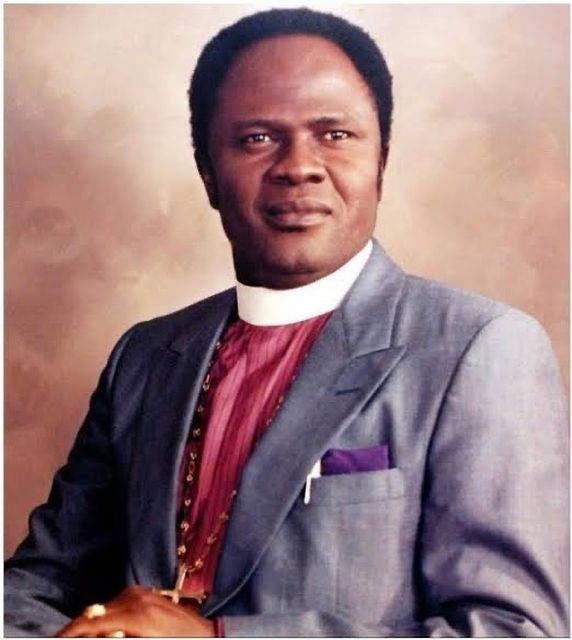
Should I Confess? by Pastor Dolapo Lawal: MP3 Download & Sermon Notes
Repentance As A Continuous Practice
Notes/Excerpt
These notes were taken while listening and may contain some errors. Please tap any sentence twice to suggest corrections.
By holding or selecting a paragraph, you can easily share snippets to friends or on your whatsapp status directly
Repentance as a Continuous Practice
This is a continuation of a series on repentance. The subject is very delicate — there is a dichotomy, two functionalities, and if you miss it you can slide into hardness of heart. Once you get into hardness of heart, God raises you like Pharaoh — as a vessel of wrath. And there is no good way to say this: God is the only boss who fires you and leaves you working. He told Saul he was rejected and Saul reigned for thirteen more years.
Romans 1 shows what God does with people who persistently reject his mercy. When God leaves you to do what you like, that is his judgment. The people God loves, he chastises.
The Nature of Childishness in the Church
1 Corinthians 13:11 — When I was a child I spoke as a child, understood as a child, thought as a child. But when I became a man I put away childish things. Paul is not addressing the church in Corinth about childlikeness — he is addressing childishness. What are the childish things he is referring to?
Looking at the context of the whole letter:
1 Corinthians 3:1–3 — I could not speak to you as spiritual people, but as carnal, as babes in Christ. For where there is envy, strife, and division among you, are you not carnal, behaving like mere men?
Childish characteristics in the Corinthian church: being divisive and envious; limited in understanding; an obsession with spectacular manifestations over love and character. The Bible says pursue love, and desire spiritual gifts — love first. You can be speaking the word and releasing darkness if the fountain is contaminated. Words are spirit and life — not grammar. Satan used scripture in Matthew 4. He can be using scripture and saying darkness. That is why misappropriation of truth is possible.
notifications_active Stay Updated
Join the Readsermons communities for daily nuggets and new sermon alerts.
Spiritual growth happens in the context of character development. If you are envious and speaking in tongues, you are carnal — and those tongues may be distracting you from the real issue.
Four Common Misunderstandings About Confession of Sin
Confession Is Begging God for Forgiveness
Some think forgiveness depends on how hard they cry, how long they fast, or what mood God is in when they come to him. This is wrong.
Forgiveness of sins is a legal issue. You do not beg for it — you receive it. It has already been accomplished through the finished works of Christ, and when you put your faith in what Jesus has done you appropriate it into your life.
Hebrews 10:12 — This man, after he had offered one sacrifice for sins forever, sat down at the right hand of God.
When the Bible says he ever lives to make intercession for us, it does not mean Jesus is in heaven praying to God on your behalf — you would have to pity him if that were true, given how many people are sinning right now. His intercession is not a prayer. Intercession means to help. His death, burial, and resurrection is a monument of intercession. When God's justice comes to deal with your sins, Jesus stands at his right hand as that monument — you have punished them in me. That happened once and for all.
personlibrary_books More SermonsPastor Dolapo Lawal
Enjoying this sermon? Browse more messages by Pastor Dolapo Lawal on Repentance at ReadSermons.
God can forgive your sin but he cannot forgive your guilt. Guilt is a feeling. His part is the taking away of the sin. Guilt is released when you put your faith in what he has done and say: it is sufficient.
If you are led to fast in repentance, the fasting is not to beg God to speak — it is to quiet your flesh so you can hear what he is already saying. Fasting silences you, not him. We do not appease God. Appeasement is for oracles.
Confession Will Make You Sin-Conscious
Confession without the gospel produces condemnation. Confession in the light of the gospel produces transformation.
Condemnation is seeing only your weakness — it says this is the best you can be. Transformation is God showing you in the gospel what you can become. Condemnation is a view of you from your past. Transformation is a view of you from what the gospel has called you to be.
Confession in the light of the gospel makes you Christ-conscious, not sin-conscious — and it strengthens your resolve to live as God would have you do. The idea of acknowledging your sin is asking God for help and driving you toward prayer, not making you stay away.
Confession Means Listing Every Sin You Have Done
Sin of commission, sin of omission, and sins of ignorance — if confession required cataloging every wrong thing you have ever done, who could be truly free? This view limits the power of the gospel because it assumes forgiveness depends on the accuracy of your memory rather than the sufficiency of Christ's work.
In the gospels, Jesus forgave people who did not formally repent — the man lowered through the roof, the woman with the issue of blood. He is showing you that God can forgive sins the person did not quote-unquote repent of in the act. He can forgive the act of sin. What he cannot forgive is the nature of sin — and that nature was dealt with in the new birth.
John 15:3 — Ye are cleansed by the words that I speak unto you. The cleansing comes from hearing what he said — not from your speaking a catalog of mistakes.
You Must Confess to a Pastor or Priest
John 20:23 — Whoever's sins you forgive are forgiven; whoever's sins you retain are retained. Some read this and conclude that apostles were given power to forgive sins. No human being has that power.
Look at the parallel accounts: Luke 24:46–47 shows the same post-resurrection appearance and the same charge — and Luke renders it as: repentance and remission of sins should be preached in his name. Mark renders it as: go into all the world and preach the gospel — he who believes is saved, he who does not is condemned. His sins are retained.
John 20:23 is the same commission — rendered in John's language. The apostles do not forgive sins by hearing confession. They preach the gospel, and it is the gospel that releases forgiveness or retains condemnation. It is through preaching the gospel that sins are remitted or retained — not through private confession to a minister.
Softening a Hardened Heart
There is a way you can harden your heart. Mark 8:13–21 — Jesus warns the disciples about the leaven of the Pharisees and the leaven of Herod. Their response: is it because we have no bread?
They had just witnessed the multiplication of bread. They did not take any with them. And the moment Jesus says "leaven," they think: it is because we don't have food.
Jesus says: is your heart still hardened? Having eyes, do you not see? Having ears, do you not hear? And do you not remember?
Remembering is a choice. It is not a spiritual gift. Any time your thinking starts from what you do not have, your heart is hardened. If your default frame is: it's because I don't have this, it's because they didn't help me, it's because nothing works for me — your heart is hardened.
The antidote is to choose to remember. Remember where you were. Remember how he came through. Remember the seasons of your life where God singled you out and favored you. Start your thinking from what he has done, not from what is still lacking. That is repentance — seeing things God's way, including the way he has already provided.
Numbers 14:27–29 — When the children of Israel said "because the Lord hates us, he brought us here to die," God swore: as I live, just as you have spoken in my hearing, so I will do. He promised them life and they said death — and they got what they said. You are not permitted to say God doesn't like you. Once you start framing your destiny that way, you are setting yourself up for self-sabotage.
Do not start your thinking from what you do not have. Choose to remember where God brought you from and what he has already done.
Pastor Dolapo Lawal
Enjoyed this sermon? Browse more messages by Pastor Dolapo Lawal on ReadSermons.
Comments
0 comments
No comments yet. Be the first to share.
Stay updated with Readsermons
To be notified on every sermon release, join the group that suits you best:
For nuggets & Sharable snippets follow us.
headphones Media & Resources
Listen to Sermon
Download initiated! Follow us to be the first to get new sermons by Pastor Dolapo Lawal.
Should I Confess?
Pastor Dolapo Lawal • 28MB
Download initiated! Follow us to be the first to get new sermons by Pastor Dolapo Lawal.
Your download
is starting! 🎉
Connect with us directly for more powerful teachings.
Should I Confess?
00:00:00 / 00:00:00