




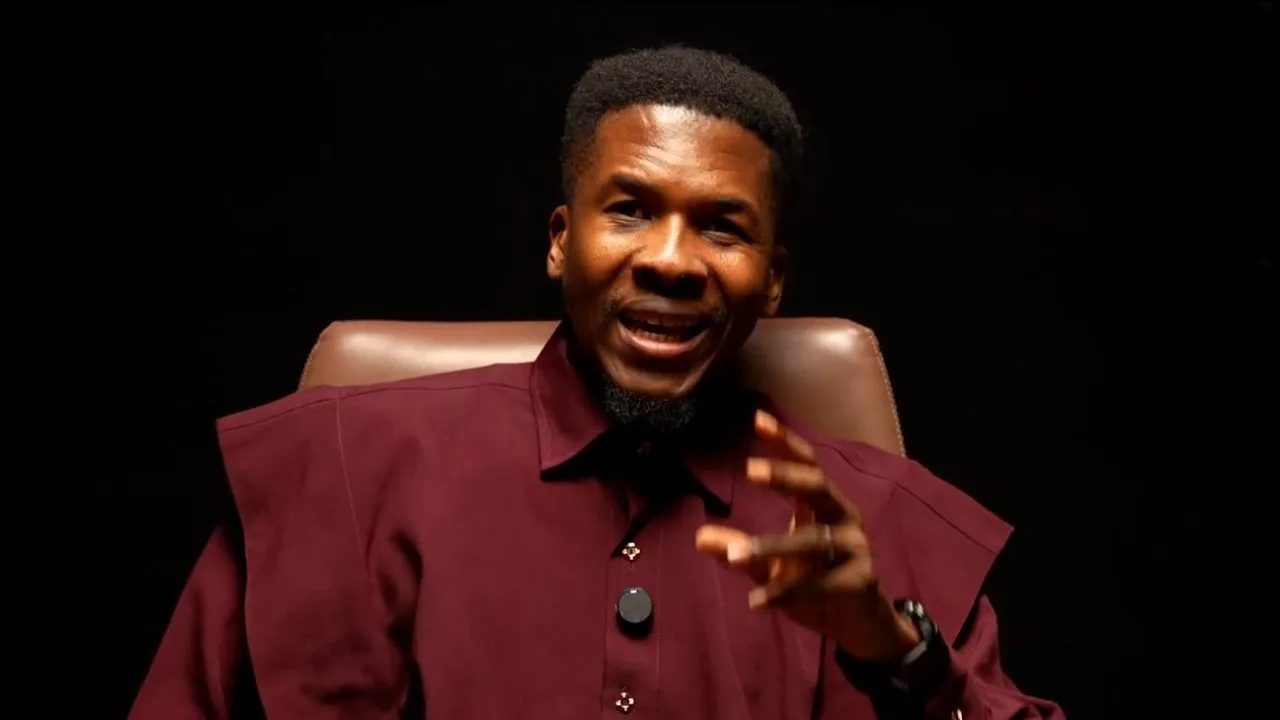
Be Separate From The World! - 100 Days Of Discipleship - Day 76 by Apostle Emmanuel Iren: MP3 Download & Sermon Notes
Why Salvation From Egypt Demands A Complete Exodus From Its Culture And Every Lingering Compromise.
Notes/Excerpt
These notes were taken while listening and may contain some errors. Please tap any sentence twice to suggest corrections.
By holding or selecting a paragraph, you can easily share snippets to friends or on your whatsapp status directly
Salvation by Blood Alone — But Don't Stay in Egypt
The prophetic imagery of the Old Testament was designed by God to teach New Testament realities through story and symbol. The deliverance of the children of Israel from Egypt was a metaphor of salvation. The crossing of the Red Sea was a metaphor of baptism. The receiving of the law at Sinai prefigured the receiving of the Holy Spirit and consecration.
Begin with the Passover. What secured the children of Israel that night was not their race, their accent, their door material, or how well-behaved the particular family was. The only thing God gave as a guarantee was this: When I see the blood, I will pass over.
If the Egyptians had known about that covenantal agreement and put blood on their lintels, they too would have been saved. So essentially, what saved anyone that night was not who they were — it was the blood on their lintel.
That is exactly what salvation is. There is no other name given under heaven by which men should be saved, but by the name of Jesus.
Romans 10 — There are many people, in Israel and in other nations, who are well-behaved but have not submitted themselves to the righteousness which is of God. That righteousness is not achieved by behavior — it is received by submitting to the sufficiency of Christ's sacrifice. Put the blood on the lintel, and that is all you need to be saved.
Pharaoh's Negotiations — The Compromises the Enemy Offers
notifications_active Stay Updated
Join the Readsermons communities for daily nuggets and new sermon alerts.
After the Passover, after that great deliverance, God did not let the children of Israel stay in Egypt. The same night of the Passover, at midnight, the instruction was to leave. They crossed the Red Sea and were out for good. The promise: The Egyptians you see today, you will see them no more.
But before that final night, Pharaoh tried to negotiate a compromise — and those negotiations carry profound prophetic weight for every believer.
-
First Negotiation — "Worship God, but stay in Egypt"
Exodus 8:25 — Pharaoh said: "Go, sacrifice to your God, but here in the land." In other words: if it is worship you want, you can have it right here. Why must your life radically change? Stay in Egypt — just add God to the life you already have.
This is the offer many accept. Saved by grace, yes. But stay in Egypt. Keep the same culture, the same conduct, the same company. Moses refused. Every believer must refuse.
-
Second Negotiation — "Go, but don't make it permanent"
personlibrary_books More SermonsApostle Emmanuel Iren
Enjoying this sermon? Browse more messages by Apostle Emmanuel Iren on Separation at ReadSermons.
Pharaoh then offered: go, but leave your children and your old men behind. If you leave your children, you will come back. Leave something behind as insurance — something that ties you to Egypt. Do not let your departure be final.
Many believers do exactly this. They are technically saved, technically in church — but something has been left behind in Egypt as a safety net. A relationship. A habit. A compromise. Something that ensures a path back.
-
Third Negotiation — "Go, but leave your cattle"
The final offer: go, but leave your cattle — your business, your financial dealings. Many claim to be Christians but the way they do business, the way they handle money, they still operate as if they are in Egypt. No difference in conduct, no difference in ethics. Everything crossed the Jordan except the cattle — and a saved Christian cannot leave their business practices in Egypt.
The Danger of Getting Comfortable in Egypt
You may also like

Walking Through The Epistle: Colossians 1 (part Ii)
by Pastor Dolapo Lawal
You can become so inoculated with small compromises that you have found a way to morph into the kind of believer who can hear challenges like these constantly and feel no real incentive for change.
The pattern usually runs like this: a sin happens and there is immediate conviction — grief, remorse, a genuine horror at the failure. But when it keeps happening, the soul grows weary of confessing. And if care is not taken, a new ideology is constructed that accommodates the reality of the struggle. The weakness becomes explained, then excused, then normal.
Colossians 3:12 is one marker of how far this drift can go: Paul instructs the church to put on mercy, kindness, humbleness of mind, meekness, longsuffering, and — notably — forgiveness. A regular churchgoer can be chronically unforgiving. These are the specificities. Salvation does not automatically produce them. Discipleship does.
Almost every basic standard of consecration is now debated among modern believers. Simple things — that believers should not cohabitate before marriage, that the marriage bed should remain undefiled — have become subjects of fierce theological debate. The reason for the debate is not theological. It is that people are looking for the most convenient framework for the flesh to keep thriving.
The Call to Come Out
2 Corinthians 6:17 — "Come out from among them and be separate, says the Lord. Touch not the unclean thing, and I will receive you."
There must be a clear difference. When people see a believer, they should not see Egypt. They should not see the same culture, the same talk, the same patterns. Contact with the world is unavoidable — Jesus himself prayed not for believers to be removed from the world but to be kept from the evil in it. It is possible to have contact without contamination. But it requires intentionality.
A righteous person falls seven times and rises again — this is the provision. The problem is a totally different ideology: staying on the floor and finding justifications for it. Never come to a point where you begin to excuse the weaknesses in your life.
If you no longer even weep over something that once broke you — that absence of grief is itself a warning sign. Cry that you no longer cry. "This is not who I am. I cannot continue like this."
Colossians 3:1–2 — "If you then be risen with Christ, seek those things which are above, where Christ is seated at the right hand of God. Set your affections on things above, not on things on the earth." This is an active, continuous discipline — not a one-time declaration. The mortification of the old nature is ongoing work.
A Decisive Step
Look at your life honestly and name the areas where Egypt still has a claim. Call them out by name — temper, lust, bitterness, compromise in business, unforgiveness, whatever it is. And then refuse to excuse them.
If you stay in Egypt long enough, you will end up serving Pharaoh and not God. The drift is gradual and its end is always service to the wrong master.
Make the decision to leave — fully, permanently, cattle and all. By the help of God and the power of the Holy Spirit: come out from among them. Let there be a change. Trust God. Cry out to God. Let your departure be complete.
Apostle Emmanuel Iren
Enjoyed this sermon? Browse more messages by Apostle Emmanuel Iren on ReadSermons.
Comments
0 comments
No comments yet. Be the first to share.
Stay updated with Readsermons
To be notified on every sermon release, join the group that suits you best:
For nuggets & Sharable snippets follow us.
headphones Media & Resources
Listen to Sermon
Download initiated! Follow us to be the first to get new sermons by Apostle Emmanuel Iren.
Be Separate From The World! - 100 Days Of Discipleship - Day 76
Apostle Emmanuel Iren • 6MB
Download initiated! Follow us to be the first to get new sermons by Apostle Emmanuel Iren.
Your download
is starting! 🎉
Connect with us directly for more powerful teachings.
Be Separate From The World! - 100 Days Of Discipleship - Day 76
00:00:00 / 00:00:00