



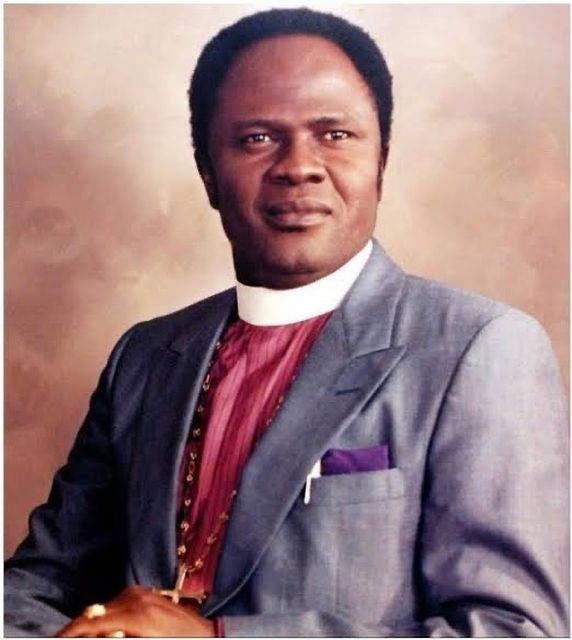
Jesus And Women by Apostle Emmanuel Iren: MP3 Download & Sermon Notes
How Jesus Dismantled Cultural Barriers To Empower Women For Their Divine Calling And Ministry.

Notes/Excerpt
These notes were taken while listening and may contain some errors. Please tap any sentence twice to suggest corrections.
By holding or selecting a paragraph, you can easily share snippets to friends or on your whatsapp status directly
The Cultural World Jesus Stepped Into
A very radical — not just theological but countercultural — text in its day is Galatians 3:28: "There is neither Jew nor Greek, neither slave nor free, neither male nor female, for you are all one in Christ." To understand how radical this was, you have to understand the prevalent culture of that time.
The Greeks — at the forefront of philosophy, music, and the arts — how did they treat their women? According to Plutarch, a second-century Greek biographer, the average woman had the social status of a slave. Not that they were slaves — it just didn't make a difference. They were kept locked away, unable to go out freely except when accompanied by a male slave. In an age that placed great value on education, only boys were allowed to go to school. Girls were not permitted to attend at all. Perhaps the most striking evidence is a letter from one Hilarion to his wife at the point of her giving birth. His message read: "If it is a male child, let it live. If it is a female child, cast it away." Female children were seen as a social burden and a liability.
Was the Roman culture any different? It was arguably worse. Men had absolute control over their children — including the legal right to kill them. Even married daughters could be killed. When Augustus Caesar came, he reinforced the law and extended it: men could kill their wives on suspicion of adultery.
What about the Hebrew culture? One of the things Jesus repeatedly said was that the Jews had made the word of God of no effect because of their traditions. The rabbinical writings reflect extreme views on women. One declared: "Let the words of the law be burnt rather than being committed to a woman. And anyone who teaches his daughter the law, it is as though he taught her lechery." Another: "He who talks to a woman in public brings evil upon himself. One is not so much as to greet her."
Jesus' Countercultural Treatment of Women
When you understand this background, familiar passages take on completely different weight.
When Jesus visits Mary and Martha's house, Martha does exactly what her culture permits — she stays in the kitchen and serves. Jesus says no. "Mary has chosen that good part, and it shall not be taken away from her." This was a radical message to the women: the gospel is not for men alone.
In John 4, Jesus engages the Samaritan woman in full conversation — shocking on two levels. A Jewish man would not speak to a Samaritan at all, let alone a Samaritan woman. Even she was taken aback. And Jesus' response was essentially: "If you knew the gift of God and who it is that is talking to you, you would have asked him for living water." As if to say: you qualify for everything God has to offer. Be bold to ask. Don't let anyone count you out.
The disciples, when they returned and found him speaking with her, marveled — the Bible specifically says so in John 4:27. This sponsors the reading that Jesus was not actually hungry when he sent them away. He knew their cultural bias would inhibit his evangelism to that woman, so he sent them away deliberately, sat by the well, and by the time they returned the conversation was done.
Then there is the resurrection. Salvation according to Romans 10:9–10 is predicated on faith and confession in the resurrection of Christ. And when Jesus rises from the dead, of all people to appear to first, he appears to women and says, "Go tell Peter and the disciples." One rabbinical writing explicitly stated that a woman's witness does not count in court. Yet the first witness of the resurrection of Christ was a woman. If Jesus were pandering to the culture of his day, he would not have done that. It was deliberate.
Paul and Women in Ministry — What He Actually Did
The standard rule of Bible interpretation: move from what is known to what is unknown. So what do we know about how Paul actually worked with women?
- Women could prophesy. In 1 Corinthians 11:5, Paul gives instructions on how women should prophesy — covering, hair, etc. If he is instructing women on how to prophesy, he clearly did not intend total silence. You cannot in chapter 11 instruct women on how to prophesy and in chapter 14 tell them to be mute altogether.
- Philip's daughters were prophets. Acts 21:8–9 — Philip had four daughters who prophesied. They were recognized as prophets.
- Phoebe was a deacon. Romans 16:1 — Paul commends Phoebe as a "servant of the church," and the Greek word translated "servant" is the same word elsewhere translated as deacon. Some have argued from 1 Timothy 3 that a deacon must be "husband of one wife," implying male. But Phoebe was a deaconess — openly and without scandal.
- Priscilla was a teacher. Romans 16:3–4 — Paul greets "Priscilla and Aquila, my fellow workers in Christ," naming the woman first. In that cultural context, this would not have been done by accident — it implies she was the more prominent figure. In Acts 18, both Priscilla and Aquila expounded the word of God more perfectly to the popular Apollos. Both were teachers. And Paul calls a woman a co-laborer — the same title he gave Timothy, who was a pastor.
- Junia was notable among the apostles. Romans 16:7 — Paul greets Andronicus and Junia as those who are "of note among the apostles." Whatever the precise interpretation, at the very least she was notable, and these were people who had churches in their homes — which in that era was no different from church.
Given this, it is impossible to conclude that Paul intended women to be universally silent. It is inconsistent. Something else was happening in those difficult texts.
Interpreting the Difficult Texts
1 Corinthians 14:34 — "Let your women keep silent in the churches."
Read the context. Paul is addressing the rowdiness of people speaking over each other when prophecies are being interpreted. He says in verse 33: "God is not the author of confusion but of peace." It is in that context — the context of interpreting prophecy in order — that he says, "Let your women keep silent." The word "silence" must be interpreted in context. Bible scholars including Mike Winger and Anthony Thiselton (whose commentary goes in depth on this passage) agree that the silence here means refraining from a particular type of speech — the rowdiness of speaking over others to question or attempt interpretation out of turn. Additionally, in that culture, men were educated and women were not — "If you want to ask, ask your husbands at home" was not a theological decree but a practical instruction for maintaining order. There is also evidence that the synagogue culture of men and women sitting separately still applied in some churches, making disruptive cross-room dialogue a real concern.
1 Timothy 2:12 — "I do not permit a woman to teach or to have authority over a man."
This one is tougher, but the context is key. Paul is not discussing church administration — he is discussing the home and family structure. He uses the argument of Adam being formed first, then Eve. He references the fall through Eve's deception. He concludes with childbearing. Childbearing is family language, not church-office language.
Also critical: the Greek word translated "woman" here — gunē — can refer to a wife or to women in general. Given the domestic framing of the whole passage, the more natural reading is that Paul is addressing the wife in the context of marriage, not all women in all church contexts.
The same Paul who wrote the difficult texts also walked openly with women in ministry, commended them by name, called them co-laborers, and declared there is neither male nor female in Christ. Move from what is known to what is unknown. The troublesome texts cannot be taken at face value as a total ban on women in ministry.
Women can go ahead and fulfill God's call on their lives — evangelizing, discipling, teaching, being a blessing — because there is neither male nor female in Christ.
Apostle Emmanuel Iren
Enjoyed this sermon? Browse more messages by Apostle Emmanuel Iren on ReadSermons.
Comments
0 comments
No comments yet. Be the first to share.
Stay updated with Readsermons
To be notified on every sermon release, join the group that suits you best:
For nuggets & Sharable snippets follow us.
headphones Media & Resources
Listen to Sermon
Download initiated! Follow us to be the first to get new sermons by Apostle Emmanuel Iren.
Jesus And Women
Apostle Emmanuel Iren • 11MB
Download initiated! Follow us to be the first to get new sermons by Apostle Emmanuel Iren.
Your download
is starting! 🎉
Connect with us directly for more powerful teachings.
Jesus And Women
00:00:00 / 00:00:00