



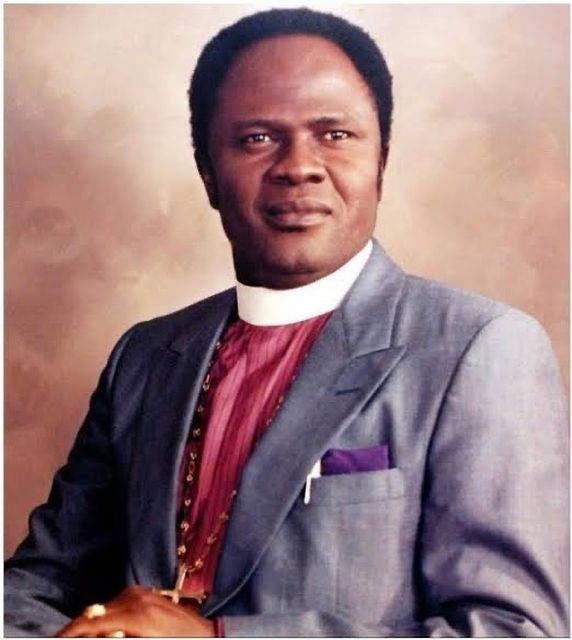
Doctrine Of Bible Interpretation Vi by Apostle Emmanuel Iren: MP3 Download & Sermon Notes
God Only Defends What He Said
lightbulb Message Summary - Key Nuggets
- Wrong interpretation of scripture has caused wars, deaths, and shattered lives across history.
- God is only committed to defending what he actually said — not what people claim he said.
- Hermeneutics — the science of interpretation — equips every believer to read scripture accurately.
- Language, figures of speech, and cultural context are the three major barriers to proper Bible understanding.
Notes/Excerpt
These notes were taken while listening and may contain some errors. Please tap any sentence twice to suggest corrections.
By holding or selecting a paragraph, you can easily share snippets to friends or on your whatsapp status directly
The Stakes of Interpretation
Have you ever been in a situation where you were misinterpreted? Something you said was misconstrued and it almost damaged relationships. That is how God feels many times, because many people have stood on his holy platforms and said God said what he did not say.
Proper interpretation is not a minor academic concern. It has caused wars between nations. Before Germany existed as a country, the king of Prussia and the ambassador of France were in a formal meeting where someone was taking the minutes. In editing the conversation, he made it appear as if one party had insulted the other. When France read it, they got angry and declared war. Thousands of people died because of wrong interpretation.
The same thing is happening with the word of God. Some people read the Bible and come up with ordinances — things you can or cannot do — that your life may depend on. When a denomination believes that blood transfusion is wrong, that is a matter of life and death. People have died because of someone's doctrine.
A one of the pastors once walked into a restaurant and found a young man he used to know — vibrant in church — who said he was no longer a Christian. Why? A man of God had preached convincingly and decreed: "If you surrender your Isaac in sacrifice, wait six months and see what God will do." Not only did the young man empty his account, he went home and persuaded his parents to give their only car to the church as a prophetic seed. Two, three years passed. The promise was six months.
Unfortunately, not many people have enough discernment to say the pastor was wrong. Their conclusion may be that it is God who is the problem. But God is only committed to defending what he said. If a pastor is saying what he thought God said — that God did not say — it will not command divine backing.
These things have real implications. A young man from a poor background wanted to further his education. Sponsors were available, but could only send him to a public university. He refused, saying God told him to attend a private one. When asked how God told him, he said he saw it in the word. He opened 1 Timothy 3:13 — "Those who have used the office of a deacon well purchase to themselves a good degree" — and concluded that "good degree" meant a private university. Five years later, he was still waiting.
notifications_active Stay Updated
Join the Readsermons communities for daily nuggets and new sermon alerts.
God is only committed to what he said. If you are angry at God because you think he did not fulfill a promise he never actually made in the first place, that is why proper interpretation is necessary.
What Is Hermeneutics?
When you come to understanding interpretation, there is a word for it: hermeneutics. Spelled H-E-R-M-E-N-E-U-T-I-C-S. Hermeneutics is simply the science of interpretation — interpretation in general. It is not actually a doctrinal word, even though we use it a lot in theology. It is the science of interpreting an author's language.
Many have been taught to read the Bible in a very loose way — as if you just hold the Bible, say "Lord, anywhere I open, you are talking to me," and whatever you land on is the word of God. God can honor the faith of ignorant people. But more often than not, you will come to a point where your experience will be this: the days of ignorance God winked at. He is now calling everyone to grow up.
There is a hermeneutics joke. Somebody stretched his Bible: "Lord, as I open now, you are talking to me." He opened and saw, "Judas went and hanged himself." He quickly closed it. He opened again. "Go and do likewise." He closed it again. "What you do, do quickly."
The Bible is spiritual in its origin, but there is a human element. There are literally human authors. And so it means that normal interpretive skills apply. The writings of Paul were letters. Imagine someone writes you a letter and you start reading from the middle. You must understand the context, the audience, the pretext, the posttext, what happened before, what happened after. Only then can you understand the meaning.
The Bible was not written to you. The address is there — to the people of Ephesus, the faithful in Christ Jesus, not to you. It is beneficial to you, but it was not written to you. You must now see how much of it applies in your context.
Apostle Emmanuel Iren
Enjoying this sermon? Browse more messages by Apostle Emmanuel Iren on Bible Interpretation at ReadSermons.
No matter how prayerful you are, no matter how much fasting you do, if you do not learn to interpret the Bible well, you are still susceptible to spiritual attacks. Because the major attacks of the devil are attacks on interpretation. When the serpent first appears in the Bible, it was on matters of interpretation: "Did God say?" You will be tested based on your understanding of what God said.
It was wrong interpretation first and foremost that made Eve vulnerable. She replied that they should not even touch the fruit lest they die. Did God say that? Genesis 3:3. God did not say that. Interpretation entered.
The temptation of Jesus was also interpretation. God the Father had spoken from heaven: "This is my beloved son in whom I am well pleased." And then the devil came: "If you are the Son of God..." The temptations were all premised on that question. See Matthew 4:3.
Hermeneutics assumes that there are diverse modes of thought and ambiguities of expression among men. It aims to remove the differences between a writer and his readers so that the meaning comes through clearly.
Paul Said His Writings Are to Be Understood
Peter said that some things Paul wrote are hard to understand. But what did Paul say about his own writings? In Ephesians 3:1-4, he said, "By revelation he made known unto me the mystery, as I have briefly written already, by which, when you read, you may understand." Paul said when you read it, you will understand.
In 2 Corinthians 1:13, he said, "We are not writing any other things to you than what you read or understand." Paul was not deliberately trying to confuse. He wrote it to be understood. It means the barrier exists in other things — not in Paul's intention. If you learn the interpretive skills and understand the basic laws of hermeneutics, you will be able to read and understand on your own.
Common Barriers to Bible Interpretation
1. Language
The King James Version, the most popular Bible translation to date, is not written in modern-day grammar. Some people think KJV language is spiritual — that if you are reading NIV or NLT, it does not feel like God talking. But Jesus in the incarnation never spoke English. That is not the heavenly language. That is why you have missed his voice many times — you were expecting something in KJV language.
There were words used in the KJV that are now obsolete. The doctrine is not obsolete; the mode of communication is now obsolete. For instance, when the Bible says "you have exalted my head like the horn of a unicorn," some atheists use this to claim the Bible is a fairy tale book. But that was old language for rhinoceros. An 1828 Noah Webster dictionary defines unicorn simply as an animal with one horn, and it applies to the rhinoceros. So the language barrier was not created by the authors themselves. That gap came by time. An interpreter must do some language study. That is why in preaching we say, "This is what this word means in the Greek."
Language barriers can simply be resolved by getting newer translations. Some translations, however, are not actually translations — they are commentaries. The Message Bible, for example, is a commentary, not a translation. It is not the exact words. It takes the text and puts it in modern language. When it becomes a commentary, it becomes subjective, and you must judge it the way you judge sermons — not treat it as the word of God.
2. Figures of Speech
Like any other literary material, the Bible is full of figures of speech — sarcasm, simile, metaphor, hyperbole. In 2 Corinthians 11:16-18, when Paul said "If otherwise, yet as a fool receive me," that is sarcasm. When Jesus said "I am the door" (John 10:9), that is a metaphor. When the Bible says "Except you hate your own life, hate your father, hate your mother, hate your wife" (Luke 14:26), that is a figure of speech — hyperbole — you know that.
In John 21:25, it says there are many other things Jesus did, and if they had all been written, the world itself would not be able to contain the books. Some atheists have tried to calculate mathematically what that implies. This is hyperbole — figure of speech.
3. Culture
The Bible says in 1 Peter 5:14, "Greet one another with the kiss of charity." In Romans 16:16, "Greet one another with a holy kiss." This appears in four places in the New Testament. Even Jesus, when speaking about the woman with the alabaster box, said in Luke 7:45, "You gave me no kiss, but this woman has not ceased."
What the Bible was advocating was cordial interaction — and you interpret that in your context. You can hug in your context or shake hands in your context. Be cordial. The cultural context of that time included kissing as a normal greeting. There are still cultures today where this is the practice. The point is not the cultural form but the spiritual principle: be warm, be cordial.
The Prophetic Nature of Old Testament Writing
The most important barrier to remove is understanding the prophetic nature of Old Testament writing. Herod called the chief priests and asked where the King of the Jews was to be born according to scripture. They went to Micah 5:2 — "But you, Bethlehem Ephrathah, though you are little among thousands of Judah, yet out of you shall come forth one who will be ruler in Israel, whose goings forth are from of old, from everlasting." If you read the book of Micah only in context, you may not understand that this was a prophecy about Christ.
The reason why the Old Testament talks about Christ but you do not see it is because it is veiled. Why was it veiled? If they had known, they would not have crucified the Lord of glory. So God veiled it deliberately, so that the rulers of the earth would continue to play guesswork until everything was fulfilled.
Apostle Emmanuel Iren
Enjoyed this sermon? Browse more messages by Apostle Emmanuel Iren on ReadSermons.
Comments
0 comments
No comments yet. Be the first to share.
Stay updated with Readsermons
To be notified on every sermon release, join the group that suits you best:
For nuggets & Sharable snippets follow us.
headphones Media & Resources
Listen to Sermon
Download initiated! Follow us to be the first to get new sermons by Apostle Emmanuel Iren.
Doctrine Of Bible Interpretation Vi
Apostle Emmanuel Iren • 21MB
Download initiated! Follow us to be the first to get new sermons by Apostle Emmanuel Iren.
Your download
is starting! 🎉
Connect with us directly for more powerful teachings.
Doctrine Of Bible Interpretation Vi
00:00:00 / 00:00:00