
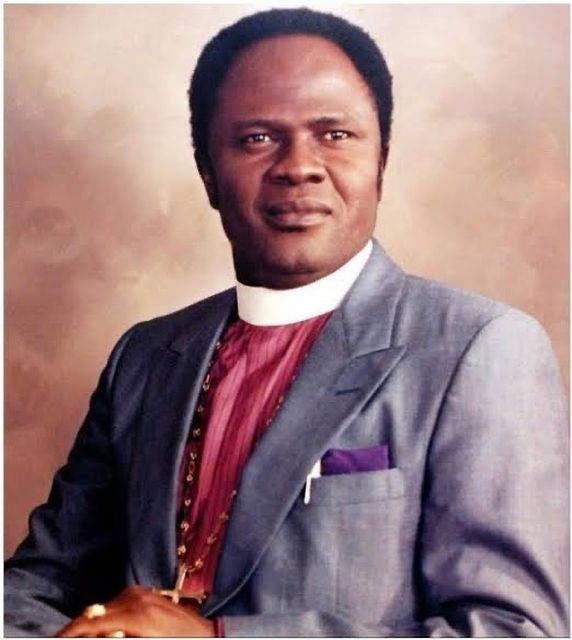



Look Into The Book Of Ephesians by Apostle Emmanuel Iren: MP3 Download & Sermon Notes
Revival Can Be Lost

lightbulb Message Summary - Key Nuggets
- Ephesians is Paul's clearest statement of the Christian position, correcting syncretism.
- Revival in Ephesus was real and mighty, yet later lost when first love grew cold.
- Believers are blessed and adopted as sons before the foundation of the world.
- Predestination in Ephesians 1 is corporate election of a people, not individual fate.
Notes/Excerpt
These notes were taken while listening and may contain some errors. Please tap any sentence twice to suggest corrections.
By holding or selecting a paragraph, you can easily share snippets to friends or on your whatsapp status directly
Adopted Into the Family of God
I was talking to a pastor in South Africa before he got serious with God. He had gone there and was struggling to get his papers - his visa had expired, and a task force was pushing people without papers off the streets. One of those times he was on the road and they came after him, and he scaled a fence with such speed that the people pursuing him lost track of him entirely. Out of a nearby house came an elderly white woman. He had jumped into her yard, with the task force still on the other side of the fence. If she shouted, he was finished. Instead, she said, "Come in." She made him a cup of tea, and the next day she walked him to the office and said, "This is my son. I'm adopting him today."
The person I'm talking about is now a pastor. As great as that story is, adoption like that gives citizenship, gives wealth and inheritance - but the God of the whole universe has given me His name. He has called me His son.
Ephesians 1:3
Introduction to Ephesians
We are doing a study on the book of Ephesians, and by way of introduction, you have to appreciate that this is one of the best books to do a commentary on, for theological reasons and for personal reasons. The book of Ephesians is one book with a rich history.
This church was one of the most focal churches in the entire church history. One way to quickly see this is the fact that so much was said about it - and the first place to go to understand it is the book of Acts. Paul actually had a missionary journey there, around AD 52, and on his second missionary journey he left two people there - Priscilla and Aquila.
Between Acts 18 and Acts 20, Priscilla and Aquila found a man named Apollos. Apollos was very eloquent in his speech, doing something Paul struggled to do - somehow the Jews found Paul's preaching less convincing, to the point that Paul, frustrated, dusted off his feet and turned to the Gentiles. Not long after, Apollos came, eloquent but not fully grounded in the theology of the message.
Acts 18
Priscilla and Aquila explained the word of God more accurately to him. Church historians believe that together they began to help the church in Ephesus grow. Later, Paul returned for his third missionary journey and spent close to three years teaching disciples and believers there.
Acts 19:20
That verse is intriguing from a historical standpoint, because you don't really understand what he was up against unless you know the context. Ephesus was one of the largest and wealthiest cities in the Roman Empire, a commercial port linking Asia and Europe. It had an enormous pagan temple, about 425 feet tall, one of the wonders of the world in that era - the temple of Artemis, called Diana by the Ephesians and Artemis by the Greeks. The same demon spirits appear in different cultures with different names, same patterns, same regions.
The statue of the goddess had several breasts. A meteorite had fallen from the sky in Ephesus, and the stone happened to have several bumps that looked like the breasts of the goddess - a coincidence that confirmed to the people that a spirit entity was guiding their affairs. The religion and commerce of Ephesus went hand in hand - it wasn't initially theological concerns that made the city resist Paul, but the fact that his teaching had implications for the economy. The silversmiths who made figurines of the goddess made a great deal of money from the temple's status as a tourist attraction.
So when you picture the scale of what happened - one man came, and in three years the word of God so mightily grew and prevailed that people brought their magic books and burned them publicly. Two things stand out from the history of the church in Ephesus.
Revival Is Possible
It doesn't matter how formidable the culture is, how established they are in their error - the word of God just needs to be taught, preached with boldness, and let it do the fighting. In a whole metropolitan city, the craftsmen began to panic because the source of their income was about to be extinguished, and Diana was losing her prestige.
notifications_active Stay Updated
Join the Readsermons communities for daily nuggets and new sermon alerts.
Revival Can Be Lost
In Acts chapter 20, Paul begins to tell the Ephesian elders that he is leaving for Rome, where he would be imprisoned and eventually killed. He lamented that after he left, false preachers would come among them to deceive the flock. He told the clergymen he had raised there, "I have told you all this with tears, that this will happen. I commend you to God, and to the word of His grace, which is able to build you up, and to give you an inheritance among all them which are sanctified."
Sure enough, it happened as he said. There is another letter written to this same church - this time by Jesus Himself.
Revelation 2
By the time Jesus writes to the church at Ephesus, a lot has changed. He commends their hard work and perseverance, their refusal to tolerate wicked people, their ability to expose false teachers and false apostles, their endurance of hardship for Christ's sake, their steadfastness, and their hatred for the practice of the Nicolaitans. But then He says, "You have forgotten your first love. If you don't repent and return, I will remove your candlestick, your strategic prophetic place in what I am doing - it will be lost."
Unfortunately, that is what happened. Revival will not sustain itself. Standards obey the law of gravity - they fall if there aren't people to uphold them, structures to keep them erect. So many great people passed through that land - Paul pastored there, Timothy pastored there, John spent his last days there, fighting false doctrine that had emerged just as it was prophesied.
This is a warning for us as families and as a church - make sure you pass on the torch to your children, and protect what God has given to us. We see this same trend from generation to generation. In the book of Judges, a judge arises and everyone turns to the Lord, and when the judge dies, everyone does what is right in their own eyes. It turns out God doesn't actually revive territories, He revives people. When people catch fire, the territory is on fire. There is no nation that is actually a Christian nation - what makes a nation a Christian nation is that there are Christians in it. If you are not serious about evangelism, the work will be forgotten.
Why Ephesians Is Different
Every other book Paul wrote had a local, immediate problem that Paul was responding to. The book of Ephesians is different - it is the closest thing to a systematic exposition of the Christian position that Paul ever wrote. At almost no other point did Paul deliberately set out to write a book simply to explain the Christian position; in his other books he was explaining the Christian position in the context of correcting some extreme that existed.
Why did Paul write the book this way? A practice called syncretism had crept into the church - mixing the worship of God with traditional practices on the side. Paul wanted to correct that, and because of it, he gives a clear account of what believers believe.
The book is divided into two halves - the first three chapters as one half, and from chapter four as the other. The first word of chapter four is, "I therefore," intimating that everything said before was to set the stage for what follows.
Ephesians 4:1
The first part is focused on who you are in Christ, what Christ has done because we are in Him. The second part is what we do because we are in Him. The first part establishes justification, righteousness; the other part establishes sanctification, obedience. This is a consistent pattern in Paul's epistles - he first establishes who you are in Christ, then gives you the responsibility you are saddled with as a believer. The message of grace rests on your shoulders, responsibilities.
Romans 12:1
Paul spoke to the Ephesians in the language they understood. Wealth and inheritance were a big deal to them. Adoption and citizenship were a big deal, even today - matters of citizenship were significant, with first-class and second-class citizens in cultures like that. Paul, to set forth the gospel, is letting the reader peep into the ideology that brought a civilization to its knees at the cross.
Blessed With All Spiritual Blessings
Apostle Emmanuel Iren
Enjoying this sermon? Browse more messages by Apostle Emmanuel Iren on Ephesians at ReadSermons.
Ephesians 1:1-5
Understood through the lens of citizens in that culture, this is describing a different kind of blessing. In our culture too, when someone has a nice car or a beautiful home, it's common to say, "He's blessed." But here, the believer in Christ is called blessed not because of the car he drives, the house he lives in, or the kind of job he has - he is blessed with all spiritual blessings in heavenly places in Christ, in a culture obsessed with material possession. Paul is introducing them to a different economy.
He has chosen us in Him to be holy and without blame. The moment you are in Christ, you have met the requirement. This was always the plan, before the foundation of the world - not that God tried the law and it didn't work, so He came up with something else. It was always justification by faith in His Son.
Corporate Election, Not Personal Predestination
This passage seems to pander to the idea that some people were destined to be saved before the foundation of the world, and others were left to themselves. My argument is that the predestination spoken of here is corporate, not personal - Paul is talking about a people group, the Jews, sovereignly selected by God to carry a special assignment on the earth, that through them the whole world would hear about Christ and come to know Him. Salvation is of the Jews.
Ephesians 1:11-13
Paul, a Jew, belongs to the group that "first trusted in Christ." He explains how the other group, the Gentiles, came into the inheritance that the Jews first heard, because the Jews heard the gospel first - Christ was revealed to them first.
Romans 9:9-13
Read at face value, this appears to say that God loved one twin and hated the other before they were even born. But the phrase "the elder shall serve the younger" was taken from Genesis, spoken to Rebecca as a prophecy about two nations that would come from her sons - Jacob's name was later changed to Israel. The second phrase, "Jacob have I loved, Esau have I hated," is a separate quotation, taken from the book of Malachi, written long after both men had died.
Genesis 25:23
Malachi 1:2-3
In Malachi, God was no longer referring to the individuals - they were long gone. He was referring to the nations descended from them, and He hated Edom, the nation from Esau, because of the abominable things that nation did. That statement was a justification of God's corporate selection of Israel as His people.
Despite how carefully God showed Israel that He chose them by election of grace, they still struggled with a superiority complex - that is why Peter did not want to go to Cornelius's house, and some still believed salvation was only for the Jews. God made sure that, by providence, the wives of the patriarchs all had the same problem of infertility - Sarah, Rebecca, and Rachel - so that without the miraculous intervention of God, there would be no lineage at all. He was showing them in a type and shadow that their entire lineage was a lineage of grace, and that He had chosen them by His sovereign will and counsel, before the foundation of the world, to be a kingdom of priests before Him.
God has the right to choose. That's what Romans 9 is explaining. Esau was in fact blessed naturally - when Jacob came to Esau trying to make peace and offered him cattle, Esau said, "I have enough." The only thing Jacob had over Esau was the promise, which could not come because Esau was the firstborn.
Genesis 33:9
You may also like

Help My Unbelief: The Rules Of Potent Faith
by Apostle Joshua Selman
Election and Corporate Mercy
When God gives a special assignment to a group or a person, it can look like favoritism toward that person, but the purpose is to show partiality to the group - the reason God raises one person, blesses the person, gives the person speed, is so that other people will find it easier to know who He is. This is the pattern of Joseph - sold into slavery, falsely accused, imprisoned, then made prime minister, while his brothers struggled at home until the famine drove them to the only place with food, where their brother had forgiven them.
1 Timothy 1:15-16
When God showed Saul mercy, He showed mercy to all the people who would be blessed through Saul's books, ministry, and preaching. Are there people to whom God shows special grace, special mercy? Yes - but it is not because He has rejected others. It is because He has chosen the others too, through the one. That was the case with Israel, that salvation was to come through them.
Worship as the Frame of Theology
When you look at how Paul structures Ephesians chapter one, it is a theological masterpiece, but he writes it as worship. He is teaching theology in the form of worship - he first starts with worship, then moves to prayer.
This was one of the major things lost by the time Jesus wrote to the church at Ephesus. They had exposed false teachers, endured hardship, remained steadfast, hated the practice of the Nicolaitans - all the religious calisthenics, all the things that made for rigid Christianity, they did. But the worship was gone. It is possible to be the one exposing everybody and have no fellowship with God yourself.
Theology, as beautiful as it is, can become knowledge that puffs up. Some people use theology only to one-up others, to prove they are better than others - meanwhile, the finality of theology is worship. Your theology is the vocabulary of your worship. If you are worshipping the Son, you say, "You are God manifest in the flesh, You died for me, You rose again the third day" - that is theology that has become the lyrics of your worship.
It is possible to teach the truth in love - there are theological discourses worth contending for, but truth must still be taught in love.
Foreknowledge: Corporate, Not Always Individual
When it comes to the subject of predestination, I want to revisit what happened with David at Keilah.
1 Samuel 23
David asked God whether, if Saul came to Keilah, the men of the city would hand him over. God said yes, they would. So David left. Sure enough, Saul came looking for him, but met David's absence, because David had already fled. This shows that even when God has foreknowledge, that foreknowledge is not the same as predestination. There are some things God foreknows because He knows the tendency of men, without having predestined those outcomes.
Romans 11:2
I am arguing that in many contexts, people assume foreknowledge always refers to individuals and to God predetermining whether they will be saved or not. I believe this verse is referring to corporate foreknowledge of a people group, the Jews.
2 Peter 3:17
The Greek word translated "know before" here is "proginosko," the same word translated "foreknew" elsewhere - showing that foreknowledge is not always a strictly divine, eternal characteristic; it can simply mean to have known something or someone beforehand, the way you might have known a schoolmate from your neighbourhood before meeting them again at university.
Acts 26:4-5
"Knew me from the beginning" uses the same Greek word, proginosko - simply meaning the Jews who knew Paul before his conversion. Whichever people group God foreknew before the advent of Christ in the gospel, the pattern was that salvation moved from Jerusalem, to Judea, to Samaria, before reaching the uttermost parts of the world.
On Hardness of Heart
A distinction must be made between what someone was predestined to do in time, and what God predestined as their salvation destiny. There is something called judicial hardness of heart - the only instance where a man cannot come to God and repent, even if he wanted to, is if, after God has tried repeatedly to reach him and he would not change, God gives him up to a reprobate mind.
God will only harden the heart of a person who first hardened his own heart. Even Pharaoh falls into the pattern given by the Joseph example - if there is anyone God insists on punishing without forgiving, it is so that salvation moves faster for others, just as the severity shown to Egypt caused other nations, like Nineveh, to hear of God and fear Him without needing to be preached to at length.
1 Timothy 2:4
There is no contradiction in this - God is not willing that any should perish, but there are lines that, once crossed, lead to a person being given up to a reprobate mind, only God knows exactly when that line is crossed. The metaphor used in Hebrews and elsewhere is of soil that, having been watered, brings forth thorns instead of fruit, and so is rejected.
Hebrews 6:7-8
The Middle Wall of Partition Broken Down
Archaeologists digging in Jerusalem found an inscription that once stood on the wall separating the outer court of the temple, the part Gentiles were permitted to approach, from the inner court that only Jews could enter - the inscription warned that anyone who went beyond that point would be killed.
Ephesians 2:14
When the Bible says He has broken down the middle wall of partition and made both one, it is referring to that very barrier - one that once carried a death penalty for crossing it. Now, all who are bold enough to call upon His name may do so freely. There is no respect of persons with God.
Romans 10:12
We are not second-class citizens. There is no Jew or Greek, no male or female - we are all one in Christ, and we have been given the gift of adoption and heavenly citizenship.
Apostle Emmanuel Iren
Enjoyed this sermon? Browse more messages by Apostle Emmanuel Iren on ReadSermons.
Comments
0 comments
No comments yet. Be the first to share.
Stay updated with Readsermons
To be notified on every sermon release, join the group that suits you best:
For nuggets & Sharable snippets follow us.
headphones Media & Resources
Listen to Sermon
Download initiated! Follow us to be the first to get new sermons by Apostle Emmanuel Iren.
Look Into The Book Of Ephesians
Apostle Emmanuel Iren • 34MB
Download initiated! Follow us to be the first to get new sermons by Apostle Emmanuel Iren.
Your download
is starting! 🎉
Connect with us directly for more powerful teachings.
Look Into The Book Of Ephesians
00:00:00 / 00:00:00