



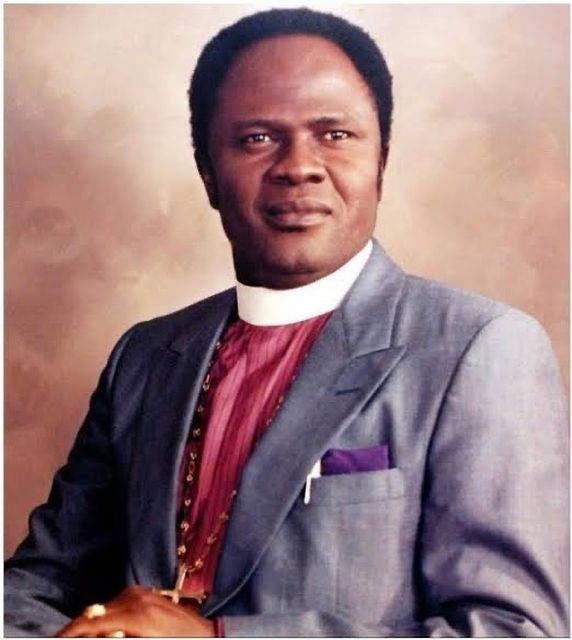
Walking Through The Epistles Part 2 by Pastor Dolapo Lawal: MP3 Download & Sermon Notes
Christ Is Salvation, Not Its Beginning

lightbulb Message Summary - Key Nuggets
- Paul's gospel is by revelation, not human tradition — he had no motivation to abandon what he excelled in except for a greater truth.
- Legalism is paganism: Christ redeems us from the curse of the law, not into it.
- The Jerusalem council confirmed the gospel is by faith in Christ's finished work alone.
- Christ breaks the walls of classism — in him there is neither Jew nor Gentile, male nor female.
Notes/Excerpt
These notes were taken while listening and may contain some errors. Please tap any sentence twice to suggest corrections.
By holding or selecting a paragraph, you can easily share snippets to friends or on your whatsapp status directly
The Letter to the Galatians
This is an expository study through the book of Galatians, covering the text in commentary style. The letter was written by Paul in response to reports that the Galatians were drifting from the simple message of the gospel.
The gospel, as Paul frames it throughout this letter, is about receiving the promise. The promise refers to the Holy Spirit — the indwelling of God in his people. This was the promise given to Abraham: in your seed shall all nations be blessed. The seed is Christ, and the proclivity of that promise is that the Spirit would be poured out — not merely visited as in the Old Testament pattern, but dwelling within, such that God would tabernacle with humanity. You see typologies of this in the tabernacle of David, in the feast of tabernacles, and in the promise God gave to David. This is what Paul means when he says believers are "sealed with the Holy Spirit of promise" — salvation itself. In 2 Corinthians he calls this the arrabon — an engagement ring, a down payment — with the full payment being the resurrection.
So the Galatians were drifting from receiving the promise of God's Spirit — being God's people through faith — and were being drawn toward a works-based system by Judaizers.
The Message of the Judaizers (Galatians 1:6-10)
The Judaizers claimed that Paul's message was merely people-pleasing — too simple, too easy. But Paul turns this around. Their message was the one actually appealing to human nature. Man, by default, always wants to do something. The desire to earn, to perform, to boast in religious works is deeply innate. Grace, which strips that away and says all are equal before God through faith, is not the crowd-pleaser. Law-keeping is.
Christ's gospel breaks the barriers of classism. In Christ, there is one righteousness, one holiness — for Jew and Gentile alike. When Paul declares there is neither male nor female in Christ, it is a radical statement in that social context. Women were not even counted in crowd numbers in the Gospels. Yet the first person commissioned to carry the message of the resurrection was a woman, sent by Jesus himself to the apostles.
The Samaritans — often regarded by Jews as half-breeds — were actually fellow Israelites from the ten northern tribes. They believed only the first five books and did not accept the prophetic writings. Jews from the southern tribes regarded them as Gentiles. If this classism is not dismantled, the Great Commission — from Jerusalem to Judea to Samaria to the uttermost parts of the earth — would have been incomplete in practice. They would have gone everywhere but only sought out Jews. What Paul was fighting was not a minor theological point; it was the entire scope of the gospel.
Paul's Credentials and the Source of His Gospel (Galatians 1:13-17)
notifications_active Stay Updated
Join the Readsermons communities for daily nuggets and new sermon alerts.
In verse 13, Paul says he had been a persecutor of the church, surpassing his contemporaries in zeal for the traditions of his fathers. His point is clear: he had no motivation to invent the gospel he now preaches. If the old system had been right, he was more qualified in it than anyone around him. He would have had everything to lose and nothing to gain by abandoning it — except that he encountered a greater light.
In verse 15-16, Paul echoes Jeremiah 1:5: "Before you were formed in your mother's womb, I knew you and I ordained you." When leaders lay hands on people in ordination, they are bearing witness to what God ordained before the foundations of the earth. Ordination is from God. Paul is establishing that his apostleship did not come from Jerusalem — it came from God himself. See also Isaiah 49:1.
His message — explained in Ephesians 3:8-12 — was to bring the Gentiles into the commonwealth of God, to reveal the mystery hidden from ages: that through faith in Christ, all peoples have access to the Father.
The Jerusalem Visits and the Authentication of Paul's Gospel
Paul visited Jerusalem five times:
- First visit — Acts 9:26-29 / Galatians 1:18-19. Three years after his conversion, he went to meet Peter and stayed 15 days. He also saw James, the Lord's brother. He shared his revelation with Peter, and Peter's verdict on Paul's message is recorded in 2 Peter 3:15 — Paul writes according to the wisdom given to him, even if some things are hard to understand. At this point, Paul was still largely unknown to the churches in Judea (Galatians 1:22).
- Second visit — Acts 11:27–12:25. A charity visit. He and Barnabas carried famine relief funds from Antioch to believers in Judea, following the prophecy of Agabus.
- Third visit — Acts 15:1-29 / Galatians 2:1-10. A theological and doctrinal visit, 14 years after Paul's conversion. He went with Barnabas and Titus — a Greek — to the Jerusalem council. The central question: must Gentiles be circumcised to be saved? The council's conclusion:
- The gospel is by faith in the finished works of Christ.
- Gentile believers should abstain from blood in food.
- They should remember the poor — Paul said he was eager to do this.
- They should abstain from sexual immorality.
personlibrary_books More SermonsPastor Dolapo Lawal
Enjoying this sermon? Browse more messages by Pastor Dolapo Lawal on Galatians at ReadSermons.
The doctrine Paul preached was certified correct by the council.
- Fourth visit — Acts 18:22. A brief visit on his way to Antioch at the end of the second missionary journey — simply to greet the church.
- Fifth visit — Acts 21:15–23:35. He brought collections from the church in Rome (Romans 15:25-27), was seized in the temple, and this began his journey to his eventual death in Rome.
Paul highlights in verse 16 that he did not immediately go to Jerusalem after his revelation. That word "immediately" is significant. He knew that for a revelation to be valid, it needed the endorsement of the church. He went first to Arabia to study — then came to Jerusalem for confirmation. He was not running with raw revelation. He was running with approved, confirmed revelation.
The Impossibility of the Law of Moses
Paul calls the law of Moses a curse, a burden, a weight. Jesus himself said in Matthew 11:28-30: "Come to me, all you who labour and are heavy laden, and I will give you rest." Reading in context, the rest he offers is the revelation of God as Father. The yoke he offers is the yoke of his teaching — and what is that teaching? That God is Father. That is what Jesus calls rest. Entering the reality of sonship is freedom from the curse of the law.
To understand why the law is a burden, consider what full law-keeping actually demands (Leviticus 11, Deuteronomy 14, and other texts):
- No pork, bacon, ham, shrimp, crab, lobster, oyster, catfish, or tilapia. Only fish with fins and scales qualify.
- No mixing of meat and dairy — no cheeseburger.
- No eating blood — no rare steak, no black pudding.
- No fat of oxen, sheep, or goat (Leviticus 7:27).
- No wearing wool and linen together (Deuteronomy 22:11).
- No shaving the edges of the beard (Leviticus 19:27).
- No tattoos (Leviticus 19:28).
- No harvesting the corners of your field.
- No planting two kinds of seed in the same field.
- The land must rest every seventh year.
- In the fiftieth year — the Year of Jubilee — all debts must be released.
- Purification required after touching a dead body. Under the law, touching the dead contaminates. Under the new covenant, touching the dead gives it life. Jesus touched lepers and they became clean — he did not become unclean. We are not the victims. We are the dispensers.
- Women could not enter the assembly during their monthly cycle (Leviticus 15).

The book of James says: fail in one point of the law and you have failed in all. That is the curse Paul speaks of. Anyone who submits to circumcision has entered the whole system and must keep every part of it.
Furthermore — and this is critical — the entire sacrificial system requires a Levitical priest. If you are not from the tribe of Levi, you cannot even facilitate the law's requirements. A non-Israelite preacher standing before people and demanding law-keeping is already in contradiction with the very law being preached.
Legalism is paganism. If it is not by faith in the finished works of Christ, it is not the gospel. Christ is not the beginning of salvation after which you begin working. Christ is salvation. We walk out — not work for — our salvation with fear and trembling.
Summary of Galatians Chapter 1
- Verses 1-5 — Paul greets the churches, affirms his apostleship as coming from God and not from men, and declares the gospel: Christ gave himself for our sins to deliver us from this present evil age, according to the will of God the Father.
- Verses 6-10 — He addresses the infiltration of false teachers who are perverting the gospel. He declares them accursed — banished, forbidden to speak, disconnected from. Importantly, Paul does not say to go and fight false teachers or expose them on public platforms. The place of a church member is to stay away from them. 2 John 10 says: if anyone brings a different doctrine, do not receive him into your house or greet him. There is order in the body of Christ. Those who hold apostolic and pastoral office are the ones designated to formally identify and address false teaching. A member's response is to withdraw — not to go online and engage.
- Verses 11-17 — Paul establishes that his gospel is by revelation from Jesus, not from human tradition. He had no motivation to leave a position he excelled in, unless he had seen something greater.
- Verses 18-24 — Paul gives the timeline of his connection to Jerusalem, showing that his gospel was not borrowed from the apostles but was independently revealed and subsequently confirmed by them.
- Father, thank you for what you have done for us in your Christ. Thank you for the gift of grace — that our righteousness is found in him and not in ourselves.
- Let the eyes of our understanding be enlightened. Give us the spirit of wisdom and revelation in the knowledge of Christ. Let the word be rooted deeply, so that in the moment we need it, it flows from a place of understanding, not just information.
- We receive your rest — the revelation of you as Father. We enter sonship. We walk out what you have already finished for us. In Jesus's name, amen.
Pastor Dolapo Lawal
Enjoyed this sermon? Browse more messages by Pastor Dolapo Lawal on ReadSermons.
Comments
0 comments
No comments yet. Be the first to share.
Stay updated with Readsermons
To be notified on every sermon release, join the group that suits you best:
For nuggets & Sharable snippets follow us.
headphones Media & Resources
Listen to Sermon
Download initiated! Follow us to be the first to get new sermons by Pastor Dolapo Lawal.
Walking Through The Epistles Part 2
Pastor Dolapo Lawal • 19MB
Download initiated! Follow us to be the first to get new sermons by Pastor Dolapo Lawal.
Your download
is starting! 🎉
Connect with us directly for more powerful teachings.
Walking Through The Epistles Part 2
00:00:00 / 00:00:00