


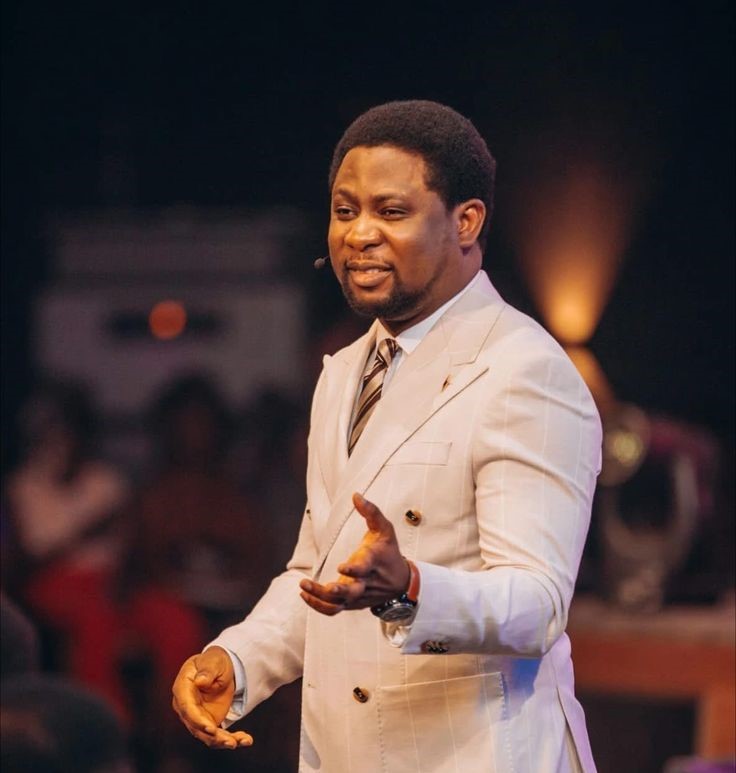
Walking Through The Epistle: Colossians 1 (part Ii) by Pastor Dolapo Lawal: MP3 Download & Sermon Notes
Doctrine That Has Legs Must Walk

lightbulb Message Summary - Key Nuggets
- The New Testament epistles are not freestyle writings — they are intentional interpretations of Old Testament scripture, with Christ as the fulfillment of every promise and shadow.
- Walk worthy in Colossians 1:10 is not a call to moral effort but to fellowship — the word walk was first used in Genesis 3 in the context of God walking with man in the garden.
- The only true growth is growth in the knowledge of Jesus Christ — not in spiritual warfare awareness, not in wisdom, but in knowing the person of Christ.
Notes/Excerpt
These notes were taken while listening and may contain some errors. Please tap any sentence twice to suggest corrections.
By holding or selecting a paragraph, you can easily share snippets to friends or on your whatsapp status directly
The New Testament Is Not Freestyle
Every epistle in the New Testament is a deliberate interpretation of Old Testament scripture. The writers were not freestyling — they were writing message notes. Paul's letter to the Colossians alone draws from Psalm 136, Micah 6:8, Psalm 66, Isaiah 9:2, Genesis 1:27, Genesis 1:1, Psalm 102, Isaiah 53, Jeremiah 31, Proverbs 2, and Deuteronomy, among others.
The structure of all scripture is: Genesis to Malachi contains the promise and the shadow; the Gospels unveil the fulfillment of that promise in the person of Christ; and the Epistles explain and expound what has been unveiled. That means the context for every New Testament text is the Old Testament — and the lens for reading everything is Christ.
This is why Hebrews goes through the Old Testament methodically — Jesus is greater than angels, greater than Moses, greater than Joshua, our high priest after the order of Melchizedek. He places the shadow and the substance side by side.
Paul's Prayer: Colossians 1:9-14
Paul's prayer in verses 9-14 is a direct response to the false teaching circulating in Colossae — but he does not name the heresy yet. The false teachers were offering superior knowledge and wisdom. Paul responds by praying for the real thing from God himself. The prayer has a deliberate sequence:
- Knowledge of God's will (verse 9). Paul prays that they be filled with the knowledge of his will in all wisdom and spiritual understanding. This is not speculative philosophy — it is revealed will. A revelation is not a discovery. In discovery, you find something through effort. In revelation, you are shown something. Your advantage is not effort but positioning. The will of God cannot be intellectually obtained; it must be revealed.
- To walk worthy (verse 10). Doctrine must produce righteous conduct. True theology must have legs — it must move you. The genuine test of theology is in consecration: if there are no fruits of righteousness, the knowledge is wrong.
- Bearing fruit in every good work (verse 10). This is outward evidence of inward transformation. Notice: you bear fruit; you do not produce it. The vine produces. You yield to what the spirit has already placed within you. Joy in difficult news — that is not you; it is the fruit of the spirit bearing through you. Faithfulness in praying for a sick person who did not get healed and trying again — that is not natural human resilience; it is the spirit of faithfulness yielded to.
- Increasing in the knowledge of God (verse 10). Growth is real — but it is specifically in the knowledge of God. 2 Peter 1:2 — grace and peace are multiplied through the knowledge of him. More knowledge of Christ means more grace (unmerited empowerment) and more peace (composure in chaos). The converse is also true: the more you know about what the devil can do, the more fear replaces peace. Spending 50 minutes cataloguing demonic capabilities and 10 minutes on the name of Jesus is a misallocation of time.
Walk Worthy Is a Fellowship Word
The word walk was first used in Genesis 3:8 — they heard the voice of God walking in the garden. Its first context is fellowship, not effort or trekking. The second usage is Genesis 5:22-24 — Enoch walked with God. Fellowship. Enoch did not fight or strive his way to heaven; he simply fellowshipped so consistently with God that one day he did not return. The third is Genesis 6:9 — Noah walked with God. The fourth is Genesis 17:1 — Abraham is invited to walk before the Lord and be perfect. The perfection is in the fellowship.
So when Paul says walk worthy, he is saying: this worthy walk is fellowship walk. It is not mechanical. Consecration is simply fellowship. When the altar is properly arranged and the fellowship is real, there are things that — because of love — a person will not do. And even if they do, they will not want to continue in it. Perpetual sin and an active prayer life cannot genuinely coexist.
Justification versus Forgiveness of Sins
There is a thin but important doctrinal line between these two:
- Forgiveness of sins acknowledges you are a sinner and releases you from guilt — go and sin no more.
- Justification is not just release from sin but access into a new status. It does not just say go — it says come. In justification, the penalty and standing of the sinner is overturned: you are discharged and acquitted. Not just forgiven, but declared righteous.
Once justification is embraced, sanctification begins — because justification means you are now a son, in God's presence, where there is no sin. You are not learning how to avoid sin; you are learning how to be righteous because that is now your environment and nature. The true test of theology is always in its fruit.
The Only Genuine Growth Is in the Knowledge of Christ
Apollowas mighty in scripture — but he knew only up to the baptism of John. Aquila and Priscilla had to pull him aside and expound the scriptures to him more excellently. The more excellent way was always Christ. Solomon asked for wisdom once and stopped asking. He had more anointing than David in many respects — commanding the presence of God, writing more songs, doing more works. But he had no Nathan. His excessive wisdom became the thing that killed him — diplomatic marriages, too much sense, not enough fellowship. He reasoned his way through what he should have received.
Bible study is Christology. You are not growing spiritually by accumulating more knowledge. You are growing spiritually by knowing Jesus and becoming more like him.
We are not chasing wisdom — we are chasing Christ, who is the wisdom and the power of God. We are not chasing miracles — we are chasing Christ, who is the wisdom and the power of God. The knowledge of Christ is what multiplies grace and peace. Everything else is peripheral.
Pastor Dolapo Lawal
Enjoyed this sermon? Browse more messages by Pastor Dolapo Lawal on ReadSermons.
Comments
0 comments
No comments yet. Be the first to share.
Stay updated with Readsermons
To be notified on every sermon release, join the group that suits you best:
For nuggets & Sharable snippets follow us.
headphones Media & Resources
Listen to Sermon
Download initiated! Follow us to be the first to get new sermons by Pastor Dolapo Lawal.
Walking Through The Epistle: Colossians 1 (part Ii)
Pastor Dolapo Lawal • 17MB
Download initiated! Follow us to be the first to get new sermons by Pastor Dolapo Lawal.
Your download
is starting! 🎉
Connect with us directly for more powerful teachings.
Walking Through The Epistle: Colossians 1 (part Ii)
00:00:00 / 00:00:00