

They Built Systems To Keep Africans Small by Apostle Femi Lazarus: MP3 Download & Sermon Notes
We Were Engineered To Remain Small

lightbulb Message Summary - Key Nuggets
- African culture has been engineered to suppress identity, curiosity, and ambition from childhood.
- The silence trained into children destroys their analytical ability and their capacity to demand accountability.
- Women are disproportionately broken by cultures that see their strength as a threat rather than a tool.
- Freedom requires non-compliance — healing from inherited smallness is possible but demands intentional work.
Notes/Excerpt
These notes were taken while listening and may contain some errors. Please tap any sentence twice to suggest corrections.
By holding or selecting a paragraph, you can easily share snippets to friends or on your whatsapp status directly
A Burden for Our People
This conversation has been a burden for a long time — seeing that our people can be more, but they have not been allowed to be. Not everything about African culture is bad. There are things we love and treasure. But there are things we have held onto that are killing us.
If you look at the average child raised in the West, they ask questions. They are curious. When told something, they ask why. The average African parent feels threatened and disrespected because a child dares to ask why.
And that is because of the way we were raised. We were raised to be quiet. We were raised to say yes. But what we do not realize is that every time a child says yes without questioning, that child is losing the ability to be analytical. They are losing the capacity to question the next person who comes with an agenda — and we have seen the effects of that across African nations.
Raised to Be Small — From Birth
We were engineered from childhood to know that we are small. From family, then school tells you you are small, then career tells you you are small. Even our names — every cultural name in Togo literally carries smallness within it. We were taught that smallness is humility. That to sit in the back of the room is respect. That you do not stand — you sit.
notifications_active Stay Updated
Join the Readsermons communities for daily nuggets and new sermon alerts.
And because of that, even abroad, we do not do much with ourselves. Not because we lack capacity, not because we lack intellectual potential — but because we were taught: you were meant to be small. So anywhere you go, you need to be small. And if you try to be big, you become a rebel.
You said something profound — there were roles you could have taken in your organization, managerial positions, and you did not take them. Why?
I did not feel like I was able to do it. I had studied economics and finance in Canada. I knew deep down I had something. But I was not feeling like I could do the job properly. It has always been battling with knowing you can birth something quite big but having low self-esteem. There was even an opportunity to be recognized in a reputable magazine for the work I was doing. I said no — because I wasn't seeing how I could be talked about in a magazine. And that partner vanished. People do not have time to wait for you to be ready.
The Achievement Ceiling
The average achievement set for young people here is: graduate from university, get a job with a tie, sit in an office, buy a motorbike, get half a plot of land, build two bedrooms. When that is achieved — you are big. That is the ceiling. And once people reach it, they settle. They are done. That is where they remain.
But that is being basic. What we call being big is actually just the foundation. We have engineered an entire generation to think that basic is a peak.
Apostle Femi Lazarus
Enjoying this sermon? Browse more messages by Apostle Femi Lazarus on Declassified Podcast at ReadSermons.
Has this ever made you cry?
So many times. I cry because I see the potential in our people. If you walk around Lomé, you see creativity everywhere — woodwork, art, clothing, weaving. We are creative, gifted, resourceful people. But you come back thirty years later and see that same young man, grown old, on that same street corner. We remain. That is the tragedy.
The Suppression of Women
The greatness of women — their boldness, their voice — is considered a threat instead of a tool. A man who feels strong only after the woman is made weak is not strong. He is a failure. What is society without women? After you break all the women, what is left?
In Togo, when you go through difficulties in your marriage, you are not allowed to talk about it. Not to a therapist. Not to a counselor. You keep it in. You are a woman — you can take it. So we see many women broken from trauma, from wounds. And when a man is beating a woman, she cannot even go to her parents. If she does, she is told: pack your bags and stay. And we even deliberately keep no house for them to come back to — so they cannot leave.
Someone told you something about marriage that shocked you.
Someone told me one day: you do not enjoy marriage, you endure it.
Most of the broken women are in the church, crying every day. And what the church does when these issues surface is: keep it to yourself, let us pray. How can someone who is being beaten and abused simply pray their way out when the simple fix is to shield them from the violence? The church does not have structures for this.
Bullied is an understatement. Our voices are not just suppressed — they are retrieved for life. These are women who we look up to. So when we see them silent, when we see them subdued, the next generation of women sees the norm. Our voices are not just reduced. They are taken. We are not bullied — we are dead bodies walking around. Dead wombs.
The Journey Toward Freedom
I took healing — in the sense of getting up and saying: no, this is not who I am. I am not born to be small. I have too much inside of me to remain here. There was a discontentment inside of me — and that discontentment was necessary. You cannot be compliant and become the person you need to be.
Compliance is not something you should hold onto in a society that has been designed to subdue you. That compliance will follow you from childhood to adulthood, from home to marriage to every sphere.
For those of us who have gone through this journey or who are still in it — we want to help others break through. It will not be smooth. It will create rejection, reproach, sometimes shame. But it is a sacrifice we are willing to make so that the next generation does not have to carry what we carried.
Your look — the white hair, the distinctive presentation — is that a symbol of resistance?
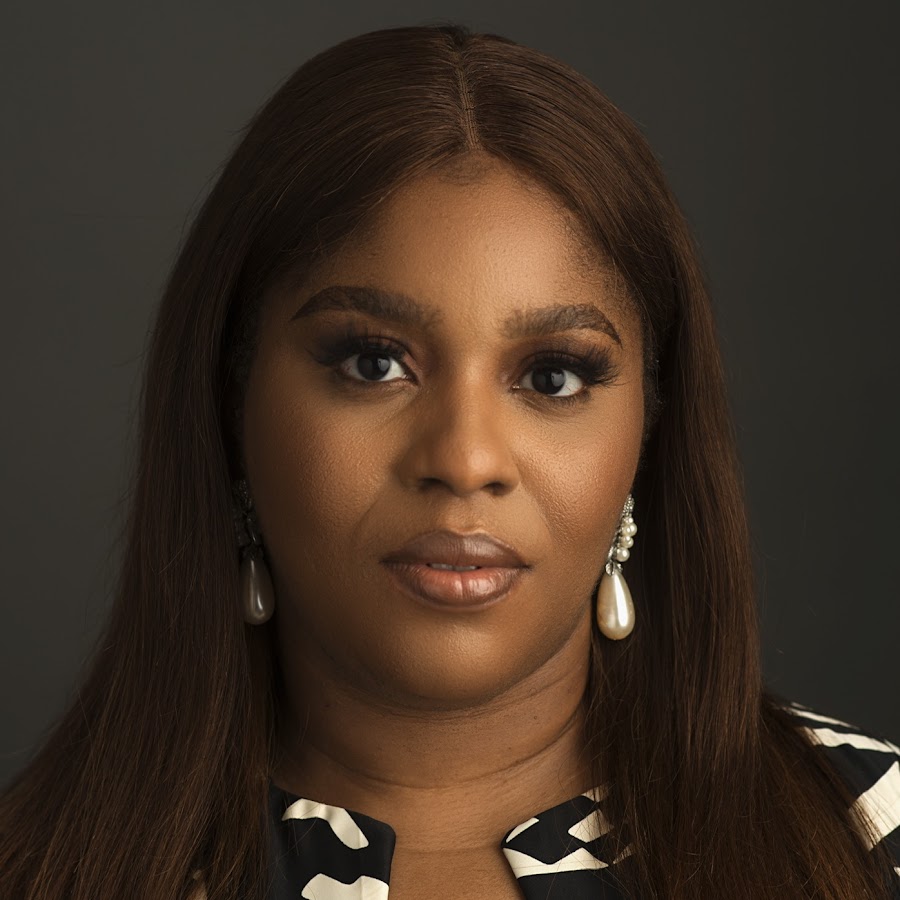
Yes. Everything about the way I appear is intentional. I chose not to be put in a box. In Togo, most women dress the same way — as though there is a uniform. When I was ten, I started choosing differently. I would go to the tailor with catalog pictures and say: make mine like this. On Christmas day I looked different from everybody. My mother was upset — but she grew to understand: this one is not normal. And I don't want to be normal.
This look is to tell someone: you don't have to be who they say you should be. Be you. There is a uniqueness about you. And that uniqueness I carry everywhere. Anywhere I go, they notice me. I'm not shy anymore. And people who see me now say they want to look like me — because once they saw it, they realized: I can be like this too.
The uniform idea — the culture of sameness — kills our uniqueness and erases our identity. We need to be ourselves.
Those of us who went out and found our identity have a responsibility to come back. Not everyone can leave to discover who they are. That is why those of us who have broken through must help others do the same — here, on the continent, in our communities.
Apostle Femi Lazarus
Enjoyed this sermon? Browse more messages by Apostle Femi Lazarus on ReadSermons.
Comments
0 comments
No comments yet. Be the first to share.
Stay updated with Readsermons
To be notified on every sermon release, join the group that suits you best:
For nuggets & Sharable snippets follow us.
headphones Media & Resources
Listen to Sermon
Download initiated! Follow us to be the first to get new sermons by Apostle Femi Lazarus.
They Built Systems To Keep Africans Small
Apostle Femi Lazarus • 20MB
Download initiated! Follow us to be the first to get new sermons by Apostle Femi Lazarus.
Your download
is starting! 🎉
Connect with us directly for more powerful teachings.
They Built Systems To Keep Africans Small
00:00:00 / 00:00:00