
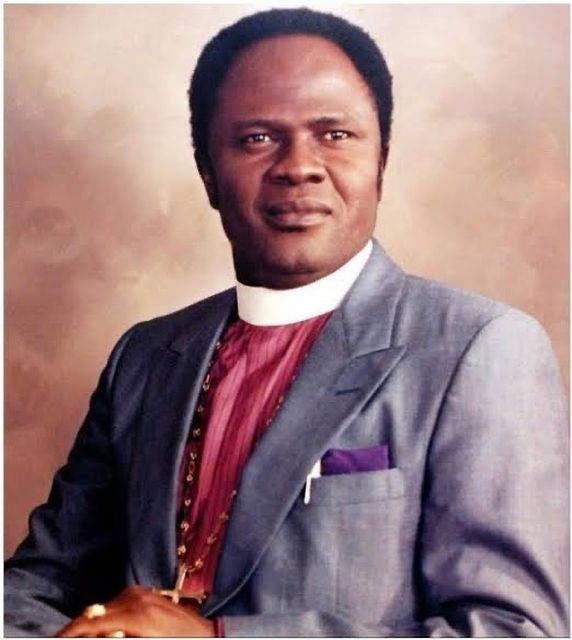



Is Salvation A Process Or Does It Happen Once? - 100 Dod - Day 98 by Apostle Emmanuel Iren: MP3 Download & Sermon Notes
Why Salvation Is Both An Immediate Event And An Inevitable Completion — And Why This Distinction Matters Pastorally.

Notes/Excerpt
These notes were taken while listening and may contain some errors. Please tap any sentence twice to suggest corrections.
By holding or selecting a paragraph, you can easily share snippets to friends or on your whatsapp status directly
Understanding Salvation — Process, Finality, or Both?
A teaching circulating in many circles proposes that salvation occurs in stages — a "small salvation" of the spirit when a person accepts Christ, and a "great salvation" that is completed progressively as the soul sheds the habits and patterns it carried before conversion. As evidence, scriptures such as Acts 2:47, Hebrews 5, and Hebrews 7:25 — "saved to the uttermost" — are cited, along with the argument that the phrase "being saved" indicates an ongoing process rather than a completed event.
This framing, while containing a grain of truth, becomes troublesome when it is taken to mean that salvation exists in layers, and that a person cannot confidently say their soul is saved until a process of full sanctification is complete.
What Is True and What Becomes Dangerous
When a person believes the gospel and receives the Holy Spirit, they are saved. The evidence of that salvation is that by the word and the Spirit, they begin to grow in consecration. So there is an aspect of the Christian journey that is a process — and yes, there is also a finality of salvation that arrives when Christ returns, when the last enemy, death, is destroyed, and when believers receive their new bodies.
In that sense: there is a dimension in which we are saved, and a finality in which we will be saved. Scripture does speak of this. Some texts say that the one who endures to the end shall be saved. The nomenclature used to describe this and how it is walked through is where everything either helps or harms.
notifications_active Stay Updated
Join the Readsermons communities for daily nuggets and new sermon alerts.
A useful analogy: if all the right ingredients are placed in a cake batter and put in an oven with proper conditions — no power failure, correct temperature — what is in that oven is cake. Not fully baked yet, but it is cake. And as surely as it remains in that oven, it will be fully baked. The outcome is final to the degree that it is inevitable.
As long as a believer genuinely has the Holy Spirit, the finality of their salvation is inevitable. The process is real. The outcome is secured.
Why This Matters — Avoiding Two Dangerous Errors
This balance is important for two reasons:
- Error 1 — Stripping assurance: If salvation is framed purely as a process, people who are legitimately saved and still struggling will be told they do not yet have it. It can make immature Christians feel like non-Christians. Paul's statement in Ephesians 2:8–9 is definitive: "By grace are you saved" — not "will you be." Through faith. Not of works, lest any man should boast.
- Error 2 — Removing accountability: If salvation is treated as a one-time event with no subsequent expectation, people cast off virtuous restraint. Works are not the prerequisite for salvation — they are the proof of it. We are his workmanship, created in Christ Jesus to do good works. Anyone whose life shows no fruit is not growing — and that needs to be addressed honestly.
Apostle Emmanuel Iren
Enjoying this sermon? Browse more messages by Apostle Emmanuel Iren on Salvation at ReadSermons.
The Acts 2:47 Misreading
The text reads: "And the Lord added to the church daily those who were being saved." The argument is that "being saved" signals that each individual's salvation was an ongoing, unfinished process.
But consider what was actually happening: people were coming to faith one after another, day after day. The phrase "being saved" refers to the daily happening of decisions — the ongoing process of people choosing to believe, not the ongoing process of any individual's personal sanctification. It was the process of their decisions, not the process of their consecration.
To interpret it the other way would mean that before someone was "added to the church," God was first watching to see whether their lie-count had dropped from fifteen per month to two. That is not what was taking place.
Faith Is Not a Process
Ephesians 2:8–9 — "By grace are you saved through faith. And that not of yourselves; it is the gift of God, not of works, lest any man should boast."
"By grace are you saved" — not "are you being saved." Through faith. And faith is not a process. The teaching that makes salvation conditional on a progressive works-based soul cleansing directly contradicts this text. What they are describing is predicated on works — the very thing Paul explicitly rules out.
The Confidence Paul Modeled
Paul, in writing to the churches, spoke with a type of conclusiveness that makes it very strange for anyone to claim a believer cannot know they are saved. In 1 Corinthians 6:11, speaking to people who had been immersed in serious sin: "Such were some of you — but you are washed." Past tense. Done. Settled.
The fruit of the Spirit is important. Growth in consecration is real and expected. But as an external observer, what can be judged is fruit. God sees the heart. And many scriptures speak with a confidence about the immediate act of faith that accounts for salvation — without attaching a prolonged certification process to it.
The Goal of This Balance
The reason these concepts matter — as annoying as the nuance can feel — is not academic. It is pastoral. There will be people who claim to have believed what the church believes but produce no fruit. And there will be people who are legitimately saved and still wrestling with struggles. The framework must be honest enough to:
- Affirm the saved person who is still growing, without stripping their assurance
- Confront the fruitless person who is just claiming a label, without offering false comfort
- Reject any system that turns sanctification into a prerequisite for justification
Salvation is immediate upon genuine faith. Growth in consecration is the expected and inevitable evidence of it. And the final completion of salvation awaits the return of Christ — but for those who genuinely have the Holy Spirit, that completion is not uncertain. It is inevitable.
Apostle Emmanuel Iren
Enjoyed this sermon? Browse more messages by Apostle Emmanuel Iren on ReadSermons.
Comments
0 comments
No comments yet. Be the first to share.
Stay updated with Readsermons
To be notified on every sermon release, join the group that suits you best:
For nuggets & Sharable snippets follow us.
headphones Media & Resources
Listen to Sermon
Download initiated! Follow us to be the first to get new sermons by Apostle Emmanuel Iren.
Is Salvation A Process Or Does It Happen Once? - 100 Dod - Day 98
Apostle Emmanuel Iren • 6MB
Download initiated! Follow us to be the first to get new sermons by Apostle Emmanuel Iren.
Your download
is starting! 🎉
Connect with us directly for more powerful teachings.
Is Salvation A Process Or Does It Happen Once? - 100 Dod - Day 98
00:00:00 / 00:00:00