



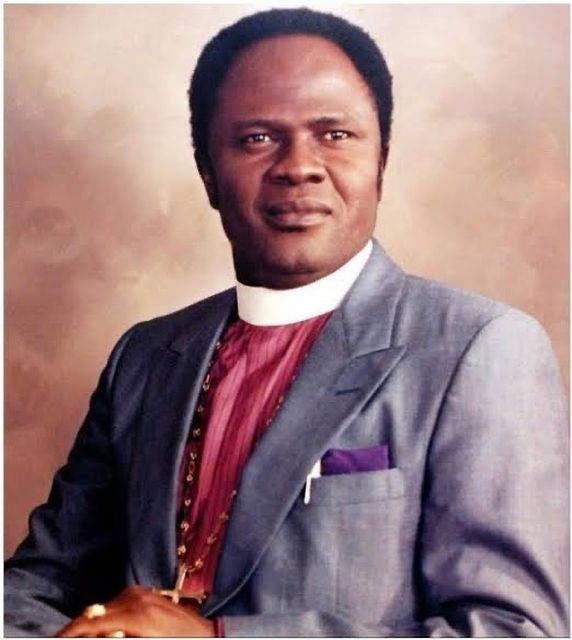
How To Teach The Bible 2 by Pastor Dolapo Lawal: MP3 Download & Sermon Notes
The Teaching Office

Notes/Excerpt
These notes were taken while listening and may contain some errors. Please tap any sentence twice to suggest corrections.
By holding or selecting a paragraph, you can easily share snippets to friends or on your whatsapp status directly
The Teaching Office and How One Enters It
There is a teaching anointing — a teaching grace — given by the election of God. Every believer should be able to articulate the word of God, but some are specifically positioned in the body of Christ as elders and pastoring teachers. There are three ways a person enters this calling:
- Desire — 1 Timothy 3:1: "If one desires the office of a bishop, he desires a good thing." Bishop, pastor, and elder are the same office in scripture — the terminology shifted based on audience. One can desire this office, but James 3:1 warns that teachers face stricter judgment, and no one takes this honor upon themselves. It is a call, not a career.
- Finding expression within another's calling — As God took from the spirit of Moses and placed it upon seventy elders, a person can find their own calling within the ecosystem of another's ministry. The only concern is that the one who invited them must themselves be called — otherwise the stream from which they draw is off.
- A direct call from God — A burden placed in the heart, often accompanied by encounter. For an apostolic call, God will typically give a specific location and emphasis. For a pastoral call, he will give a blueprint of the kind of believers he intends that person to raise — and that blueprint becomes the standard against which the work is measured.
The constant across all three paths is the ability to teach. That is the only way the minds of people are shaped.
The Five Contexts of Interpretation — Continued
Earlier sessions covered historical context, dispensational context, immediate literal context, and audience context. The remaining three are purpose context, genre context, and the principle of scripture interpreting scripture.
Context 5 — Purpose Context
notifications_active Stay Updated
Join the Readsermons communities for daily nuggets and new sermon alerts.
Every biblical book has a stated purpose, and understanding that purpose governs how the entire book is read. The introductory chapter of a letter typically previews everything to be discussed. The conclusion brings it to application. This pattern is consistent across Pauline epistles:
- Introduction and greeting
- Doctrinal argument pertaining to the situation
- Illustration from the Old Testament
- Practical application directed at the audience
- Summary
John 20:31 — "But these are written that you may believe that Jesus is the Christ, the Son of God, and that believing you may have life in his name." John states his purpose explicitly. If a reading of the Gospel of John does not land on this conclusion, the entire point has been missed. The introduction to the Gospel of Luke similarly explains that it was written so that Theophilus would have certainty regarding the things he had been taught. The stated purpose becomes the lens through which the entire work is read.
Context 6 — Genre Context
The genre of a biblical book directly affects how it must be interpreted. Five primary genres require distinct approaches:
- Law — read for moral, ceremonial, and civil principles, understood through dispensational context
- History — descriptive, not automatically prescriptive; not everything recorded is endorsed or commanded
- Poetry — uses figurative and prophetic imagery that must not be interpreted with wooden literalism
- Prophecy — uses symbolic vision language that requires cross-referencing with fulfillment passages
- Epistles — interpretations of the gospel addressed to believing communities; contextual reading of pre-text and post-text is the primary method
Pastor Dolapo Lawal
Enjoying this sermon? Browse more messages by Pastor Dolapo Lawal on The Word at ReadSermons.
History: The Acts of the Apostles records the acts of human beings. Not everything in Acts is prescriptive doctrine. Because Paul traveled to Macedonia does not mean every minister must. Because the 120 waited in the upper room for ten days before the Spirit fell does not mean that sequence must be replicated for every believer to receive the Spirit — the same book records the Spirit falling while Peter was still speaking, and elsewhere through the laying on of hands. Doctrine cannot be built on a single historical account when the same book contradicts that pattern.
The casting of lots in Acts 1 to replace Judas is another case in point. This was a historical act — not a biblical method for selecting church leaders. The one God had actually chosen to replace Judas was Paul, whose calling came later and directly.
History does not equal biblical mandate. David wearing an ephod to inquire of God was appropriate to his dispensation — before the Spirit was given to dwell within believers. To replicate that practice now, when the Spirit already resides within, approaches idolatry. David's polygamy violated an explicit command in Deuteronomy 17:17 — "Neither shall he multiply wives for himself." The law of kingship was clear. Solomon's problems began precisely when the accumulation of wives became a diplomatic strategy rather than an expression of covenant faithfulness. That it is recorded in scripture does not make it sanctioned.
Jacob stealing Esau's blessing is sometimes quoted as evidence of the "premium" one should place on the anointing. But this reading negates a foundational command — "Thou shalt not steal" — and misidentifies what was stolen. The bowl of porridge secured the double-portion inheritance. The blessing of the firstborn was stolen from Isaac through deception. Jacob did not need to steal it. He later received the legitimate blessing when he wrestled — and God specifically asked, "What is your name?" — making him own his identity before the name was changed. The legitimate blessing came through honest encounter, not theft.
Because something happened in scripture does not make it biblical. The Bible is a library, not a single book. Before claiming "the Bible says," a teacher must have checked carefully.
Poetry: Poetic language interpreted literally produces absurdity. Exodus 15:8 — "By the blast of your nostrils the waters piled up." This is prophetic poetry describing the parting of the Red Sea, not an anatomical statement about God. Psalm 98:8 — "Let the rivers clap their hands; let the hills be joyful together." This is prophetic imagery — a call to all creation to worship.
The valley of dry bones in Ezekiel 37 is consistently misread. The vision begins with Ezekiel carried in the Spirit — it is already marked as visionary. Verse 11 provides God's own interpretation: "Son of man, these bones are the whole house of Israel." The vision is not a literal resurrection of corpses. It is a prophecy of national restoration, fulfilled in Acts 2 when the Spirit was poured out and the church of Israel rose. To read the valley of dry bones as a literal resurrection makes Ezekiel the Christ — which is a heretical conclusion, however unintentionally reached. Only the Christ has authority to raise the dead. Ezekiel is not the resurrection and the life. The theological implication of a literal reading undoes the entire framework of salvation.
When reading prophetic books or books of poetry, the goal is to identify the literal and figurative balance — to find the allegory of hope, power, or divine intent that the imagery is communicating.
Gospels: Most of the Gospel accounts are literal and historical, but some accounts are custom-made responses to specific individuals. When Jesus told the rich young ruler in Matthew 19:21 to sell everything he had, he was not issuing a universal command for perfection. He was diagnosing a specific condition — that the man's possessions had come to own him rather than him owning his possessions. Jesus did not give this instruction to every person he encountered. The Gospels must be read with this discernment.
Epistles: The epistles are letters — and nobody writes mysteries in letters. The writers expected that children who were addressed in those same letters could understand what was written. The epistles are not theologically complicated. The revelation they contain is contextual interpretation of the Old Testament — the law of pre-text and post-text is the primary tool for reading them.
1 Timothy 5:8 — "If anyone does not provide for his own, especially those of his household, he has denied the faith and is worse than an unbeliever" — is commonly used to mean that any man who cannot financially provide for his family has denied the faith. Reading from verse 5 corrects this: the context is entirely about widows in a family being cared for by their relatives, not about general household provision as proof of faith.
1 Corinthians 7:1 — "It is good for a man not to touch a woman" — begins: "Now concerning the things of which you wrote to me." Paul is responding to a specific question sent by the Corinthians. The word "touch" is not about physical contact in a general sense. Pre-text and post-text reveal what he is actually addressing.
Scripture Interprets Scripture
1 Corinthians 2:13 — "comparing spiritual things with spiritual." When a text is unclear or appears to contradict, the resolution is found within the canon itself. The Bible interprets itself.
A parable has one authorial intention — one meaning. A reader may receive a personally quickened insight from a parable, but that insight is a word for the individual, not a doctrine to be taught. The text has a fixed meaning determined by the writer's intention. Any reading that departs from that intention is not interpretation — it is invention.
There is only one meaning to a text. That meaning is the meaning. Everything else is not interpretation — it is error.
This discipline is essential for prophetic people in particular. Jesus was able to identify that the voice saying "turn stone to bread" was incorrect because he knew the correct meaning of Deuteronomy 8 — that God allowed hunger to test and humble, not as an occasion for miraculous provision on demand. Correct Bible interpretation is discernment. A prophet who is loose with interpretation will be seduced in the spirit realm. The two gifts — prophecy and teaching — are not in tension. They require each other.
The deeper a person goes in Christ, the simpler the message becomes. Young believers are fascinated by revelation. Mature believers need the word that confirms what is already in their hearts. The ministry of the Holy Spirit is to teach and to bring to remembrance what has already been learned — not to produce novelty. A performance mindset in a teacher — the desire to always say something new — is the root of doctrinal error.
Practical Wisdom for Teachers
The teaching anointing works alongside two components: favor and honor.
A teacher who has favor but not the word will be heard but will lead people astray. A teacher who has the word but not favor will be correct and irrelevant — no one will listen. Both are necessary.
When God grants favor upon a teaching gift, the evidence is not platform size. It is the specific instruction he gives: approach the word with meekness, don't sound overconfident, know your audience.
Boldness is not volume. Boldness is staying true to who you are when you minister. If a person is not naturally loud, they are boldest when they preach quietly. The audience senses inauthenticity immediately — and it becomes a distraction from the message.
Not everyone is your audience. God calls people for people. There are similarities of story, of journey, of struggle between a teacher and the people God has assigned to them. A deep message is not one that is complex — it is one in which people find themselves. They see their situation and they see the way out.
Regarding honor and ministry: the example of Jesus in Mark 6:1–6 is instructive. When he returned to his hometown, the people initially marveled — "What wisdom is this? What mighty works?" But familiarity stole their astonishment. "Is this not the carpenter's son? Is this not Mary's son?" They were offended, and he could do no mighty work there. The Bible says could — not would. He tried. It did not work. God marveled at their unbelief.
A teacher who attempts to establish their ministry among people who knew them before the call will struggle. The people who watched someone grow up carry an image that resists the anointing. Prove the gift in Capernaum. Let it be established elsewhere first. By the time a homecoming happens, it should be because people have come across the fruit of the ministry from a distance and already received it.
Reduce mistakes as much as possible. People give grace to David on the page — they will not give it to a living pastor who commits the same errors. Protect the teaching ministry through the life that carries it.
Lord, grant us the grace of teaching and the grace of favour to go with it. Give us meekness in how we approach your word. Open the hearts of those you have assigned to receive the ministry you have placed within us. Let the message find the people it was sent for, and let the people find the voice God has sent to them.
Pastor Dolapo Lawal
Enjoyed this sermon? Browse more messages by Pastor Dolapo Lawal on ReadSermons.
Comments
0 comments
No comments yet. Be the first to share.
Stay updated with Readsermons
To be notified on every sermon release, join the group that suits you best:
For nuggets & Sharable snippets follow us.
headphones Media & Resources
Listen to Sermon
Download initiated! Follow us to be the first to get new sermons by Pastor Dolapo Lawal.
How To Teach The Bible 2
Pastor Dolapo Lawal • 28MB
Download initiated! Follow us to be the first to get new sermons by Pastor Dolapo Lawal.
Your download
is starting! 🎉
Connect with us directly for more powerful teachings.
How To Teach The Bible 2
00:00:00 / 00:00:00