




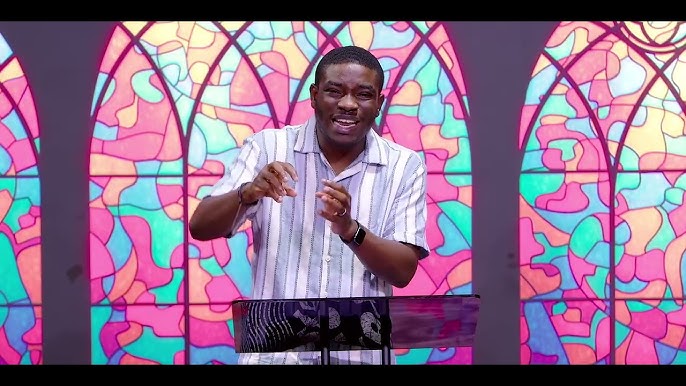
How To Receive From God by Pastor Dolapo Lawal: MP3 Download & Sermon Notes
God Is A Giver, You Are A Receiver
lightbulb Message Summary - Key Nuggets
- In this teaching, Pastor Dolapo Lawal breaks down the principles of faith, surrender, and alignment that open you up to divine provision, wisdom, and direction. If you have ever wondered why some prayers seem unanswered or how to practically walk in the reality of God’s promises, this message will bring clarity and power to your walk with God.
Notes/Excerpt
These notes were taken while listening and may contain some errors. Please tap any sentence twice to suggest corrections.
By holding or selecting a paragraph, you can easily share snippets to friends or on your whatsapp status directly
Introduction: God's Willingness to Give
This teaching explores how to receive from God — one of the most important questions a believer can ask.
The first thing to understand is God's willingness to give. He is the dedomi — a giver, not a taker. Many people have the idea of God always wanting to collect from them, but that's not true.
For every blessing God promises and for every act of obedience he requires, it is as though God always attaches a blessing or a reward:
- Abraham offered his son in Genesis 22 — and God proclaimed blessings upon him
- Hebrews 12 says Jesus, having seen the glory set ahead of him, endured the cross — God showed him the reward before asking him to endure
- The Bible says He is a rewarder of those who diligently seek him
Some teachers are tempted to avoid mentioning the blessings attached to giving — not wanting people to give out of greed. But talking about those blessings is not fueling greed. It is putting people in a position to look at themselves in the mirror, see the blessings, and ask: Do I believe the word of God is true? If I do, I will give — both because I love him and because I believe his promises pertaining to the reward of obedience.
God is a giver. He is all-sufficient. When he receives from us, it is because he wants to give back to us.
The Two Foundations: God Is a Giver, You Are a Receiver
- Number one — God is a giver
- Number two — you are a receiver, and you can only receive what God has or what God wants to give
A lot of people don't receive from God because they are not receiving what God wants to give. They want to collect from God what he did not intend to give them.
Romans 8:32 — He who did not spare his own son, but delivered him up for us all, how shall he not with him also freely give us all things?
Matthew 6:30–34 (Message Translation) — If God gives such attention to the appearance of wildflowers, most of which are never even seen, do you not think he will attend to you, take pride in you, and do his best for you? The goal of this passage is to prompt a shift: stop being so preoccupied with getting, and instead respond to God's giving. Steep your life in God's reality, God's initiative, God's provision. Do not worry about missing out. You will find all your everyday human concerns will be met. Give your entire attention to what God is doing right now and don't get worked up about what may or may not happen tomorrow.
How to Receive: Enter Into What God Is Doing
Romans 4:1–3 (Message Translation) — Abraham entered into what God was doing for him, and that was the turning point. He trusted God to set him right instead of trying to be right on his own.
Righteousness means operating in the proclivities of what God provides.
This is what is called kingdom. The true riches of the kingdom are the riches that come from God's basilia — God's authority. In other words, you have what God gave to you.
Consider the parable of the talents:
- God gave one servant one talent, another two, another five
- The one with two multiplied to four. The one with five multiplied to ten
- You can have five and not multiply, and live in leanness of soul — dissatisfied, seemingly greedy to others, yet not operating at full capacity
True riches is not just about having a child — it is Isaac, the child of promise. That is the kingdom. Where God's word comes alive in you and becomes flesh in you.
notifications_active Stay Updated
Join the Readsermons communities for daily nuggets and new sermon alerts.
Consider the difference between Abraham's story and God's story:
- Abraham's story: I used to think I was a barren man, but at 90 I gave birth to Ishmael — glory be to God
- God's story: Sarah's womb was dead. God gave a 99-year-old woman a renewed body, strength to carry a baby and strength to push. That is almost impossible — that is a God story
When you look at Sarah, you don't say "this woman is so powerful." You say, "God did that for that woman." Things that God will do in your life, people will say — this is the finger of God.
The Simple Answer: Hear and Align
How do we receive from God? The answer is simple:
We receive from God by hearing what God wants to do, and aligning with what he wants to do.
Romans 10:17 — Faith cometh by hearing, and hearing by the word of God.
We hear what God wants to do in our life in two places:
- The place of prayer — as we pray, God quickens a word we have studied; this is what is called a rhema word — a quickened, now word
- The study of God's word — reading the Bible positions you to receive that quickened word
When that rhema word comes, it comes with the supply of the spirit of faith. You believe. And you will know you have heard from God because there will be instructions — things you have to change or things you now have to start doing for those promises to come to pass.
In the case of Abraham, the instruction was to change his name from Abram to Abraham. When instructions like that begin to come, you know you have heard from God.
Case Study: Abraham and Sarah
In Genesis 12:3 — I will bless those who bless you, and I will curse him who curses you, and in you all the families of the earth shall be blessed.
God spoke this to Abraham alone. Sarah did not hear it. Abraham told his wife — "God promised me, in my seed shall all the families of the earth be blessed." Sarah said, "Nice idea. Beautiful. Blessed be God." And then they started trying.
After years of nothing, Sarah reasoned: The promise was to Abraham — his seed — not to me specifically. So she gave him her maid Hagar, and they had Ishmael. Abraham said: "It makes sense — he said 'in my seed,' and I'm the one who has seed."
This is how people can misinterpret a prophetic word and end up in error. This is what causes delay. God is not slack — the disconnect was that a component was missing.
The same mistake Adam made was the same mistake Abraham made — he did not teach his wife how to receive from God.
The Turning Point: When Sarah Believed
In Genesis 18:9–14, the angel of the Lord appeared to Abraham and asked, "Where is your wife Sarah?" He said, "Here in the tent." The angel said, "I will certainly return to you according to the time of life, and behold Sarah your wife will have a son." Sarah was listening in the tent door. Now Abraham and Sarah were old, well advanced in age, and Sarah had passed the age of childbearing. Sarah laughed within herself, saying, "After I have grown old, shall I have pleasure, my lord being old also?" The Lord said, "Is there anything too hard for the Lord? At the appointed time I will return, and Sarah will have a son."
Hebrews 11:11 — By faith, Sarah herself also received strength to conceive seed, and she bore a child when she was past the age because she judged him faithful who had promised.
Until Sarah believed the promise, Isaac did not come.
It was only Abraham believing in Genesis 12. It was in Genesis 18 that Sarah came into the economy of that promise. The angel spoke to her — and he knew the very thought of her heart. She reasoned: If he knows the thought of my heart, why would he lie to me?
Pastor Dolapo Lawal
Enjoying this sermon? Browse more messages by Pastor Dolapo Lawal on Receiving at ReadSermons.
Delay is not God being slack. The problem was that Sarah had not yet heard — and faith cometh by hearing.
The promise was first mentioned to Abraham, but until Sarah came into the economy of that promise, it did not manifest.
Notice also — in Genesis 12, God gave the promise without a time frame. In Genesis 18, he said "according to the time of life." Pay attention to the specifics of what God is saying. If he did not say "next two weeks," do not place a two-week timeline on it. If you do and it doesn't happen in two weeks, you will judge him unfaithful — and that unfaithfulness in your assessment is not based on his character, but on your misinterpretation.
How Do We Hear from God?
We hear in the place of prayer and in the word. You can be reading the Bible and a promise will be quickened to you — but prayer is essential because prayer is communication between God and man.
The promise of God truly starts the day God speaks that scripture back to you. What you see in the scripture before that moment is hope. When you take it to him in prayer, he gives you life for that hope.
John 5:39–40 — Search the scriptures for in them you think you have eternal life, but they are they that testify of me. But you are not willing to come to me that you may have life.
What one sees in the scripture before God speaks is hope. When that scripture is taken to him in prayer, he gives life to that hope. That is why, if you take away the place of prayer from confession, you have destroyed everything. The extreme of the prosperity message is to go to the Bible, pick something, and start confessing it until it happens — that is not what it means.
The power of confession is in agreement — when you and God are saying the same thing pertaining to a situation.
The turning point for Abraham was repentance. Not repentance from sin — but repentance as seeing things from God's point of view. Abraham plugged into what God was doing for him, instead of running his own story.
Who Hears from God?
A note of balance — God is not a talkative. The psalmist says, "Once has he spoken, twice have I heard, that power belongs to God." There are people in the Bible who in their entire lifetime heard from God only a handful of times. What many call "hearing from God every week" is more accurately described as leading — impressions, a sense of direction. That is not the same as a promise from heaven.
One promise from God is enough for a lifetime — because inside that promise are other assignments, other manifestations.
Inside God's promise to Abraham were preservation, health, family, inheritance — God didn't announce each one separately. Once has he spoken. Twice have I heard.
So who are the people that hear? There are three kinds:
-
People who will do what God says
- God doesn't speak to people he knows will disobey — and that is an act of mercy
- If God knows that telling you something will result in disobedience, your conscience will suffer and your fellowship with him will be damaged — in mercy, he will not tell you
- God brought the project of Jesus to Mary because he knew she would say, "Be it unto me according to your word"
- Zechariah was picked to carry John the Baptist because he was spiritually mature enough to wait — even to the point of saying, even if I don't have a child, I'll still serve God
- Jesus did not pick anyone to follow him who did not come — and it was not the first time they had heard about him; most were already at John's baptism
- Jesus did not pick Pharisees — they would not have come
-
People who speak for him
- Moses constantly heard from God because God was using Moses to speak to Israel
-
People who establish his kingdom
You may also like

Your Harvest Is Now
by Pastor Jerry Eze
arrow_forward
The Kingdom God Wants to Give
Luke 12:29–33 — Do not seek what you shall eat or what you shall drink, nor have an anxious mind. For all these things the nations of the world seek after, and your Father knows you need these things. But seek the kingdom of God, and all these things shall be added to you. Do not fear, little flock, for it is the Father's good pleasure to give you the kingdom. Sell what you have and give alms.
That final instruction — sell what you have and give alms — was not a random addition. It reveals what kind of people God can trust with the kingdom: those who have conquered greed, fear, and self-centeredness.
The kingdom is not given to those who only pray for blessing, but to those who are safe stewards of blessings.
In practical terms, the kingdom looks like this:
- You are not getting a job — you are becoming an employer
- You are not just surviving — you are sustaining others
- You are not just praying for money — you are praying for multiplication that blesses others
- You are not just asking for influence — you are using influence to raise men
A pastor can operate a ministry without kingdom. If everything in the ministry is centered around the leader himself, that is not kingdom. Kingdom is when God raises you as a blessing; you are an offering poured out to people, and people find their bearing from you.
When someone you've trained says the Lord is calling them to start their own church, and you are operating in kingdom, you support and bless them. If you demonize them, that is not kingdom — that is ownership, not stewardship.
Betrayal is when someone comes inside your house and begins removing bricks to build their own. Stepping out to build is not betrayal. The people God will exalt are people he can use to challenge others to want to be exalted.
The Seed and the Bread
2 Corinthians 9:10 — He gives seed to the sower and bread to the eater.
This is how he gives bread: he gives bread to the eater through the seed that he gave to the sower.
- Seed = a promise from God. Seed is not yet food, but seed will become food.
- The seed must be planted. It must die. It resurrects with a new body — and out of that death, life comes forth.
- The bread eaters come to the one with the tree: "Please, can I have from what you have?" Then you give from what your seed has produced.
The bread eater will always be waiting. The one who receives seed is the one with kingdom.
If you are going to be Joseph, you are not prime minister for yourself. You are prime minister so the promise of God is fulfilled — you bring your family out of Canaan, you bring them into Egypt for preservation. People may do you wrong. But when the promise of God comes to pass in the one with the seed, you feed them.
Arms Giving: A Qualification for the Kingdom
Giving alms is a powerful tool for stepping into what God has for you. It teaches two things:
- Selflessness
- Intercession
Proverbs 14:31 — Whoever oppresses a poor man insults his maker, but he who is generous to the needy honors him.
Deuteronomy 15:7–11 — If there be any poor Israelites in your towns, do not be hard-hearted or tight-fisted toward them. Instead, be generous and lend to them whatever they need. Do not refuse a loan because the year of cancellation of debt is close at hand. If you refuse and the needy person cries out to God, you will be considered guilty of sin. Give generously to the poor, not grudgingly, for the Lord your God will bless you in everything you do. There will always be some in the land who are poor — that is why I am commanding you to share freely.
Proverbs 28:27 — Those who give to the poor will lack nothing, but those who close their eyes to them receive many curses.
Proverbs 19:17 — Whoever cares for the poor lends to God, who will repay back the sum in full.
Matthew 19:21 — Jesus told someone: If you wish to be perfect, go sell what you have and give to the poor and you will have treasure in heaven. Then come, follow me.
That young man left sorrowful, for great were his possessions. In other words, what he owned now owned him. He was apart from the Pharisees and Sadducees — he was the only person who came to Jesus and left sad about his money. Great were his possessions — meaning his possessions were great over him.
The Balance: Bearing Burdens vs. Enabling Irresponsibility
2 Thessalonians 3:10–13 — Those unwilling to work will not get to eat. Yet we hear that some are living idle lives, refusing to work and meddling in other people's business. We command such people to settle down and work to earn their own living. As for the rest of you, never get tired of doing good.
He that stole, let him steal no more — that he may be able to give to others.
Galatians 6:2 — Bear one another's burdens and so fulfill the law of Christ.
Galatians 6:5 — For every man shall bear his own burden.
These two are not contradictions. The difference is in the Greek:
- Verse 2 — "baros": a heavy, overwhelming weight — something too much for one person to carry alone. This is what you help bear.
- Verse 5 — "phortion": personal responsibility, an assigned duty. This each person must carry for themselves.
To illustrate: a young woman is selling on WhatsApp, doing everything she can, because her school fees are overwhelming her. That is baros. Stepping in to help her carry that — that is bearing a burden.
Another person hears about that help and comes forward: "I also have a need. I want to buy an iPhone 17." That is load — a lifestyle, not a burden.
You must learn not to give people bread. Give them seed. If you give people bread, they will come back with entitlement. The day you don't give them, they will forget you ever did.
- Help people bear what is a make-or-break situation — something necessary for living
- You are not helping people fund lifestyle — you are helping them survive and rise
Closing: Becoming One Who Carries Seed
Those who give themselves to helping others — who see young people who cannot go to school, who see a need in the house of God, and plug in — what God gives to such people is seed so they can give bread.
What God gives to those who carry others is seed so they can give bread.
The true thing received from God is not just provision — it is his rule, his basilia, his kingdom.
These things which you have heard, the same commit to faithful men, that they may be able to teach others also.
God bless you.
Pastor Dolapo Lawal
Enjoyed this sermon? Browse more messages by Pastor Dolapo Lawal on ReadSermons.
Comments
0 comments
No comments yet. Be the first to share.
Stay updated with Readsermons
To be notified on every sermon release, join the group that suits you best:
For nuggets & Sharable snippets follow us.
headphones Media & Resources
Listen to Sermon
Download initiated! Follow us to be the first to get new sermons by Pastor Dolapo Lawal.
How To Receive From God
Pastor Dolapo Lawal • 23MB
Download initiated! Follow us to be the first to get new sermons by Pastor Dolapo Lawal.
Your download
is starting! 🎉
Connect with us directly for more powerful teachings.
How To Receive From God
00:00:00 / 00:00:00